Wheat
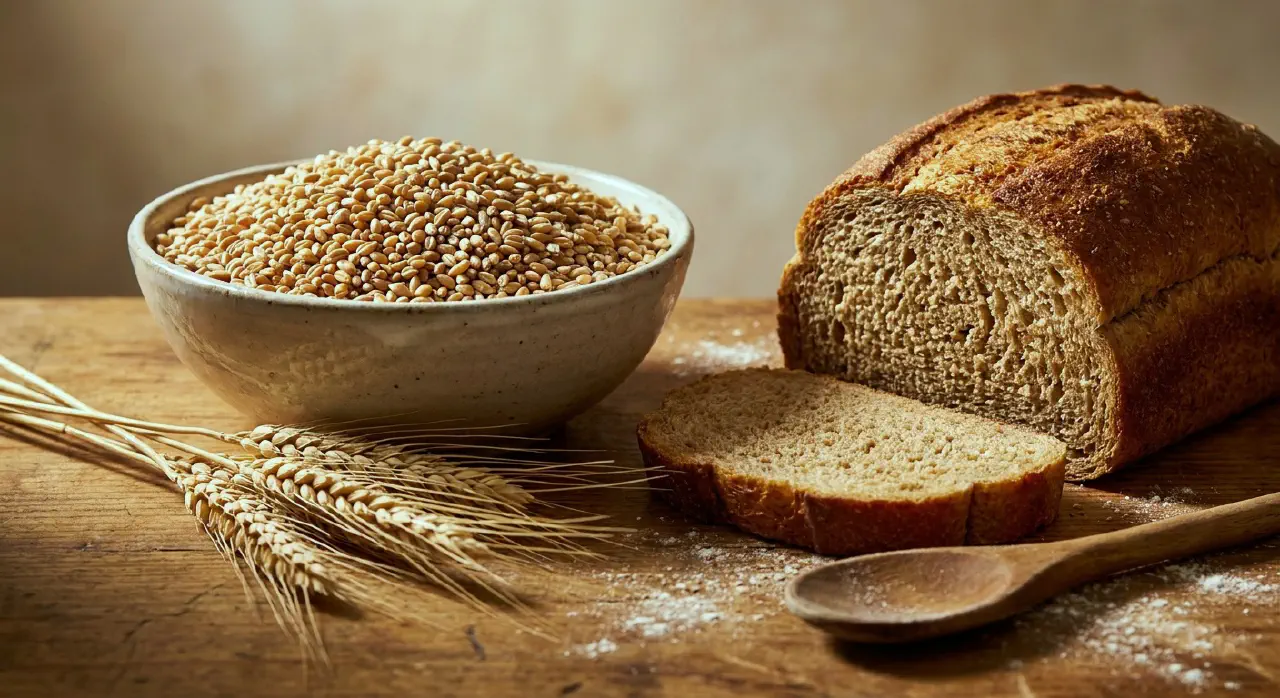
Wheat is the most important cereal in Mediterranean civilization and Western cooking, responsible for leavened bread, pasta, pastry, and a vast range of other preparations. What makes wheat unique is its gluten - a protein network of exceptional elasticity that no other grain can replicate. That elasticity comes from a genetic accident: bread wheat’s six chromosome sets, the result of an unusual hybridization ~8,000 years ago, produced a glutenin protein with uniquely springy bonds.
The four wheat species
Einkorn (T. monococcum): The simplest wheat, diploid, cultivated first ~10,000 years ago. Rich in yellow carotenoids and high in protein (~16%), but the glutenin:gliadin ratio is inverted (1:2 vs 1:1 in bread wheat), making its gluten sticky and extensible but not elastic - poor for raised breads, but flavorful in porridges.
Emmer/Farro (T. turgidum dicoccum): Tetraploid; the dominant wheat of the ancient Near East and Mediterranean until Roman times. “Farro” in Italian. Moderate protein (~17%), gluten moderately strong but not elastic - suited to winter soups and risotto-style farrotto, not light bread.
Durum wheat (T. turgidum durum): The most important tetraploid. Glassy, hard grain; strong but inelastic gluten - perfect for pasta (which requires cohesion, not spring) but not raised bread. Its yellow color comes from the carotenoid lutein. The Mediterranean’s pasta wheat.
Bread wheat (T. aestivum): The hexaploid hybrid that became ~90% of world wheat production. Protein 10–15%; gluten uniquely strong and elastic - able to stretch without snapping, trapping gas bubbles from fermentation to produce light loaves. The flour world runs on this one species.
Minor wheats: Spelt (ancient T. aestivum variant, high protein, slightly less elastic gluten, used for soups and some breads), Kamut (ancient durum relative, large grain, suited to pasta), Einkorn - all experiencing artisan revival.
Gluten: the defining protein
Gluten doesn’t pre-exist in flour. It forms when two storage proteins - glutenin (strength, elasticity) and gliadin (extensibility, stretch) - hydrate and bond during mixing. Together they create a viscoelastic network that expands to accommodate gas from yeast or chemical leaveners, then springs back to hold structure.
Gluten quality is as important as quantity. Bread wheat’s glutenin provides high elasticity - critical for gas retention in raised bread. Durum’s glutenin is strong but low-elasticity - ideal for pasta, where sheets must be pressed thin without tearing, not stretched and sprung back. Einkorn’s ratio produces sticky gluten that collapses rather than holds.
See wheat-flour for detailed flour types, protein percentages, and sauce-making applications.
Celiac disease (gluten-sensitive enteropathy): An autoimmune condition where the body forms antibodies against gliadin, attacking the intestinal cells responsible for nutrient absorption and causing serious malnourishment. Affects wheat, barley, and rye (all contain gliadin-related proteins). Safe grains: corn, rice, amaranth, buckwheat, millet, quinoa, sorghum, teff.
Milling and refining
Milling breaks grain into pieces and refining sifts away bran and germ - the two components most nutritionally rich but also most prone to rancidity (their concentrated oils oxidize within weeks). The result is white flour: shelf-stable and light-colored, but stripped of most fiber, oil, B vitamins, and ~25% of the protein. Industrial refined cereals are typically fortified with B vitamins and iron to compensate.
Whole wheat flour retains the bran, whose sharp particles physically cut gluten strands - producing denser, more flavorful results. White wheats (lower phenolic content) produce whole-grain flour with less astringency and lighter color than standard red wheats.
Wheat preparations
Wheat berries: Whole grain with bran intact. Require an hour or more to cook without presoaking. Chewy, nutty, most nutritious form.
Bulgur: Ancient preparation; whole grains cooked, dried until glassy-hard, then milled to remove bran and germ. The interior gelatinizes and anneals (like parboiled rice) - durable, nutritious, fast-cooking. Coarse bulgur for pilafs and tabbouleh; fine bulgur for falafel and sweets.
Wheat germ: 20% protein, 10% oil, 13% fiber - nutritionally dense, but its oil makes it susceptible to rapid staling. Refrigerate.
Green/immature wheat (firik/freekeh): Wheat harvested while still young, moist, and green - then charred briefly over a straw fire, dried for keeping. Known as firig in Turkish, frikke/freekeh in Arabic. The brief high-temperature roasting caramelizes the immature sugars and produces a distinctive smoky, grassy, nutty flavor. The grain retains a soft, slightly chewy texture after cooking. An ancient tradition across the eastern Mediterranean and Middle East, used in pilafs, soups, and stuffings.
Seitan (mian jin/gluten): Wheat’s insoluble proteins isolated by kneading dough in water, washing away starch and solubles. Discovered by Chinese noodle makers ~6th century. The resulting chewy, slippery mass absorbs sauce flavors readily and becomes the backbone of Buddhist vegetarian cuisine - with texture genuinely resembling meat muscle. High in glutamic acid; fermentation of gluten produces the savory precursor to MSG.
See also
- gluten-science - full glutenin/gliadin mechanics, why bread wheat’s hexaploid gluten is unique
- wheat-flour - flour types by protein content, gluten mechanics, starch role in baking
- seed-biology - amylose/amylopectin, protein solubility classes, milling rationale
- bread-baking - gluten development in practice, fermentation, oven spring
- pasta-noodles - durum’s inelastic gluten for pasta; egg pasta from soft wheat
- flatbreads-specialty - tortillas, naan, pizza, and other wheat-based flatbreads
- starch-gelatinization - wheat starch in sauces and crumb setting
- fermentation-overview - yeast acting on wheat flour; gluten relaxation during bulk ferment
- grains - other cereals for comparison (rye’s pentosans, oats’ beta-glucans, corn’s types)