Marinades - The Complete Overview
Marinades © kvalifood.com
No category in the kitchen is more misunderstood. The common belief that marinades penetrate deeply, tenderize thoroughly, and transform tough cuts conflicts at nearly every point with how flavors and acids actually move through muscle tissue.
Foundations
Most water-soluble flavor molecules penetrate only 2-5 mm into a protein over a typical 2-24 hour marinade. Marinade flavor is fundamentally a surface phenomenon. This is physics, not a failure of technique - and it means the strategies of piercing, scoring, injecting, and pounding are not affectations but genuine penetration aids.
Salt is the only marinade component that reliably penetrates beyond the surface. Everything else seasons the exterior. This single fact should govern how you budget marinade time: 30 minutes in a salty marinade is more effective for interior flavor than 24 hours in an unsalted one.
Fat carries aroma molecules but cannot penetrate water-rich muscle tissue. An oil-and-herb marinade coats the surface with an aromatic film but contributes almost nothing to interior flavor. Fat-soluble flavor compounds are best thought of as surface seasonings - they work best when the marinated protein is seared or roasted at high heat, driving surface aromatization through Maillard reactions.
The Penetration Problem
Flavor molecules in a marinade penetrate muscle tissue through diffusion - a slow, concentration-gradient-driven process constrained by the dense protein matrix of muscle fibers. The practical reality, well-established in food science research, is that most water-soluble flavor molecules penetrate 2-5 mm into a protein over a typical 2-24 hour marinade period. A 50 mm thick chicken breast will be marinated on its surface and for a few millimeters beneath - its center will taste like unmarinated chicken. This is not a failure of technique; it is physics. It means marinade flavor is a surface phenomenon, and the strategies of piercing, scoring, injecting, and pounding are not affectations - they are genuine penetration aids.
Food Science - Why Fat-Soluble Flavors Don’t Penetrate: Oil-based marinades face an additional barrier beyond diffusion: the muscle tissue’s water content repels fat-soluble compounds. An oil-and-herb marinade coats the surface with an aromatic film but contributes almost nothing to interior flavor. Fat-soluble flavor compounds (in chili oil, infused olive oil, spice oleoresins) are best thought of as surface seasonings - they work best when the marinated protein is then seared or roasted at high heat, which drives surface aromatization through Maillard reactions.
Acid: Tenderizing or Damaging?
Acid marinades (citrus, vinegar, wine, buttermilk) interact with muscle proteins in ways that are more complex than simple “tenderization.” At low acid concentrations and short exposure times, acid partially denatures surface proteins, which does soften texture marginally. But acid does not break peptide bonds - it cannot dissolve the collagen fibers or myofibril structures that make tough cuts tough. That requires sustained high heat (braising). At high acid concentrations or extended times, acid denatures surface proteins fully, creating a firm, gray, “cooked” texture in the outer layer of the protein. This is the mechanism of ceviche - but applied accidentally to a chicken breast left in lemon juice overnight, it creates mealy, texturally compromised meat.
| Marinade Type | Acid Level | Time < 4 hrs | Time 4-24 hrs | Time > 24 hrs |
|---|---|---|---|---|
| Citrus (lemon, lime) | High (pH 2.2-2.4) | Surface flavor, slight softening | Surface protein denaturation begins | Mealy, gray exterior - avoid |
| Wine / vinegar | Moderate (pH 3.0-3.5) | Good surface flavor development | Balanced; mild surface softening | Texture begins to suffer |
| Buttermilk / yogurt | Low-Moderate (pH 4.0-4.6) | Minimal | Optimal: lactic acid penetrates; casein coats surface, protecting from direct heat | Good; safe for extended use, e.g., overnight chicken |
| Enzyme-based (pineapple, papaya, kiwi) | Low (near-neutral) | Significant surface tenderization | Surface becomes mushy | Disintegration - avoid entirely beyond 2-4 hrs |
| Dry brine (salt-based) | N/A | Salt begins drawing moisture out | Optimal: salt dissolves and reabsorbs with protein modification | Excellent - dry brining 24-72 hrs for poultry or pork is standard practice |
Enzymatic Marinades
Bromelain (pineapple), papain (papaya), actinidin (kiwi), and ficin (fig) are proteolytic enzymes that genuinely cleave peptide bonds - they are capable of actual tenderization, not merely surface denaturation. This makes them far more powerful than acid-based marinades, and correspondingly more dangerous. Bromelain in particular is highly active at refrigerator temperatures. A 30-minute marinade in fresh (not canned - heat processing deactivates the enzyme) pineapple juice can soften a thin cut; 3-4 hours produces mushy, structurally collapsed protein. Use is best confined to brief applications on thin cuts, and always with fresh enzyme source rather than processed.
Critical - Enzymatic Marinade Safety: Fresh pineapple, papaya, and kiwi must never be used as a base for overnight marinades of any protein thicker than 1.5 cm. The enzyme does not inactivate at refrigerator temperatures and will continue working throughout the storage period. Canned, pasteurized, or cooked versions of these fruits are safe - the heat has denatured the enzyme. In practical professional application, enzymatic marinades are best reserved for situations where you can monitor time precisely and serve immediately after cooking.
Dry Marinades and Dry Brines
Dry brining (salting in advance) is the most consistently effective marinade technique available. Salt draws liquid out of the protein through osmosis, then - as the salt concentration in this liquid increases - the liquid reabsorbs back into the muscle along with dissolved salt, modifying protein structure from within. The result is measurably juicier cooked protein with flavor distributed throughout, not just on the surface. The mechanism is entirely different from acid-based marinades and more effective for moisture retention. Minimum effective time is approximately 45 minutes for thin cuts; 24-72 hours for large cuts and whole birds.
Aromatic Penetration in Dry Rubs
Dry rub aromatics (spices, dried herbs) sit on and just beneath the protein surface. Their primary function is not interior seasoning but surface flavor development during cooking - specifically, by becoming part of the Maillard reaction crust. Spice compounds participate directly in browning chemistry, creating unique aromatic compounds not present in the raw spice. This means the sequence of dry-rubbing and subsequent high-heat cooking is a flavor-generation process, not merely a coating. A protein dry-rubbed and immediately seared will develop different crust flavors than one rested overnight - the overnight rest allows greater surface moisture evaporation and tighter spice-surface contact.
Marinade Composition: A Functional Framework
Every effective marinade can be analyzed as a combination of three functional components, each with a distinct role:
| Component | Examples | Role |
|---|---|---|
| Fat (carrier) | Oil | Carries fat-soluble aromatics; coats surface; conducts heat evenly during searing |
| Acid (flavor + texture) | Vinegar, citrus, wine, dairy | Drives acid flavor; some surface protein modification; penetration limited |
| Aromatics (flavor) | Herbs, spices, alliums, fermented pastes | Surface flavoring; Maillard reaction participants; the primary flavor contributors |
| Salt (penetration) | Salt, soy, miso, fish sauce | The only flavor compound that reliably penetrates beyond the surface; non-optional |
Practical Implication: If you want flavor inside the protein - not just on its surface - salt (or a salty fermented ingredient) is the only marinade component that will achieve this. Everything else seasons the surface. Budget marinade time accordingly: 30 minutes in a salty marinade is more effective for flavor penetration than 24 hours in an unsalted one.
Food Safety in Marination
Marinades used for raw protein must never be served uncooked as a sauce - the cross-contamination risk from raw meat, poultry, or fish is absolute. If the marinade is intended to become a sauce or basting liquid, it must be brought to a full boil (165°F (75°C) internal) and held for at least 2 minutes before serving. Alternatively, a separate portion of the marinade can be reserved before it contacts the raw protein. Marinade salt content and acid level do not provide sufficient antimicrobial protection to make used marinade safe for direct serving.
Marinating must occur under refrigeration (below 40°F (4°C)). Room-temperature marinating accelerates the growth of surface pathogens along with any flavor development - this is not a reasonable tradeoff in a professional environment. The only exception is very brief (under 30 minutes) marination at temperatures not exceeding 70°F (20°C), which is acceptable for service-to-service transitions.
Choosing the Right Liquid Preparation
Marinades overlap with sauces and dressings more than any other category. A teriyaki glaze is both a warm sauce and a marinade. A chimichurri brushed onto a steak during grilling has become a basting sauce. A vinaigrette used briefly on raw fish sits between dressing and marinade. When choosing which approach to take, these questions clarify:
- What is the primary function? Flavor penetration before cooking - marinade. Coat and season at service - dressing. Accompany and enrich the finished dish - sauce.
- What is the fat-acid balance of the primary ingredient? Rich, fatty proteins need more acid. Lean, delicate proteins need fat richness to compensate.
- Will it be cooked further? Volatile aromatics should be added at the end. Acid can be added early if depth (not brightness) is the goal.
Flavor Balance Diagnostics
When a marinade or its resulting sauce tastes “almost right” but something is missing, this framework identifies the gap:
| Symptom | Likely Deficiency | Remedy |
|---|---|---|
| Flat, lifeless | Salt (primary amplifier) | Add salt incrementally; also check acid |
| One-dimensional, monotone | Acid | Small addition of acid lifts and separates flavors |
| Harsh, sharp, aggressive | Sweetness or fat | Pinch of sugar or additional fat to round |
| Rich but heavy, cloying | Acid | A few drops of citrus or vinegar cuts richness immediately |
| Correct taste but no aroma | Volatile aromatics | Fresh herbs, citrus zest, finishing oil - anything added off heat |
| Aromatic but watery | Savory depth (umami) | Reduced stock, soy sauce, parmesan rind, anchovy, miso |
| Correct but texturally thin | Body / viscosity | Reduction, butter mounting, starch slurry - choose based on flavor goals |
Marinades Around the World
Asia
China
- Char Siu Sauce (叉烧酱) - Sweet, sticky Cantonese barbecue sauce of hoisin, soy, five-spice, honey, and garlic. Used to marinate and glaze char siu pork, chicken wings, and ribs. Both - often mixed at home from pantry ingredients, but bottled versions widely sold.
- Ground Bean Sauce (磨豉酱) - Made from fermented yellow soybeans and spices, less sweet than hoisin. Used in Cantonese marinades, stir-fries, and braised dishes. Store-bought.
Japan
- Teriyaki Sauce (照り焼き) - Sweet-salty glaze of soy sauce, mirin, sake, and sugar. Used to glaze grilled or broiled fish, chicken, and meats. The word means “shining grill.” Both - simple to mix at home from pantry ingredients, but bottled versions common.
- Tare Sauce (タレ) - General term for soy-mirin-sake based glazing sauce. Used in yakitori, yakiniku, teriyaki, and with sushi. Many regional and restaurant-specific variations. Both - restaurants make their own, home cooks often buy bottled.
- Yakiniku Sauce (焼肉のタレ) - Soy, sake, mirin, sesame, garlic, ginger, and often fruit (apple or pear) based sauce for dipping grilled meats at the table. Both - mixed at home or bought bottled (Ebara brand is standard).
- Miso-Based Glazes and Sauces - Miso paste combined with mirin, sake, and sugar to create glazes for grilled fish (saikyo miso), dengaku (grilled tofu/eggplant), and marinades. Many regional miso varieties (white, red, hatcho). Homemade - miso is store-bought, but the glaze is mixed fresh.
Korea
- Gochujang (고추장) - Fermented red pepper paste made from chili flakes, glutinous rice, fermented soybeans, and salt. Sweet, spicy, and deeply savory. Used in bibimbap, stews, marinades, and as base for many sauces. Store-bought.
- Yangnyeom Sauce (양념장) - General term for seasoning sauce; most famously the sweet-spicy glaze for yangnyeom chicken (Korean fried chicken), made from gochujang, ketchup, garlic, soy, and sugar. Also used for japchae, jeon, and other dishes. Made fresh - assembled from pantry ingredients.
- Bulgogi Marinade - Sweet-savory marinade of soy sauce, sugar or pear juice, sesame oil, garlic, ginger, and grated Asian pear (for tenderizing). Used for thinly sliced beef or pork. Asian pear distinguishes it from other soy marinades. Made fresh - mixed at home from pantry ingredients.
India
- Tandoori Marinade - Yogurt-based marinade with Kashmiri red chili, turmeric, garam masala, ginger-garlic paste, and lemon juice. Used for tandoori chicken, paneer tikka, and other clay oven dishes. Yogurt tenderizes; the spice mix gives the characteristic red color. Made fresh - mixed from yogurt and spices before marinating.
- Tikka Marinade - Similar to tandoori but often uses cream or cheese (hung curd) for richer texture. Spiced with chaat masala, kasoori methi (dried fenugreek). Used for kebabs and tikka pieces. Made fresh - mixed from yogurt, cream, and spices before marinating.
Philippines
- Adobo Sauce - Braising sauce of soy sauce, vinegar, garlic, bay leaves, and black peppercorns. The defining sauce of Filipino adobo (chicken, pork, or both). Every family has their own ratio. Made fresh - built during the braising process from pantry ingredients.
Europe
Italy
- Salmoriglio - Olive oil, lemon juice, oregano, and garlic, whisked into an emulsion. A Sicilian sauce for grilled fish and meat. Made fresh.
Spain
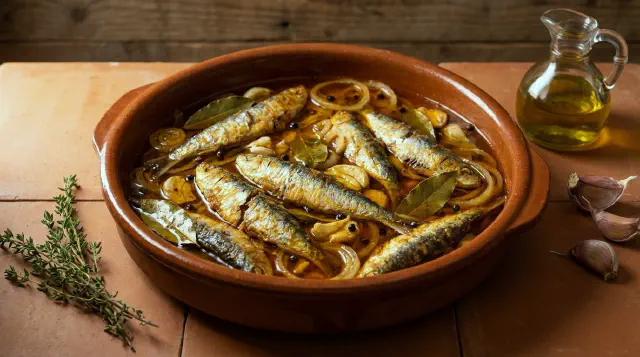
- Escabeche - Vinegar-based marinade with olive oil, garlic, peppercorns, bay leaf, and sometimes saffron. Used for preserving and flavoring cooked fish and game. Homemade.
Portugal
- Molho de Piri Piri - Hot sauce of bird’s-eye chili peppers, garlic, lemon juice, olive oil, and sometimes herbs. Found on every Portuguese table. The country’s signature condiment. Both.
- Molho Escabeche - Vinegar-based sauce with olive oil, garlic, smoked paprika, onion, and white wine. Used to marinate and preserve fish and meat. Homemade.
- Vinha d’Alhos - Wine or vinegar marinade with garlic, paprika, chili paste, and salt. From the Minho region, traditional for Christmas pork in Madeira. Originally developed by sailors to preserve meat. Homemade.
Greece
- Ladolemono - Simple emulsion of olive oil and lemon juice, often with oregano. The default dressing for grilled fish, meat, and salads. Made fresh.
Scandinavia
- Sursild saus (Pickled herring sauce) - Various cream-, mustard-, or curry-based sauces for marinated herring. Both.
Americas
Pan-American / Cross-Border
- Adobo - From Spain via colonialism, adapted everywhere differently. In Mexico: a wet chile paste. In Puerto Rico: a dry seasoned salt. In the Philippines (via the Manila-Acapulco galleon trade): a vinegar braise. The word itself means “to marinate/season” and the concept pervades all Latin American cooking. Both.
- Mojo - Originating in the Canary Islands, mojo became central to Cuban and Puerto Rican cooking. Defined by sour citrus (naranja agria), garlic, and olive oil. Cuban mojo criollo is the most famous version; Puerto Rican mojo is used for pernil. Homemade.
Mexico
- Adobo - A paste or sauce of dried chiles (ancho, guajillo, chipotle), vinegar, garlic, oregano, and spices. Used to marinate meats (carne adobada, barbacoa) or as a braising sauce. Fundamental to Mexican cooking. Both.
- Recado Rojo (Achiote Paste) - Mayan spice paste from the Yucatán made with ground annatto (achiote) seeds, oregano, cumin, allspice, garlic, and sour orange juice. The essential marinade for cochinita pibil and other Yucatecan dishes. Regional staple (Yucatán). Both.
Peru
- Aji Amarillo Paste - Pureed aji amarillo peppers, the backbone of Peruvian cuisine. Used in sauces, stews, ceviches, and marinades. Fruity heat with no close substitute. Both.
- Leche de Tigre - The citrus-based curing liquid from ceviche: lime juice, aji, garlic, cilantro, onion, fish juices. Served as a shot or used to dress additional ceviches. Ubiquitous (cevicherías). Made fresh.
Caribbean
- Jerk Marinade / Jerk Sauce - The defining Jamaican seasoning: scotch bonnet peppers, allspice (pimento), thyme, scallions, garlic, ginger, soy sauce, and often brown sugar and lime. Used to marinate chicken, pork, and fish before grilling over pimento wood. Homemade.
- Mojo Criollo - Cuba’s signature sauce: sour orange juice (naranja agria), garlic, olive oil, cumin, and oregano. Used to marinate lechón asado (roast pork) and served as a finishing sauce over yuca con mojo. Homemade.
- Green Seasoning - A bright green paste of chadon beni (culantro), chives, thyme, parsley, garlic, celery, pimento peppers, and scotch bonnet. Used to marinate virtually all meats and seafood before cooking. The backbone of Trini cooking. Homemade.
- Mojo Criollo (Puerto Rican style) - Similar to Cuban mojo but often with added bitter orange, garlic, olive oil, and a Puerto Rican spice blend. Used for pernil (roast pork shoulder) and grilled meats. Homemade.
United States
- BBQ Sauce (regional styles) - America’s great regional sauce tradition. Kansas City: thick, sweet, tomato-and-molasses based. Carolina (Eastern): thin vinegar-pepper sauce. Carolina (Western/Lexington): vinegar-tomato. Texas: thin, peppery, beef-drippings based. South Carolina: mustard-based. Alabama white: mayonnaise-vinegar. Each region considers its version the only legitimate one. Both.
- Alabama White BBQ Sauce - Invented in 1925 at Big Bob Gibson’s in Decatur, AL: mayonnaise, apple cider vinegar, black pepper, and horseradish. Used to dip smoked chicken and as a slaw dressing. Homemade.
Canada
- Montreal Steak Spice Rub - A coarse blend of black pepper, coriander, cayenne, dill seed, garlic, and red pepper flakes. Rubbed onto steaks before grilling. Originated in Montreal’s deli culture. Both.
Middle East & North Africa
Morocco
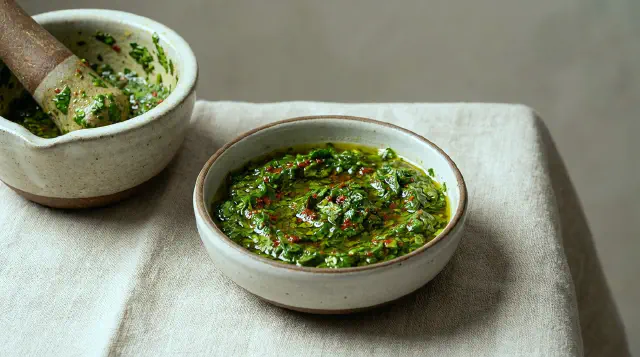
- Chermoula (شرمولة) - Dense herb paste of cilantro, parsley, garlic, cumin, paprika, preserved lemon, and olive oil. Used as a marinade for fish and meat, a basting sauce for tagines, and a condiment. The emblematic Moroccan sauce. Homemade.
- Ras el Hanout Spice Paste - When the complex spice blend (4–21 spices) is mixed with oil and garlic into a paste, it functions as a marinade for grilled meats and as a seasoning base for tagines. Both.
Tunisia
- Tabil Paste - When the tabil spice mix (coriander, caraway, chili, garlic) is combined with oil or tomato paste, it becomes a marinade and seasoning paste for couscous, ojja, and grilled meats. Both.
Iran
- Saffron-Yogurt Marinade - Yogurt combined with bloomed saffron, onion, turmeric, and lemon juice. The standard marinade for all Persian kebabs (koobideh, joojeh). Tenderizes the meat and gives it the characteristic golden color. Made fresh.
Yemen
- Hawaij (حوائج) - Yemeni spice blend of cumin, black pepper, turmeric, and cardamom (savory version) or ginger, cardamom, cinnamon, and cloves (coffee version). Mixed with oil, it becomes a rub/marinade for grilled meats and a seasoning for soups and stews. Both.
Directions
See Also
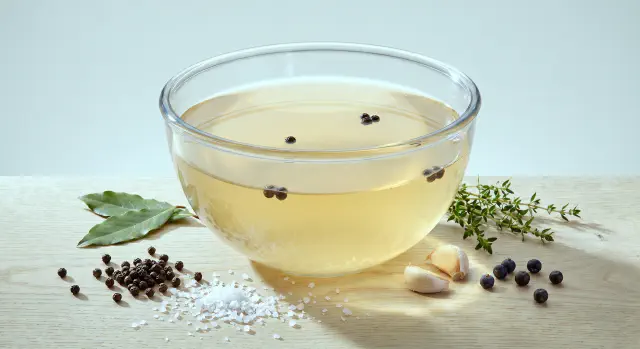
Brine for curing meat, poultry and fish
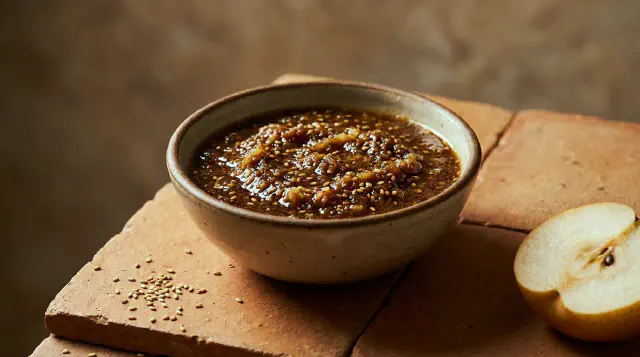
Bulgogi Marinade
Chermoula (Moroccan Herb Marinade)
Cold Sauces - The Complete Overview
Dressings - The Complete Overview
Escabeche (Spanish Vinegar Marinade)
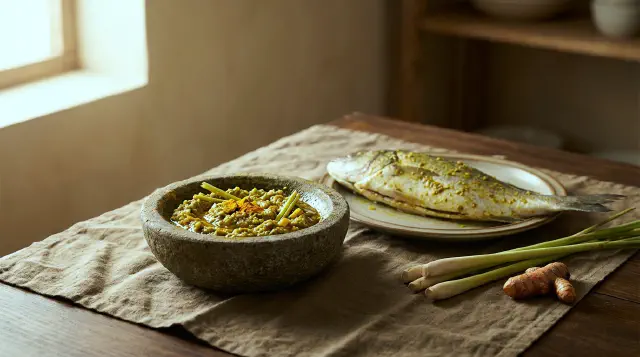
Fish Marinade
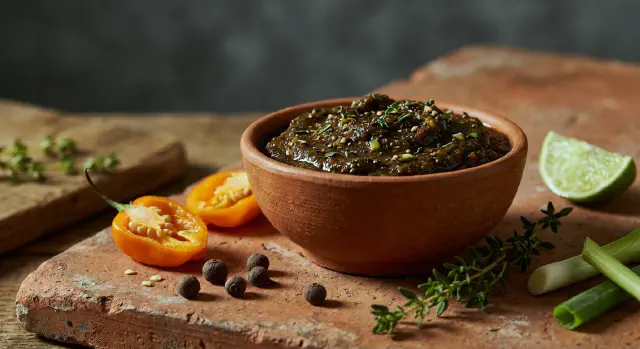
Jerk Marinade
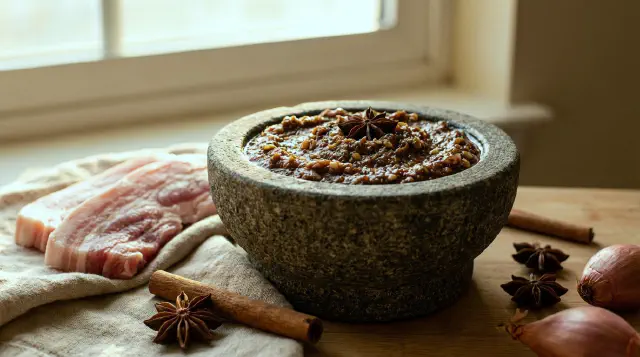
Meat Marinade
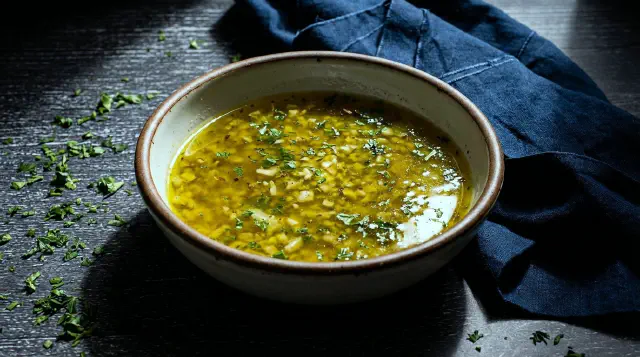
Raw Mojo Criollo (Marinade)
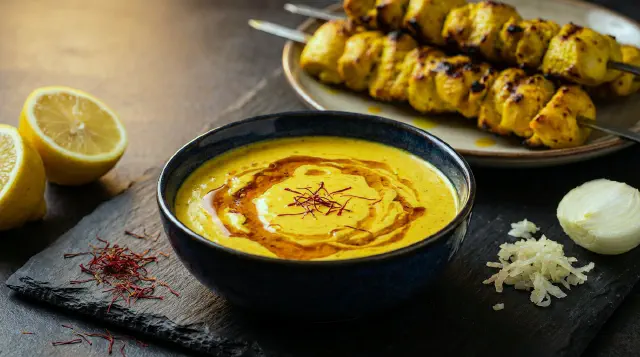
Saffron-Yogurt Marinade (Persian Joojeh Kabab Marinade)
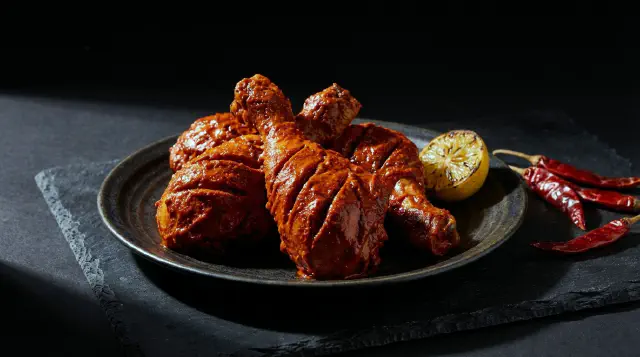
Tandoori Marinade
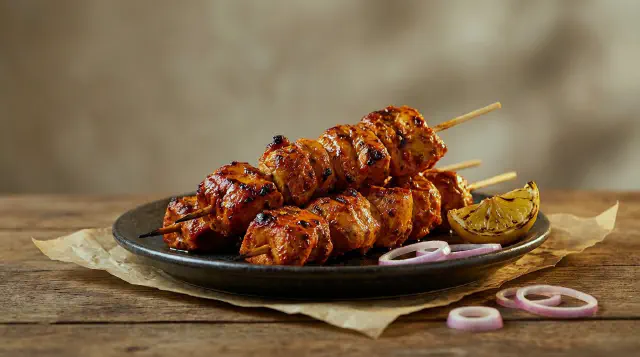
Tikka Marinade