Cold Sauces - The Complete Overview
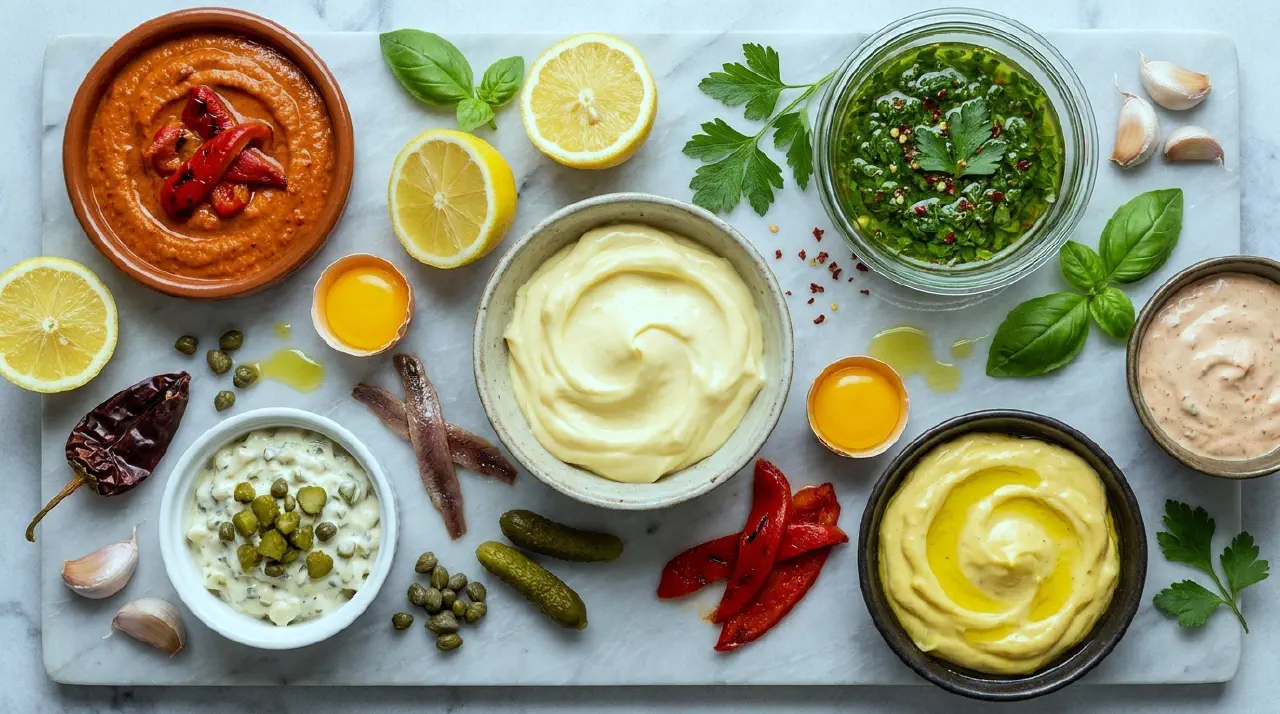
Cold sauces © kvalifood.com
Temperature is a structural choice, not simply a serving preference. Cold sauces stabilize emulsions that heat would destroy, preserve volatile aromatics that cooking would drive off, and deliver textural contrast to hot preparations.
Foundations
Every sauce operates on two sensory registers. Taste - salt, sweet, sour, umami, bitter - supplies structure. Smell - carried by aroma molecules that are far more soluble in fat than in water - completes the flavor. Fat is not merely a carrier of richness but the principal vehicle for volatile flavor delivery. This is why cold sauces, which preserve volatile aromatics that heat would destroy, can deliver more complex aromas than their cooked counterparts.
Cold sauces achieve body through two primary thickening strategies:
| Method | Mechanism | Key Consideration |
|---|---|---|
| Emulsification | Emulsifier molecules stabilize oil-in-water droplets; packed droplets impede flow | Stability is thermodynamically unfavorable - the system always wants to separate; only kinetics keep it together |
| Vegetable / plant particles | Cell-wall fragments and pureed plant tissues create viscosity through particle density | Color and flavor are inseparable from structure; oxidation is the enemy in herb-based preparations |
The world’s oldest sauces were cold preparations. Roman garum, Southeast Asian fish sauce, Chinese soy sauce - all based on the controlled breakdown of proteins into free amino acids. The tradition of emulsified cold sauces developed alongside these fermented preparations, reaching its current form in the mayonnaise family and the herb sauces of the Mediterranean.
Mayonnaise and Its Derivatives
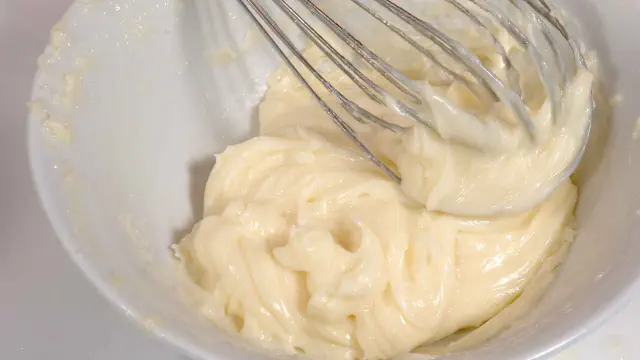
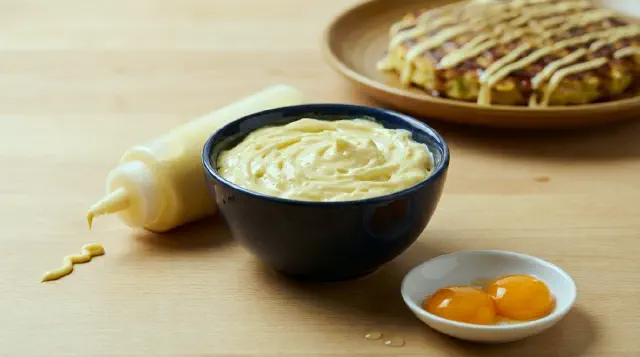
Mayonnaise is the most stable emulsion in the kitchen - an oil-in-water emulsion so thoroughly packed with oil droplets (up to 80% oil by volume) that water is the minority phase. At this concentration, tightly packed droplets physically impede each other’s movement, creating thick, spreadable consistency without any starch or gelatin. The emulsion’s stability comes from three sources: phospholipids in egg yolk, yolk proteins, and the mustard compound sinigrin - each coating oil droplet surfaces from a different molecular mechanism.
Classic Mayonnaise - Base Formula:
1 yolk (~17 g) + 150 ml oil (neutral or olive) + acid (lemon / white wine vinegar) + mustard (Dijon preferred)
The technique of adding oil drop-by-drop at the start is not ritual but chemistry: each droplet must be coated by emulsifier before the next arrives. Rapid early addition overloads emulsifier capacity before a stable network has formed. Once the emulsion thickens - a visible change that signals droplets are coated and packed - oil can be added in a thin stream.
Food Science - Emulsifier Capacity: The limit of “one yolk to 150 ml oil” is a real molecular constraint: when all available emulsifier surface area is occupied by droplet coatings, additional oil cannot be incorporated and the emulsion will break catastrophically. This ratio must be observed arithmetically, not estimated by eye.
The Derivative Landscape
| Sauce | Base | Key Additions | Application |
|---|---|---|---|
| Rémoulade | Mayonnaise | Capers, cornichons, anchovy paste, tarragon, Dijon | Seafood, charcuterie, crudités |
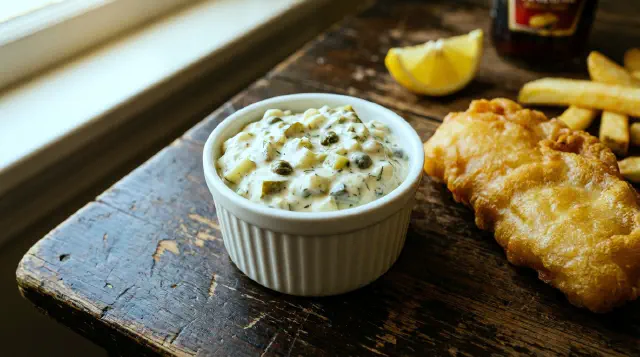
| Tartar | Mayonnaise | Capers, pickles, shallots, parsley, lemon | Fried fish, seafood |
| Aioli | Emulsified garlic + olive oil (± egg) | Raw garlic (high allicin content), extra-virgin olive oil | Provençal fish dishes, vegetables |
| Rouille | Aioli base | Saffron, piment d’Espelette or cayenne, bread for body | Bouillabaisse, soupe de poisson |
| Gribiche | Hard-cooked yolk emulsion | Hard egg whites, capers, pickles, herbs, mustard | Offal, boiled vegetables, terrines |
| Chantilly (savory) | Mayonnaise | Whipped cream folded in last moment | Asparagus, delicate vegetables |
| Andalouse | Mayonnaise | Tomato purée, piment doux, brunoise of peppers | Fried foods, eggs, cold meats |
Raw Herb Sauces and Coulis
Uncooked herb sauces represent a distinct philosophy: the preservation of volatile aromatic compounds that heat would destroy or transform. Basil loses approximately 80% of its primary aroma compound (linalool and methyl chavicol) within the first minute of cooking - a pesto cooked would not be pesto in any meaningful sense. The challenge is therefore not heat management but oxidation management.
Oxidation and Color Loss in Herb Sauces
When plant cells are ruptured by grinding or chopping, the enzyme polyphenol oxidase comes into contact with phenolic compounds previously kept separate by intact cell membranes. The enzymatic browning reaction that follows is rapid, irreversible, and responsible for the darkening of fresh herb preparations. Three mitigation strategies are available:
- Blanching: 15-20 seconds in boiling water, then ice bath, deactivates polyphenol oxidase permanently. Slight cooked character develops but color is preserved for days. Essential for large-batch production.
- Acid addition: Lemon juice lowers pH and partially inhibits enzyme activity. Less effective than blanching but preserves raw flavor. Practical for à la minute preparation.
- Oil coverage: Coating herb surface with oil excludes oxygen and mechanically impedes enzyme-substrate contact. Effective for storage (pour a thin layer of oil over the surface of stored pesto); not a complete solution.
Technique - Mortar vs. Machine: Traditional mortar-and-pestle pesto produces measurably different flavor from food-processor pesto. Grinding releases cell contents gradually, minimizing oxidation and preserving distinct fresh-basil aromatics. Machine processing introduces more air, generates more heat from friction, and ruptures cells more violently - oxidation is faster and flavor evolution more pronounced. For service-quality pesto in a professional kitchen, blanched basil in a food processor is a reliable compromise: color is preserved, preparation is rapid, and the flavor difference from raw mortar-made pesto is less dramatic than the color difference.
Classic Raw Herb Sauces
| Sauce | Origin | Key Aromatics | Fat Base | Acid | Pairing Logic |
|---|---|---|---|---|---|
| Pesto Genovese | Liguria | Basil, garlic | Extra-virgin olive oil | None traditional | Pasta, fish, vegetable soups |
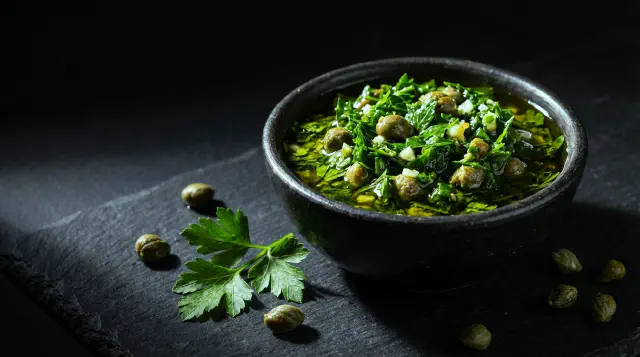
| Salsa verde (Italian) | Italy | Parsley, capers, anchovy, garlic | Olive oil | Lemon / wine vinegar | Bollito misto, offal, grilled fish |
| Chimichurri | Argentina | Parsley, oregano, garlic, chili | Neutral oil | Red wine vinegar | Grilled beef; high heat meats |
| Chermoula | North Africa | Coriander, cumin, preserved lemon, paprika | Olive oil | Preserved lemon / fresh lemon | Fish, lamb, roasted vegetables |
| Gremolata | Lombardy | Lemon zest, garlic, parsley | None - dry condiment | Lemon (in the zest) | Osso buco; braised meats generally |
| Pistou | Provence | Basil, garlic | Olive oil | None | Soupe au pistou; vegetable preparations |
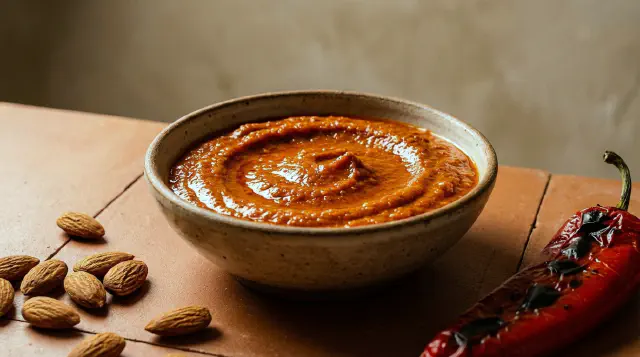
| Romesco | Catalonia | Roasted pepper, dried ñora, garlic, tomato | Olive oil | Sherry vinegar | Grilled vegetables, calçots, fish |
Fat-Based Cold Sauces
Compound butters and other fat-based cold preparations share a structural logic: solid fat acts as a delivery mechanism. At serving temperature - whether the butter melts on contact with hot protein or is served slightly softened - the fat releases encapsulated aromatics directly onto the food surface, coating more evenly than a poured sauce can. This is why a café de Paris butter on a steak delivers intense, uniform flavor distribution that a spooned sauce cannot replicate.
Key principle in compound butter construction: aromatic compounds must be either fat-soluble (herbs, citrus zest oils, spices) to remain in the butter phase, or present at sufficient concentration to overwhelm phase separation. Water-soluble flavor elements (wine reductions, citrus juice) will weep from the butter as it melts unless reduced to near-dry, paste-like concentration before incorporation.
Fermented and Umami-Rich Cold Sauces
The world’s most ancient liquid preparations - Roman garum, Southeast Asian fish sauce, Chinese soy sauce, Korean doenjang - derive their flavor not from aromatics but from the controlled enzymatic and microbial breakdown of proteins into free amino acids, particularly glutamate. These preparations do not thicken food or modify its texture; their function is the amplification of savory perception across the entire dish. A few drops of a well-made fish sauce in a European preparation will not make it taste “Asian” - it will simply make it taste more intensely of itself. This is the original meaning of umami before the word existed.
Flavor Balance Diagnostics
When a sauce tastes “almost right” but something is missing, this framework identifies the gap:
| Symptom | Likely Deficiency | Remedy |
|---|---|---|
| Flat, lifeless | Salt (primary amplifier) | Add salt incrementally; also check acid |
| One-dimensional, monotone | Acid | Small addition of acid lifts and separates flavors |
| Harsh, sharp, aggressive | Sweetness or fat | Pinch of sugar or additional fat to round |
| Rich but heavy, cloying | Acid | A few drops of citrus or vinegar cuts richness immediately |
| Correct taste but no aroma | Volatile aromatics | Fresh herbs, citrus zest, finishing oil - anything added off heat |
| Aromatic but watery | Savory depth (umami) | Reduced stock, soy sauce, parmesan rind, anchovy, miso |
| Correct but texturally thin | Body / viscosity | Reduction, butter mounting, starch slurry - choose based on flavor goals |
Cold Sauces Around the World
Asia
Pan-Asian / Cross-Regional
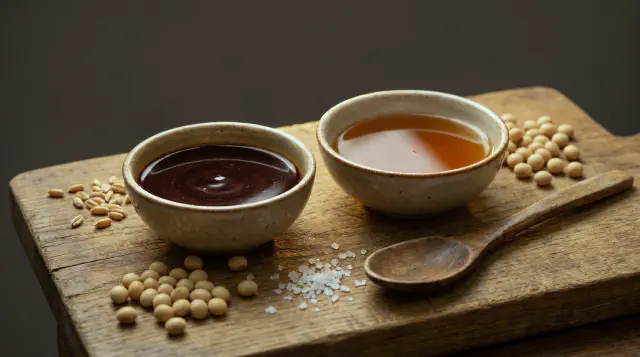
- Soy Sauce - Fermented soybean-based salty liquid used as seasoning and dipping sauce across all of East and Southeast Asia. Every country has local variants (Chinese light/dark, Japanese shoyu, Korean ganjang, Indonesian kecap). Store-bought.
- Fish Sauce - Fermented fish/anchovy liquid providing salt and umami. Core seasoning in Thai (nam pla), Vietnamese (nuoc mam), Filipino (patis), Burmese (ngan bya yay), and Cambodian cooking. Used both as ingredient and table condiment. Store-bought.
- Sesame Oil - Pressed from toasted sesame seeds, used as a finishing oil and cold sauce component across China, Japan, Korea, and Southeast Asia. Loses flavor when heated; best used cold or at the end of cooking. Store-bought.
- Chili Oil (various names) - Hot oil infused with dried chili flakes and spices, used as table condiment and sauce base. Found in Chinese (hong you / la you), Japanese (rayu), Korean, and Southeast Asian kitchens. Regional variations include Sichuan mala chili oil with numbing peppercorns. Both - homemade is common and preferred, but store-bought versions widely available.
- Sesame Paste/Sauce - Thick paste from ground toasted sesame seeds, used as base for cold noodle sauces, hotpot dipping, and salad dressings in China (zhima jiang), Japan (goma dare), and Korea. Paste is store-bought; sauce is mixed fresh.
- Sweet Chili Sauce - Sweet, mildly spicy sauce of chilies, sugar, garlic, and vinegar. Originated in Thailand (nam chim kai) but now ubiquitous across Southeast Asia as dipping sauce for fried foods and spring rolls. Store-bought.
- Shrimp Paste (various forms) - Fermented shrimp paste used as flavor base. Thai kapi, Malaysian/Indonesian belacan, Filipino bagoong, Burmese ngapi, Vietnamese mam tom. Often pounded into sauces rather than used directly. Store-bought.
China
- Light Soy Sauce (生抽, shēng chōu) - Lighter, saltier soy sauce for seasoning and dipping. The default “soy sauce” in Chinese recipes. Made from fermented soybeans and wheat. Store-bought.
- Hoisin Sauce (海鲜酱) - Sweet, thick sauce of fermented soybeans, garlic, chilies, and sesame. Used as dipping sauce for Peking duck and spring rolls, and as glaze for roasted meats. Store-bought.
- Chinkiang Black Vinegar (镇江香醋) - Dark rice vinegar with malty, slightly sweet, complex flavor. Used as dipping condiment for dumplings and xiao long bao, and in cold dishes. Store-bought.
- Fermented Bean Curd (腐乳, fǔrǔ) - Cubes of tofu fermented with salt, rice wine, and spices (sometimes chili). Eaten as condiment with congee or used in marinades and sauces. Comes in white, red, and chili varieties. Store-bought.
- Sichuan Chili Oil (红油, hóng yóu) - Hot oil poured over ground Sichuan chilies, often with Sichuan peppercorns, star anise, and other aromatics. Used on cold noodles, wontons, and as all-purpose condiment. Homemade - every household and restaurant has their own recipe; store-bought exists but is considered inferior.
- Sesame Paste Sauce (麻酱, májiàng) - Toasted sesame seed paste thinned with soy, vinegar, and/or chili oil. Dressing for cold noodles (liang mian, liang pi), hotpot dipping sauce, and cold vegetable dishes. Paste is store-bought; the sauce is mixed fresh at home or at the table.
Japan
- Ponzu (ポン酢) - Citrus-based sauce made with soy sauce, rice vinegar, mirin, dashi, and yuzu (or other citrus) juice. Used as dipping sauce for shabu-shabu, sashimi, grilled fish, and as salad dressing. Both - often mixed at home from soy, mirin, and citrus, but bottled versions widely sold.
- Tonkatsu Sauce (とんかつソース) - Thick, fruity-sweet brown sauce served with breaded fried pork (tonkatsu), chicken katsu, croquettes, and yakisoba. Based on Worcestershire-style sauce with fruit puree. Store-bought.
- Mentsuyu (めんつゆ) - Dashi-based sauce with soy, mirin, and sugar. Used as dipping sauce for cold soba and somen noodles, and as seasoning base for hot noodle soups. Both - easy to mix from dashi, soy, and mirin, but concentrated bottled versions very popular.
- Goma Dare / Sesame Dressing (ごまだれ) - Thick sesame sauce of toasted sesame paste, soy, vinegar, mirin, and sometimes miso. Used as shabu-shabu dipping sauce and salad dressing. Both - mixed at home from sesame paste, or bought bottled.
- Yakiniku Sauce (焼肉のタレ) - Soy, sake, mirin, sesame, garlic, ginger, and often fruit (apple or pear) based sauce for dipping grilled meats at the table. Both - mixed at home or bought bottled (Ebara brand is standard).
- Yuzu Kosho (柚子胡椒) - Fermented paste of yuzu citrus peel, chili peppers, and salt. Intensely aromatic, used sparingly with grilled meats, hot pots, and sashimi. Store-bought.
- Wasabi (わさび) - Pungent green paste from grated wasabi root (or more commonly horseradish imitation). Served with sushi, sashimi, and soba. Freshly grated wasabi is a delicacy; tubed versions are daily staple. Store-bought (tube or powder).
- Karashi (からし) - Hot Japanese mustard made from Brassica juncea seeds. Served with tonkatsu, oden, natto, and shumai dumplings. Sharper and more pungent than Western mustard. Store-bought (tube or powder).
- Rayu (ラー油) - Japanese chili oil, typically milder than Chinese versions. Table condiment at ramen shops and gyoza restaurants. Store-bought.
Korea
- Gochujang (고추장) - Fermented red pepper paste made from chili flakes, glutinous rice, fermented soybeans, and salt. Sweet, spicy, and deeply savory. Used in bibimbap, stews, marinades, and as base for many sauces. Store-bought.
- Ssamjang (쌈장) - Combination of doenjang and gochujang with garlic, sesame oil, scallions, and sometimes sugar. The essential dipping sauce for Korean BBQ lettuce wraps (ssam). Both - traditionally mixed at home from doenjang and gochujang, but store-bought versions common.
- Ganjang (간장) / Korean Soy Sauce - Multiple varieties: guk-ganjang (traditional soup soy sauce, lighter, saltier), yangjo-ganjang (naturally brewed), jin-ganjang (blended). Guk-ganjang is used for soups, namul (vegetable sides), and seasoning. Store-bought.
- Chogochujang (초고추장) - Vinegar-gochujang sauce made by mixing gochujang with vinegar, sugar, and sesame oil. Sweet-tangy-spicy. Served with raw fish (hoe), blanched seafood, and vegetable dishes. Made fresh - mixed to order from gochujang, vinegar, and sugar.
- Aecjeot (액젓) / Korean Fish Sauce - Fermented anchovy or sand lance sauce, saltier and more pungent than Southeast Asian fish sauce. Essential for kimchi making, also used in steamed eggs, soups, and stews. Store-bought.
- Saeujeot (새우젓) / Salted Shrimp - Tiny salted fermented shrimp, used in kimchi and as condiment for pork belly (bossam). Adds deep umami. Store-bought.
- Chamgireum (참기름) / Korean Sesame Oil - Dark, intensely nutty toasted sesame oil. Used as finishing oil and seasoning in nearly all Korean dishes: namul, bibimbap, marinades, stews. Store-bought.
Vietnam
- Nuoc Cham (Nước Chấm) - The quintessential Vietnamese dipping sauce: fish sauce, lime juice, sugar, garlic, and chilies diluted with water. Used with spring rolls, grilled meats, vermicelli bowls, and as salad dressing. Regional variations exist (north uses pork broth, south uses coconut water and palm sugar). Made fresh - mixed to order at home or at the table.
- Nuoc Mam (Nước Mắm) - Pure Vietnamese fish sauce, saltier and more pungent than nuoc cham. Used as table seasoning and cooking ingredient. Phu Quoc island produces the most prized variety. Store-bought.
- Mam Tom (Mắm Tôm) - Fermented shrimp paste, extremely pungent. Diluted with lime, sugar, and chili as dipping sauce. Essential with bun dau mam tom (fried tofu with noodles). Store-bought (the paste); dipping sauce is mixed fresh.
- Mam Nem (Mắm Nêm) - Fermented anchovy sauce blended with pineapple, sugar, lemon, chili, lemongrass, and garlic. Pungent alternative to nuoc cham. Served with beef spring rolls and grilled meats. Store-bought (the paste); dipping sauce is mixed fresh.
- Tuong (Tương) - Vietnamese fermented soybean paste, similar to Chinese doujiang. Tuong Ban (from Ban village) is especially prized. Used as dipping sauce and in cooking. Northern regional tradition; daily staple. Store-bought.
- Tuong Ot (Tương Ớt) - Vietnamese chili sauce, a brighter, thinner hot sauce than Sriracha. Served with noodles, pho, and snacks. Store-bought.
- Mo Hanh (Mỡ Hành) - Scallion oil made by lightly frying green onions in oil. Spooned over grilled pork, broken rice (com tam), and banh cuon. Simple but essential. Homemade - made fresh by frying scallions in oil.
- Nuoc Mam Gung (Nước Mắm Gừng) - Ginger-fish sauce dip: fish sauce with fresh ginger, lime, sugar, and chili. Specifically paired with poultry (especially Hainanese-style boiled chicken) and seafood. Made fresh - mixed to order from fish sauce, ginger, and lime.
- Peanut Sauce (Nuoc Leo) - Hoisin-based peanut dipping sauce with peanut butter, coconut milk, and chili. Served with fresh spring rolls (goi cuon) and bun thit nuong. Homemade - mixed from hoisin, peanut butter, and coconut milk.
Thailand
- Nam Pla Prik (พริกน้ำปลา) - Sliced fresh chilies in fish sauce, sometimes with garlic and lime. Sits on every Thai table. Used to season rice dishes, noodles, and soups to taste. Made fresh - assembled at the table from fish sauce, chilies, and lime.
- Nam Prik Kapi (น้ำพริกกะปิ) - Pounded shrimp paste chili dip with lime, chilies, garlic, sugar, and sometimes pea eggplants. Served with fried mackerel, raw and blanched vegetables. Perhaps the most iconic nam prik. Homemade - pounded fresh with mortar and pestle.
- Nam Prik Num (น้ำพริกหนุ่ม) - Northern Thai dip of charcoal-roasted green chilies, garlic, and shallots. Smoky and herbaceous. Served with sticky rice, pork cracklings, and raw vegetables. Homemade - pounded fresh from roasted chilies.
- Nam Jim Jaew (น้ำจิ้มแจ่ว) - Isaan (northeastern Thai) dip of dried chili flakes, fish sauce, lime or tamarind, toasted rice powder, shallots, and herbs. Crunchy from the rice powder, smoky from dried chilies. Served with all grilled meats. Made fresh - mixed to order from pantry ingredients.
- Sriracha (ศรีราชา) - Hot sauce from Si Racha city: Thai chilies, vinegar, garlic, palm sugar, and salt. Thinner and tangier than the American (Huy Fong) version. Used with seafood and omelets in Thailand. Store-bought.
- Sweet Chili Sauce (น้ำจิ้มไก่, nam chim kai) - Sweet, mildly spicy sauce of chilies, garlic, sugar, and vinegar. Originally a condiment for grilled chicken. Now used universally with fried foods and spring rolls. Store-bought.
- Nam Jim Seafood (น้ำจิ้มซีฟู้ด) - Spicy lime-garlic-chili sauce, thinner and more acidic than other nam jims. Served with grilled or steamed seafood. Made fresh - mixed to order from lime, garlic, and chilies.
India
- Green Chutney / Hari Chutney (हरी चटनी) - Fresh chutney of mint, cilantro, green chilies, ginger, garlic, and lemon juice, ground to a paste. Served with samosa, chaat, kebabs, sandwiches, and as all-purpose condiment. Homemade.
- Tamarind Chutney (इमली की चटनी, Imli ki Chutney) - Sweet-sour chutney of tamarind pulp, jaggery, cumin, and chili. Drizzled over chaat, served with samosas and pakoras. The partner to green chutney in street food. Homemade.
- Coconut Chutney (नारियल चटनी) - Creamy South Indian condiment of fresh grated coconut, green chilies, ginger, and tempered with mustard seeds and curry leaves. Essential accompaniment to dosa, idli, and vada. Homemade.
- Peanut Chutney - Roasted peanuts ground with dried chilies, garlic, tamarind, and spices. Thicker and nuttier than coconut chutney. Served with dosa, idli, and uttapam. Homemade.
- Raita (रायता) - Yogurt-based cooling sauce with vegetables (cucumber, onion, tomato) or fruits (pomegranate, boondi) and spices (cumin, chaat masala). Served alongside biryani, pulao, and spicy curries to temper heat. Homemade - mixed fresh from yogurt and vegetables.
- Achaar / Indian Pickle (अचार) - Oil-and-spice preserved vegetables or fruits (mango, lime, chili, garlic, mixed). Unlike Western pickles, Indian pickles use mustard oil and spice blends. Can last months or years. Both - traditionally homemade, but store-bought brands widely available.
- Kasundi (কাশুন্ডি) - Bengali fermented mustard sauce: pungent paste of mustard seeds with chilies, garlic, and sometimes dried mango. Sharper than European mustard. Served with cutlets, chops, and fried snacks. Both - homemade is traditional, but bottled versions increasingly common.
- Gunpowder Podi / Chutney Podi - South Indian dry powder of roasted lentils, dried chilies, sesame seeds, and spices. Mixed with ghee or oil and eaten with rice, dosa, or idli. Named “gunpowder” for its fiery kick. Homemade.
- Pudina Raita / Mint Raita - Yogurt blended with mint, cumin, and salt. Cooling accompaniment to biryani and kebabs. Homemade - mixed fresh from yogurt and mint.
- Tomato Chutney - Cooked or raw chutney of tomatoes with mustard seeds, curry leaves, dried chilies, and garlic. Tangy and hot. Common in South India with dosa and idli, and in North India with snacks. Homemade.
- Mango Chutney (आम की चटनी) - Sweet-sour chutney of raw or ripe mango cooked with sugar, vinegar, and spices. Ranges from chunky preserves to smooth sauces. Served with curries, poppadoms, and as sandwich spread. Both - homemade is traditional, but store-bought (e.g. Patak’s) widely available.
- Coriander Chutney - Variation on green chutney emphasizing fresh coriander over mint, often with peanuts or coconut. Served with kebabs, tikka, and as sandwich spread (especially in Mumbai’s vada pav). Homemade.
Indonesia
- Sambal Oelek / Sambal Ulek - Raw chili paste of ground fresh red chilies and salt. The simplest sambal, bright red and sharp. Base ingredient for other sambals and used directly as condiment. Both - homemade is traditional, but store-bought (e.g. Huy Fong) widely available.
- Sambal Terasi / Sambal Belacan - Chilies pounded with toasted shrimp paste (terasi/belacan), lime juice, and sometimes tomato. The most traditional sambal, deeply savory and funky. Served with rice, grilled fish, and vegetables. Homemade - pounded fresh with mortar and pestle.
- Sambal Matah - Raw Balinese sambal of finely sliced shallots, lemongrass, bird’s eye chilies, and coconut oil with lime juice. Fresh and aromatic, not cooked. Served with grilled fish and chicken. Homemade - assembled fresh from raw ingredients.
- Sambal Kacang / Peanut Sauce - Ground roasted peanuts with chili, garlic, shallots, kecap manis, tamarind, and lime. Served with satay, gado-gado (vegetable salad), ketoprak, and lontong. Homemade - ground and mixed fresh.
- Kecap Manis (Sweet Soy Sauce) - Thick, syrupy sweet soy sauce made with palm sugar. Used in marinades, stir-fries, nasi goreng, and as table condiment. Distinctly Indonesian. Store-bought.
- Sambal Kecap - Simple dip of sliced chilies, shallots, and tomato in kecap manis. Served alongside fried rice, soto soup, and grilled meats. Made fresh - mixed to order from kecap manis, chilies, and shallots.
- Sambal Dabu-Dabu - North Sulawesi (Manado) sambal of coarsely chopped tomatoes, chilies, shallots, calamansi, and basil, dressed with hot oil. Fresh salsa-like texture. Served with grilled fish. Homemade - assembled fresh from chopped raw ingredients.
- Acar (Pickled Vegetables) - Quick pickle of cucumber, carrot, shallot, and chili in vinegar with sugar and turmeric. Served as refreshing side with heavy rice dishes. Homemade.
Philippines
- Toyomansi (Toyo’t Kalamansi) - Soy sauce mixed with calamansi (Philippine lime) juice and sometimes siling labuyo (bird’s eye chili). The default dipping sauce for almost everything: grilled meats, dumplings, fish, and fried foods. Made fresh - mixed to order from soy sauce and calamansi.
- Suka at Bawang (Vinegar-Garlic Dip) - White cane or coconut vinegar with crushed garlic and sometimes chili. Served with fried fish, lechon kawali, and adobo. Made fresh - mixed to order from vinegar and garlic.
- Bagoong - Fermented shrimp (bagoong alamang) or fish paste, ranging from fine paste to chunky with visible shrimp. Sauteed bagoong (ginisang bagoong) with garlic and onion is served with green mangoes and kare-kare. Store-bought (the paste); ginisang bagoong is cooked at home.
- Banana Ketchup - Sweet, tangy sauce made from mashed banana, vinegar, sugar, and spices, colored red. Invented during WWII when tomatoes were scarce. Used like American ketchup with fried foods, hot dogs, and spaghetti. Store-bought.
- Palapa - Maranao (Mindanao) condiment of sakurab (native scallions), ginger, turmeric, and chilies sauteed in coconut oil. Very spicy. Used with rice and grilled meats. Homemade.
- Taba ng Talangka (Crab Fat) - Savory paste of crab roe/fat preserved in garlic and oil, sometimes with calamansi. Used as pasta sauce, rice topping, and condiment. A luxury item. Both - homemade is traditional, but bottled versions sold as delicacy.
- Atchara - Sweet pickled green papaya with carrots, onion, ginger, bell pepper, and raisins in sweetened vinegar. Served as palate cleanser with grilled and fried meats. Homemade.
Malaysia
- Sambal Belacan - Fresh red chilies pounded with toasted belacan (shrimp paste), sugar, and lime juice. Served alongside nearly every Malaysian meal. Bold, funky, sour, and spicy. Homemade - pounded fresh with mortar and pestle.
- Sambal Kicap - Sweet soy sauce (kicap manis) with sliced shallots, chilies, garlic, and sometimes lime. Quick dip for fried foods, soups, and plain rice. Made fresh - mixed to order from kicap manis and chilies.
- Sambal Tempoyak - Fermented durian paste with chilies, anchovies, shallots, lemongrass, and turmeric leaf. Can be served raw or cooked. Pungent and funky. Homemade - mixed from fermented durian paste and chilies.
- Kicap Manis - Malaysian sweet soy sauce, similar to Indonesian kecap manis. Used in char kway teow, Hokkien mee, and as table condiment. Store-bought.
- Budu - Fermented anchovy sauce from the east coast (Kelantan, Terengganu). Thicker and more pungent than Thai fish sauce. Eaten as dipping sauce with rice and ulam (herb salad). Store-bought.
- Cincalok - Fermented baby shrimp (krill) from Malacca. Pink, salty, and pungent. Used as condiment or cooked into omelettes and stir-fries. Store-bought.
Sri Lanka
- Pol Sambol (Coconut Sambol) - Freshly grated coconut mixed with chili flakes, red onion, lime juice, and Maldive fish. Fiery, crunchy, and aromatic. Served at breakfast, lunch, and dinner with rice, hoppers, and rotis. Homemade.
- Lunu Miris - Spicy relish of red onion, chili flakes, Maldive fish, salt, and lime juice, ground with mortar and pestle. Sharp, salty, and intensely spicy. Served with hoppers, string hoppers, and rice. Homemade - ground fresh with mortar and pestle.
- Katta Sambol - Related to lunu miris but coarser, with more chili, shallots, and Maldive fish. Extra-spicy version for heat lovers. Served as side condiment. Homemade.
- Gotukola Sambol - Fresh sambol of shredded gotu kola (Asiatic pennywort) with coconut, red onion, lime, chili, and Maldive fish. Bright green, herbal, and refreshing. Homemade.
- Date and Tamarind Chutney - Sweet-sour chutney of dates and tamarind with spices. Served with snacks, vadai, and short eats. Common in Sri Lankan Tamil cuisine. Homemade.
Myanmar (Burma)
- Balachaung (ဘာလချောင်) - Crispy fried condiment of dried shrimp, garlic, onions, chili flakes, and shrimp paste fried until dry and crunchy. Mixed directly into rice. Many locals consider it indispensable. Homemade.
- Crispy Garlic Oil (Kyet Thun Ni Baw Cho) - Fragrant oil with crispy fried garlic flakes. Both the golden oil and the crunchy bits are used as topping on noodles, salads, soups, and rice dishes. Found in virtually every Burmese kitchen. Homemade.
- Pickled Tea Leaf Dressing (Laphet Thoke Sauce) - Dressing for laphet thoke (tea leaf salad): fish sauce, lime juice, garlic oil, and sometimes peanut oil. Mixed with fermented tea leaves, fried garlic, peanuts, sesame, and dried shrimp. Made fresh - mixed from fish sauce, lime, and garlic oil.
- Nga Yoke Thee Achin - Tart sweet chili sauce with vinegar, fish sauce, garlic, sugar, and fresh chilies. Dipping sauce for fried foods and fritters. Homemade.
Europe
Pan-European / Shared Across Multiple Countries
- Mayonnaise - Emulsion of egg yolks, oil, and vinegar or lemon juice. French in origin but universally adopted across Europe as a base for countless derivative sauces. Both.
- Mustard (various) - Ground mustard seeds with vinegar and spices. Every major European country has its own style: Dijon (France), English/Colman’s (UK), sweet Bavarian Senf (Germany), coarse-grain Danish sennep. Store-bought.
- Horseradish Sauce - Grated horseradish root with cream, vinegar, or sour cream. Found in Germany (Meerrettichsauce), Austria (Kren), Poland (sos chrzanowy), Scandinavia (pepparrotssås), and the UK. Both.
- Aioli/Alioli - Originally a pure emulsion of garlic and olive oil (Spain/Provence). Now widely made with egg yolk across southern Europe. Served with fish, vegetables, and bread. Made fresh.
France
- Rémoulade - Mayonnaise with herbs (parsley, chervil, tarragon), capers, cornichons, and mustard. Served with cold meats and seafood. Homemade.
- Sauce Ravigote - Vinaigrette base with chopped shallots, capers, and fresh herbs (chives, chervil, tarragon). For cold meats. Never contains mayonnaise in France. Made fresh.
- Sauce Gribiche - Emulsion of hard-boiled egg yolk and oil, with cornichons, capers, and herbs. For cold meats, fish, and tête de veau. Made fresh.
- Rouille - Saffron- and cayenne-spiked garlic mayonnaise, thickened with bread. Served on croutons with bouillabaisse. Made fresh.
- Tapenade - Paste of olives, capers, anchovies, garlic, and olive oil. A Provençal staple spread on bread or served as a condiment. Both.
- Sauce Vierge - Fresh tomato concassé with olive oil, lemon juice, and herbs. A light, uncooked sauce for grilled fish. Made fresh.
- Aïoli (Provençal) - Garlic pounded with olive oil and sometimes egg yolk. Served with the Provençal dish “le grand aïoli” (salt cod, vegetables, snails). Made fresh.
- Persillade - Finely chopped parsley and garlic, often with olive oil. Added at the end of cooking or used as a finishing condiment. Homemade.
Italy
- Pesto alla Genovese - Fresh basil, pine nuts, garlic, Parmigiano-Reggiano, Pecorino, and olive oil pounded together. The iconic Ligurian sauce for trofie and trenette. Both.
- Salsa Verde - Parsley, capers, anchovies, garlic, and olive oil, finely chopped. Served with bollito misto (boiled meats) and fish. Has roots going back over 2000 years. Homemade.
- Salsa Tonnata - Creamy sauce of pureed tuna, anchovies, capers, mayonnaise, and lemon juice. The sauce for vitello tonnato. Homemade.
- Salsa di Noci - Walnut sauce with bread, garlic, Parmigiano, and olive oil. A Ligurian sauce for pansoti (filled pasta). Homemade.
- Gremolata - Finely chopped parsley, lemon zest, and garlic. The classic finishing condiment for ossobuco. Homemade.
- Mostarda di Frutta - Candied fruits in mustard-flavored syrup. Served with bollito misto and aged cheeses. Store-bought.
Spain
- Romesco - Roasted tomatoes, ñora peppers, almonds, hazelnuts, garlic, and olive oil. From Tarragona, Catalonia. Served with calçots, fish, and grilled vegetables. Homemade.
- Alioli - Traditional version is a pure emulsion of garlic and olive oil, without egg. Served with rice dishes, grilled meat, fish, and vegetables. Made fresh.
- Mojo Rojo - Red sauce of dried peppers, garlic, cumin, vinegar, and olive oil. Canary Islands specialty for papas arrugadas (wrinkled potatoes) and grilled meats. Both.
- Mojo Verde - Green sauce of fresh coriander (or parsley), garlic, cumin, vinegar, and olive oil. The green counterpart to mojo rojo, for fish. Both.
- Picada - Pounded paste of almonds (or other nuts), garlic, bread, parsley, and sometimes saffron. Added to Catalan stews and sauces to thicken and flavor. Documented since the 13th century. Homemade.
- Salsa Verde (Spanish) - Parsley, garlic, olive oil, and sometimes green peppers or capers. Different from the Italian version. Served with fish. Homemade.
- Salmorejo - Thick cold emulsion of bread, tomatoes, garlic, olive oil, and vinegar. Thicker than gazpacho, from Córdoba. Served as a sauce or cold soup. Homemade.
- Escabeche - Vinegar-based marinade with olive oil, garlic, peppercorns, bay leaf, and sometimes saffron. Used for preserving and flavoring cooked fish and game. Homemade.
Portugal
- Molho de Piri Piri - Hot sauce of bird’s-eye chili peppers, garlic, lemon juice, olive oil, and sometimes herbs. Found on every Portuguese table. The country’s signature condiment. Both.
- Molho Escabeche - Vinegar-based sauce with olive oil, garlic, smoked paprika, onion, and white wine. Used to marinate and preserve fish and meat. Homemade.
- Molho Verde - Parsley, coriander, garlic, olive oil, and vinegar. A green sauce served with grilled fish and boiled potatoes. Homemade.
- Molho de Vilão - Vinegar, olive oil, onion, garlic, and parsley. A simple vinaigrette-style sauce for grilled sardines and other fish. Made fresh.
Greece
- Tzatziki - Strained yogurt with grated cucumber, garlic, olive oil, and dill or mint. Served with souvlaki, gyros, grilled meats, and as a meze dip. Both.
- Skordalia - Thick garlic sauce made with potatoes or bread, olive oil, and vinegar or lemon juice. Served with fried fish (especially salt cod), beets, and bread. Homemade.
- Taramosalata - Whipped fish roe (tarama) with bread or potato, olive oil, lemon juice, and onion. Served as a meze dip. Both.
- Htipiti/Tirokafteri - Whipped feta cheese with roasted red peppers, olive oil, and chili. A spicy feta spread served as meze. Homemade.
- Melitzanosalata - Smoky roasted eggplant mashed with garlic, olive oil, lemon, and sometimes tahini. Served as a meze dip. Homemade.
- Fava - Pureed yellow split peas with olive oil, lemon, and capers. Served as a meze, especially associated with Santorini. Homemade.
Germany
- Senf (German mustard) - Ranges from fiery to sweet. Bavarian Süßer Senf (sweet mustard) is mild and grainy, essential with Weißwurst. Hausmachersenf is coarse-ground with vinegar and spices. Store-bought.
- Meerrettichsauce (Horseradish sauce) - Freshly grated horseradish with cream or sour cream. Served with Tafelspitz-style boiled beef, smoked fish, and cold meats. Both.
- Kräuter-Frankfurter Grüne Soße - Cold sauce of seven fresh herbs (parsley, chives, chervil, cress, borage, sorrel, burnet), sour cream, and hard-boiled egg. A protected regional specialty from Frankfurt, served with boiled potatoes and eggs. Homemade.
- Remoulade (German-style) - Mayonnaise-based sauce with pickles, capers, herbs, and sometimes anchovy. Served with Fischbrötchen (fish sandwiches) and cold meats. Both.
Austria
- Apfelkren - Grated apple (or applesauce) mixed with freshly grated horseradish. The classic accompaniment to Tafelspitz (boiled beef). Homemade.
- Schnittlauchsauce (Chive sauce) - Sour cream or cream-based sauce with fresh chives. Served cold alongside Tafelspitz and boiled beef. Homemade.
- Preiselbeersauce (Lingonberry sauce) - Lingonberry compote/sauce. Served with game, Wiener Schnitzel, and Kaiserschmarrn. Both.
United Kingdom
- Mint Sauce - Chopped fresh mint with vinegar and sugar. The traditional pairing with roast lamb, possibly dating to Roman times. Both.
- HP Sauce (Brown sauce) - Tomato-based condiment with molasses, dates, tamarind, and vinegar. Named after the Houses of Parliament. As common on British tables as ketchup in America. Store-bought.
- Worcestershire Sauce - Fermented anchovy, tamarind, vinegar, molasses, and spice sauce. Created by accident in the 1830s. Used in cooking (Bloody Mary, Welsh rarebit) and as a table condiment. Store-bought.
- Piccalilli - Bright yellow mustard-and-turmeric relish with cauliflower, gherkins, and vegetables. Served with pork pies, ham, and ploughman’s lunch. Both.
- Cumberland Sauce - Redcurrant jelly with port, orange and lemon zest, and mustard. Served cold with game, ham, and pâtés. Homemade.
- Horseradish Sauce - Grated horseradish with cream and vinegar. The traditional accompaniment to roast beef. Both.
Ireland
- Apple Sauce - Stewed apples, sometimes with sugar and clove. Served with roast pork and black pudding. Both.
Scandinavia
- Remoulade (Danish) - Yellow mayonnaise-based sauce with curry powder, chopped pickles, capers, and mustard. Distinctly different from French rémoulade. Essential on hot dogs, roast beef smørrebrød, and fried fish. Both.
- Smørrebrød garnishes - Various cold sauces and toppings for open-faced sandwiches: pickled herring cream, curry mayonnaise, dill-mustard dressing. Both.
- Rødbedecrème (Beetroot cream) - Pickled or boiled beets blended with sour cream or crème fraîche and horseradish. Served with herring, smoked fish, and smørrebrød. Homemade.
- Lingonsylt (Lingonberry sauce) - Simple lingonberry compote, often just berries and sugar. Served with meatballs, pancakes, porridge, blood pudding, and game. Both.
- Gravlaxsås (Mustard-dill sauce) - Sweet mustard, dill, and oil dressing. The classic accompaniment to gravlax (cured salmon). Both.
- Räkmacka sauces - Sour cream and dill-based sauces for open-faced shrimp sandwiches. Homemade.
- Pepparrotssås (Horseradish sauce) - Grated horseradish with cream. Served with boiled beef and smoked fish. Homemade.
- Tyttebærsaus (Lingonberry sauce) - Norwegian lingonberry sauce for game, meatballs, and porridge. Both.
- Sursild saus (Pickled herring sauce) - Various cream-, mustard-, or curry-based sauces for marinated herring. Both.
Netherlands
- Fritessaus - Sweet, creamy sauce similar to mayonnaise but with max 25% fat, leaner and sweeter. The national frites condiment. Store-bought.
- Pindasaus/Satésaus (Peanut sauce) - Indonesian-influenced peanut sauce with kecap manis, soy sauce, and coconut milk. Served with fries, satay, and Indonesian-Dutch dishes. Both.
- Joppiesaus - Mayonnaise-based sauce with mild curry spices and onion. Invented in the 1980s at a snackbar in Glanerbrug. Served with fries and snacks. Both.
- Ravigotesaus - Dutch version of ravigote with herbs, pickles, and mayonnaise. Served with fried fish. Both.
- Knoflooksaus (Garlic sauce) - Creamy garlic sauce, a popular choice at frites stands and kebab shops. Store-bought.
- Uitsmijter saus - Various condiments served with the Dutch uitsmijter (open-faced egg sandwich), including mustard and pickles. Homemade.
Belgium
- Sauce Andalouse - Mayonnaise with tomato paste and roasted peppers. The most popular frites sauce in Belgium alongside mayo. Store-bought.
- Sauce Samouraï - Mayonnaise with pronounced chili heat and garlic. A Belgian frituur favorite. Store-bought.
- Sauce Américaine/Américain - Mayonnaise seasoned with pickles, onions, capers, and Worcestershire sauce. Served with frites and the Belgian “filet américain” (steak tartare). Store-bought.
- Sauce Algérienne - Creamy sauce with sweet-spicy curry notes. One of the many Belgian mayonnaise-based frituur sauces. Store-bought.
- Sauce Marocaine - Mayonnaise with harissa, cumin, and warm spices. Another Belgian frituur classic reflecting North African influence. Store-bought.
Eastern Europe
- Sos Chrzanowy (Horseradish sauce) - Grated horseradish with sour cream, vinegar, and sugar. Essential at Easter with white borscht and cold meats. Homemade.
- Sos Tatarski (Polish tartare sauce) - Mayonnaise with dill pickles, pickled mushrooms, chives, mustard, and lemon. Served with hard-boiled eggs (not fish, as in Western Europe). Homemade.
- Ćwikła (Beetroot-horseradish relish) - Grated cooked beetroot mixed with horseradish. A bright red condiment essential at Easter. Homemade.
- Tejföl (Sour cream) - Thick sour cream, used both as a cooking ingredient and a table condiment dolloped on soups, stews, and pancakes. Functionally similar to Russian smetana. Store-bought.
- Torma (Horseradish) - Grated horseradish with vinegar and sugar, often with beetroot. Served with cold meats and sausages at Easter. Both.
- Tartármártás - Hungarian tartar sauce with mayonnaise, pickles, and mustard. Served with fried fish and cold dishes. Homemade.
- Smetana (Sour cream) - Heavy fermented cream (15–42% fat), far richer and tangier than Western sour cream. The single most important condiment in Russian cuisine. Served with borscht, blini, pelmeni, and nearly everything else. Store-bought.
- Khrenovina/Khrenodyor - Raw sauce of fresh tomatoes, horseradish, and garlic, blended cold. Originated in Siberia. Served with meat and as a dip. Called “Russian ketchup” by some. Homemade.
- Adjika (Russian-style) - Hot pepper paste with garlic, herbs, and spices. Adapted from the Georgian original, often with tomato added. Served with grilled meats. Homemade.
- Gorchichnyi sous (Mustard sauce) - Russian mustard (sharper than Dijon) blended with vinegar, sugar, and oil. Served with kholodets (aspic) and cold meats. Homemade.
- Tkemali (adopted from Georgia) - Sour plum sauce popular in Russian households, adopted from Georgian cuisine. Served with grilled meats. Homemade.
- Tkemali - Sour green or red plum sauce with garlic, dill, coriander, summer savory, and chili. Called “Georgian ketchup” because it goes on everything. Both.
- Satsivi - Rich walnut sauce with garlic, cinnamon, cloves, fenugreek, and coriander. Traditionally served cold with turkey or chicken at the New Year’s feast (supra). Homemade.
- Bazhe - Smooth walnut sauce with garlic, vinegar, coriander, and fenugreek. Lighter and tangier than satsivi. Served with fish and poultry at feasts. Homemade.
- Satsebeli - Tomato-based sauce with herbs, garlic, and spices (often with adjika paste). A Georgian universal table sauce for grilled meats and khinkali dumplings. Both.
- Adjika - Fiery paste of hot peppers, garlic, herbs (coriander, dill, fenugreek), and salt. Originally from Abkhazia. Used as a condiment and cooking ingredient. Both.
- Tkmeli - Blackberry or unripe grape sauce with herbs and garlic. A tart, seasonal sauce for meats. Homemade.
- Garo - Walnut sauce with pomegranate juice, garlic, and herbs. Served with fish. Homemade.
Turkey
- Cacık - Yogurt with grated cucumber, garlic, mint, and olive oil. The Turkish counterpart to tzatziki. Served as a dip, meze, or thinned into a cold soup. Homemade.
- Tarator - Sauce of walnuts (or bread), garlic, lemon juice, and olive oil, thinned with water or yogurt. Served with fried vegetables, fish, and as a meze. Homemade.
- Muhammara - Roasted red pepper and walnut paste with pomegranate molasses, cumin, and Aleppo pepper. From southeastern Turkey (Antep/Gaziantep). Served as a meze. Homemade.
- Yoğurt Soslu (Yogurt sauce) - Plain yogurt with garlic and sometimes dried mint or Aleppo pepper flakes. Served over mantı (dumplings), kebabs, and börek. Homemade.
- Biber Salçası (Pepper paste) - Concentrated sun-dried red pepper paste, sweet or hot. Used as a cooking base and table condiment. Both.
- Nar Ekşili Sos (Pomegranate sauce) - Pomegranate molasses-based dressing with olive oil. Used on salads, grilled meats, and as a dipping sauce. Homemade.
Americas
Pan-American / Cross-Border
- Chimichurri - Shared across Argentina, Uruguay, Paraguay, and southern Brazil. Parsley, garlic, oregano, oil, and vinegar. The universal South American grilled-meat sauce. The details vary (oregano ratios, use of fresh vs. dried herbs) but the core is constant. Homemade.
- Salsa Criolla - Found in Argentina, Uruguay, Peru, and Cuba, each with distinct local versions. The Argentine/Uruguayan version is tomato-pepper-onion-vinegar. The Peruvian version is lime-soaked red onions with aji. The concept of a “creole sauce” as a fresh, acidic accompaniment unites them. Homemade.
- Mojo - Originating in the Canary Islands, mojo became central to Cuban and Puerto Rican cooking. Defined by sour citrus (naranja agria), garlic, and olive oil. Cuban mojo criollo is the most famous version; Puerto Rican mojo is used for pernil. Homemade.
- Aji / Hot Pepper Table Sauce - Across South America, every country has its own “aji” - a fresh, uncooked hot sauce served at the table. Colombian aji (cilantro, lime, onion, pepper). Peruvian aji (aji amarillo-based). Ecuadorian aji (tree tomato-based). Bolivian llajwa (locoto pepper). The concept of a fresh chile condiment at every meal is universal. Homemade.
- Salsa Rosada / Salsa Golf - The mayo-ketchup combination appears independently across Latin America: salsa golf in Argentina/Uruguay, salsa rosada in Colombia and Brazil (molho rosé). Universal fast-food and cocktail-shrimp sauce. Made fresh.
- Scotch Bonnet / Habanero Pepper Sauce - The pepper sauce tradition unites the entire Caribbean basin. Jamaican, Trinidadian, Belizean, Haitian, and Yucatecan cooks all build hot sauces around these closely related peppers, though the supporting ingredients (allspice vs. culantro vs. mustard vs. sour orange) differ dramatically. Homemade.
Mexico
- Salsa Roja (Red Salsa) - Cooked or raw sauce of tomatoes, dried or fresh chiles (guajillo, árbol, serrano), garlic, and onion. The default table salsa in most of Mexico, served with everything from tacos to eggs. Homemade.
- Salsa Verde - Based on tomatillos and green chiles (serrano or jalapeño), with cilantro, onion, and garlic. Can be raw or cooked. Present on virtually every Mexican table alongside salsa roja. Homemade.
- Pico de Gallo (Salsa Mexicana / Salsa Cruda) - Fresh, uncooked chopped salsa of tomato, white onion, serrano chile, cilantro, and lime juice. The classic raw salsa served with chips, tacos, and grilled meats. Made fresh.
- Guacamole - Mashed avocado with lime, salt, cilantro, onion, and often serrano chile. Served as a dip, taco topping, or side. Known worldwide but deeply rooted in Mexican daily cooking. Made fresh.
- Salsa Macha - Oil-based salsa from Veracruz made by frying dried chiles (morita, árbol) in oil with garlic, often with peanuts and sesame seeds. Crunchy, smoky, and rich - essentially a Mexican chili oil. Used as a condiment for tacos, eggs, and soups. Homemade.
- Chamoy - Sweet-sour-salty-spicy condiment made from pickled fruit (apricot, mango, or plum), dried chiles, and lime. Used on fresh fruit, candy, drinks, and street snacks. Enormously popular, especially with younger generations. Store-bought.
- Salsa Borracha (“Drunken Salsa”) - A salsa from central Mexico made with pasilla chiles, pulque or beer, garlic, onion, and orange juice. The alcohol gives it a distinctive tangy depth. Traditionally paired with barbacoa. Homemade.
- Salsa Xnipec (“Dog’s Nose Salsa”) - Raw Yucatecan salsa of diced habanero, tomato, red onion, cilantro, and sour orange juice. Named because it makes your nose run like a dog’s. Extremely hot. Made fresh.
- Crema Mexicana - A pourable, slightly tangy cultured cream (thinner than sour cream, richer than crème fraîche). Drizzled over enchiladas, tacos, soups, and beans to balance heat. Store-bought.
Argentina
- Chimichurri Verde - The national condiment: finely chopped parsley, garlic, oregano, red pepper flakes, olive oil, and red wine vinegar. Inseparable from asado (grilled meat) culture. Served at every barbecue. Homemade.
- Chimichurri Rojo - Red variation using roasted red peppers, smoked paprika, and tomato in addition to the standard chimichurri base. Slightly sweeter and smokier than the green version. Homemade.
- Salsa Criolla - Fresh relish of diced tomatoes, onions, bell peppers, vinegar, olive oil, and parsley. Served alongside chimichurri at asados, particularly with choripán (sausage sandwich). Homemade.
- Salsa Golf - Argentine invention (attributed to Nobel laureate Luis Federico Leloir): a mix of mayonnaise and ketchup, sometimes with a dash of lemon and cognac. Served with seafood, fries, and cold appetizers. Made fresh.
- Llajwa / Llajua - Andean hot sauce from northwestern Argentina (and Bolivia) made by grinding locoto peppers and tomatoes in a stone mortar. Fresh, fiery, and uncooked. Served with empanadas and grilled meats. Homemade.
- Provenzal (Salsa Provenzal) - A garlic-and-parsley sauce mixed with oil, sometimes with lemon. Used as a topping for grilled meats, especially at the end of cooking. A standard finish at any Argentine asado. Homemade.
- Salsa de Aji Molido - Simple condiment of crushed dried red pepper flakes (aji molido) steeped in oil, sometimes with garlic. Found on every pizza parlor and parrilla table in Argentina. Both.
- Dulce de Leche (as sauce) - While primarily a spread/sweet, liquid dulce de leche is used as a dessert sauce on pancakes, ice cream, and pastries. Made from slow-cooked sweetened milk. Both.
Uruguay
- Chimichurri - Essentially identical to Argentine chimichurri - parsley, garlic, oregano, vinegar, oil. Equally central to Uruguayan asado culture. Homemade.
- Salsa Criolla - Uruguayan version includes dried oregano as a distinguishing ingredient, giving it an earthier note than the Argentine version. Diced peppers, tomatoes, onion, vinegar, and oil. Homemade.
- Salsa Golf - Same mayo-ketchup blend as Argentina, equally popular. Served with milanesas, fries, and cold platters. Made fresh.
Brazil
- Molho Vinagrete (Vinagrete / Molho à Campanha) - Brazil’s signature churrasco condiment: chopped tomatoes, onion, parsley, white wine vinegar, and olive oil. Unlike Mexican pico de gallo, it uses vinegar rather than lime and parsley rather than cilantro. Present at every barbecue and feijoada. Homemade.
- Molho de Alho (Garlic Sauce) - A creamy white garlic sauce made with cooked garlic, butter, flour, milk, and mayonnaise. Served alongside churrasco meats at Brazilian steakhouses. Homemade.
- Molho de Pimenta (Malagueta Pepper Sauce) - Homemade hot sauce made by steeping malagueta peppers in vinegar or cachaça, sometimes with garlic and herbs. Every Brazilian household has a version in the fridge. Homemade.
- Molho Rosé (Salsa Rosada) - Brazilian version of cocktail sauce: mayonnaise, ketchup, and a splash of orange juice or cognac. Served with shrimp, salads, and cold appetizers. Made fresh.
- Farofa - Toasted cassava flour mixed with butter, garlic, bacon, or herbs. Sprinkled over feijoada, churrasco, and rice to add crunch and absorb juices. Not a sauce per se, but used as a condiment. Both.
- Chimichurri - Used widely in southern Brazil (gaucho country), identical to the Argentine/Uruguayan version. Served with churrasco. Homemade.
Peru
- Salsa Huancaína - Creamy yellow sauce from Huancayo made with aji amarillo peppers, queso fresco, evaporated milk, and crackers or bread as thickener. Served over boiled potatoes (papa a la huancaína) and as a general dipping sauce. Homemade.
- Aji Verde (Peruvian Green Sauce) - Creamy green sauce made from aji amarillo, cilantro, huacatay (black mint), mayonnaise, and queso fresco. The essential accompaniment to pollo a la brasa (Peruvian rotisserie chicken). Homemade.
- Aji de Huacatay - Sauce built around huacatay (Peruvian black mint), a native Andean herb with a flavor between mint, basil, and tarragon. Blended with aji amarillo, cheese, and oil. Served at polladas and parrilladas. Homemade.
- Ocopa - From Arequipa: a sauce of aji amarillo, peanuts, queso fresco, milk, huacatay, and crackers. Similar to huancaína but nuttier and more herbal. Served over boiled potatoes. Homemade.
- Salsa Criolla - Peruvian version: thinly sliced red onions soaked in lime juice, with cilantro and aji amarillo. Tangy, sharp, and palate-cleansing. Served with ceviche, grilled meats, and many main dishes. Made fresh.
- Aji Amarillo Paste - Pureed aji amarillo peppers, the backbone of Peruvian cuisine. Used in sauces, stews, ceviches, and marinades. Fruity heat with no close substitute. Both.
- Salsa de Rocoto - Sauce made from rocoto peppers (very hot, apple-shaped highland pepper), onion, and herbs. Served alongside dishes in the Andes. Homemade.
- Leche de Tigre - The citrus-based curing liquid from ceviche: lime juice, aji, garlic, cilantro, onion, fish juices. Served as a shot or used to dress additional ceviches. Ubiquitous (cevicherías). Made fresh.
Colombia
- Aji Colombiano (Aji Picante) - Fresh table hot sauce made from chili peppers, onion, cilantro, lime juice, and sometimes vinegar. Every family and region has its own version. Found on virtually every Colombian table. Homemade.
- Suero Costeño - Fermented whole-milk dip from Colombia’s Caribbean coast, salted and tangy (like a thicker, tangier crème fraîche). Served with arepas, empanadas, tamales, and fried plantains. Regional staple (Caribbean coast). Homemade.
- Guacamole Colombiano - Colombian version uses avocado, onion, lemon, cilantro, and salt - generally simpler and milder than the Mexican version, with less chile. Served as a side with bandeja paisa and other meals. Made fresh.
- Salsa Rosada - Mayo-ketchup blend (like Argentine salsa golf), often with a squeeze of lime. Served with fried foods, hot dogs, hamburgers, and salchipapas (fries with sausage). Made fresh.
- Aji de Aguacate - Avocado-based aji: a creamy green sauce blending avocado with cilantro, scallion, lime, and chili. Gentler than standard aji. Homemade.
Caribbean
- Scotch Bonnet Pepper Sauce - Hot sauce built around scotch bonnet peppers, vinegar, garlic, and sometimes mustard or fruit. Every home and cook shop has a version. The default hot condiment across Jamaica. Homemade.
- Escovitch Sauce - A spiced vinegar sauce with sliced onions, carrots, scotch bonnet, allspice, and bell peppers. Poured over fried fish while still warm, creating a pickle. Iconic preparation for fried fish throughout Jamaica. Homemade.
- Mango Chutney - Introduced via Indian influence: cooked green mango, sugar, vinegar, garlic, raisins, and tamarind. Sweet-sour-spicy, served with curries, patties, and fried foods. Both.
- Mojo Criollo - Cuba’s signature sauce: sour orange juice (naranja agria), garlic, olive oil, cumin, and oregano. Used to marinate lechón asado (roast pork) and served as a finishing sauce over yuca con mojo. Homemade.
- Mojo Verde - Green variation using fresh cilantro, parsley, or mint blended with garlic, oil, and vinegar. Served with seafood and root vegetables. Homemade.
- Salsa de Mango - Fresh mango sauce with lime and sometimes habanero. Served with fried foods and grilled seafood. Made fresh.
- Chadon Beni Sauce - A bold, herby condiment made with culantro (chadon beni), garlic, lime, and hot pepper. Served as a table sauce with doubles, barbecue, and fried foods. Homemade.
- Trini Pepper Sauce - Hot sauce built around Congo or scorpion peppers, mustard, garlic, chadon beni, and vinegar. Distinctive for its extreme heat and herbaceous character. Homemade.
- Tamarind Sauce (Chutney) - Sweet-sour sauce of tamarind pulp, sugar, garlic, cumin, and pepper. Part of the Indian-influenced side of Trinidadian cuisine. Served with doubles, roti, and fried snacks. Homemade.
United States
- Ranch Dressing - Buttermilk-based creamy dressing with garlic, onion, dill, and herbs. Invented in the 1950s on a California dude ranch. America’s best-selling salad dressing and most popular dipping sauce (for pizza, wings, vegetables, everything). Both.
- Blue Cheese Dressing - Creamy dressing of blue cheese, buttermilk, mayonnaise, sour cream, and vinegar. The original and “correct” accompaniment to Buffalo wings; also used on salads and as a dip. Both.
- Thousand Island Dressing - Mayonnaise-ketchup base with sweet pickle relish, onion, and sometimes hard-boiled egg. Created in the Thousand Islands region of New York. Used on salads and as the classic Reuben sandwich spread. Both.
- Russian Dressing - Despite the name, invented in New Hampshire around 1910. Mayonnaise and ketchup/chili sauce with horseradish, pimentos, and chives. Piquant and pink, similar to but distinct from Thousand Island. Both.
- Rémoulade (Louisiana Creole) - The American South’s adaptation of the French original: Creole mustard, mayonnaise, cayenne, paprika, celery, and lemon. Tangy, spicy, and pink-orange. Served with fried seafood, po’boys, and crab cakes. Regional staple (Louisiana/Gulf Coast). Homemade.
- Comeback Sauce - Mississippi’s signature dip: mayonnaise, chili sauce, ketchup, Worcestershire, hot sauce, garlic, and onion. Described as the “offspring of Thousand Island and rémoulade.” Served with fried food and as a salad dressing in Jackson, MS. Homemade.
- Alabama White BBQ Sauce - Invented in 1925 at Big Bob Gibson’s in Decatur, AL: mayonnaise, apple cider vinegar, black pepper, and horseradish. Used to dip smoked chicken and as a slaw dressing. Homemade.
- Cocktail Sauce - Ketchup or chili sauce mixed with prepared horseradish, lemon juice, Worcestershire, and sometimes hot sauce. The standard accompaniment to shrimp cocktail and raw oysters. Both.
- Tartar Sauce - Adapted from the French original: mayonnaise with chopped pickles (cornichons or relish), capers, lemon, and dill. The inseparable companion of fried fish and seafood throughout America. Both.
- Honey Mustard - Equal parts honey and prepared mustard (Dijon or yellow), sometimes thinned with vinegar or mayo. Used as a dip for chicken tenders, a salad dressing, and a glaze. Both.
- Hot Sauce (Louisiana style) - Tabasco (since 1868) and its descendants: aged cayenne peppers, vinegar, and salt. The original American hot sauce tradition, predating the recent craft hot sauce boom. Store-bought.
Canada
- Donair Sauce - A sweet, tangy sauce made from condensed milk, vinegar, and garlic. The essential topping for Halifax donairs (a Maritime adaptation of the döner kebab). Unique to the Maritimes. Homemade.
Middle East & North Africa
Regional / Cross-Border
- Tahini Sauce (Tarator / Tahina) - Sesame paste thinned with lemon juice, garlic, and water into a pourable sauce. The universal companion to falafel, shawarma, grilled meats, and fish across the entire region from Morocco to Iran. Made fresh.
- Zhug / Sahawiq / Skhug (سحوق) - Fiery fresh chile sauce in green (cilantro-heavy) or red versions, with garlic and cumin. Originated in Yemen, carried to Israel by Yemeni Jews, now found across the Levant. Homemade.
- Toum (تومية) - Fluffy white garlic emulsion of raw garlic, oil, lemon juice, and salt - the Levantine answer to aioli. Essential with grilled chicken (shish tawook, shawarma) across Lebanon, Syria, Jordan, and Palestine. Restaurant and home staple. Homemade.
- Pomegranate Molasses (Dibs Rumman / دبس رمان) - Thick, sweet-tart syrup made by reducing pomegranate juice. Used in dressings, marinades, muhammara, and stews. Core ingredient in Syrian, Lebanese, Turkish, and Iranian cooking. Store-bought.
- Shatta (شطة) - Fermented or fresh hot chile paste, made in red (dried chiles) or green (fresh chiles, herbs) versions. Found across Egypt, Palestine, Syria, and Jordan as a table condiment. Homemade.
Morocco
- Chermoula (شرمولة) - Dense herb paste of cilantro, parsley, garlic, cumin, paprika, preserved lemon, and olive oil. Used as a marinade for fish and meat, a basting sauce for tagines, and a condiment. The emblematic Moroccan sauce. Homemade.
- Matbucha (مطبوخة) - Slow-cooked tomato and roasted bell pepper sauce with garlic, paprika, and chili, cooked down until thick. Brought to Israel by Moroccan Jews where it became a mezze staple. Originally Moroccan, now ubiquitous in Israel. Homemade.
- Preserved Lemon Paste - Salt-cured lemons aged at least a month until the rind turns soft and the sharp acidity becomes mellow and floral. Chopped finely and added to sauces, tagines, and salads. Homemade.
Tunisia
- Slata Mechouia - Grilled vegetable salad-sauce made from fire-roasted tomatoes, peppers, onions, and chiles, mashed and dressed with olive oil. Garnished with olives and boiled egg. Served as a starter or condiment alongside main dishes. Ubiquitous everyday dish. Homemade.
- Kerkennaise - Sauce from the Kerkennah Islands made with capers, olive oil, tomato, scallions, coriander, caraway, cumin, parsley, garlic, and white vinegar. Typically served with fish. Homemade.
Egypt
- Tahina Sauce (Egyptian-style) - Egyptian tahini sauce is thinner and more lemony than Levantine versions, made with tahini, lemon juice, garlic, and water. Drizzled over foul medames, ta’ameya (falafel), grilled fish, and salads. Made fresh.
- Dukkah (دقة) - Coarsely ground mix of toasted nuts (hazelnuts or peanuts), sesame seeds, coriander, cumin, and fennel seeds. Dipped into with bread and olive oil, or sprinkled over salads and eggs. Egyptian in origin, now known worldwide. Both.
- Daqqa (Vinegar-Garlic Sauce) - Sharp, pungent sauce of crushed garlic, vinegar, and chili. Served alongside koshari and other street foods as a flavor booster. Made fresh.
- Shatta (Egyptian-style) - Egyptian version is typically a red chili paste, smoky and tangy, served as a table hot sauce with koshari, sandwiches, and grilled meats. Daily condiment. Homemade.
Lebanon
- Toum (تومية) - The definitive Lebanese garlic sauce: raw garlic emulsified with oil and lemon into a fluffy white cream. Inseparable from shish tawook, chicken shawarma, and grilled meats. A mezze table essential. Homemade.
- Tarator (طراطور) - Tahini-based sauce with garlic and lemon, thinner and more pourable than hummus. The essential sauce for beef/lamb shawarma, falafel, and fried fish. Thinned further, it becomes a salad dressing. Made fresh.
- Baba Ganoush (Dip/Sauce form) - Smoky roasted eggplant blended with tahini, lemon juice, and garlic. When thinned, functions as a sauce for grilled meats and vegetables. Ubiquitous mezze item. Homemade.
Syria
- Muhammara (محمرة) - Aleppo’s iconic red pepper and walnut dip: roasted red peppers, walnuts, breadcrumbs, pomegranate molasses, and Aleppo pepper. Rich, smoky, sweet-tart. Served as a dip, spread, or sauce for grilled meats and kebabs. Homemade.
- Aleppo Pepper Oil - Aleppo pepper flakes steeped in olive oil, often with a pinch of salt. Drizzled over hummus, eggs, grilled meats, and flatbreads. A defining Aleppine condiment. Homemade.
- Toum (Syrian-style) - Identical to Lebanese toum - garlic pounded in a mortar with oil streamed in slowly. Served with chicken, beef, lamb, and goat. Shared with Lebanon as a daily condiment. Homemade.
- Yogurt-Cucumber Sauce (Laban bi Khyar) - Thick yogurt with diced cucumber, dried mint, and garlic. Served alongside grilled meats, kibbeh, and rice dishes. Made fresh.
Israel / Palestine
- Tahini (Tahina) - Described as appearing “on everything” in Israel. Poured over falafel, shawarma, hummus, salads, roasted vegetables, and even desserts (with date syrup). Arguably the single most important condiment in Israeli-Palestinian cuisine. Made fresh.
- Amba (عنبة) - Tangy, pungent pickled mango sauce with fenugreek, turmeric, and vinegar. Brought to Israel by Iraqi Jews in the 1950s. Part of the “holy trinity” of Israeli sauces (tahini, amba, schug) for shawarma. Ubiquitous street food condiment in Israel. Store-bought.
- Skhug / Schug - Yemeni-origin hot sauce adopted wholesale into Israeli cuisine. Green version (cilantro, green chiles, garlic, cumin) is most common. The third pillar of the shawarma condiment trio. Daily condiment. Homemade.
- Hilbeh (حلبة) - Whipped fenugreek paste, light and frothy, served as a dip. Brought by Yemeni Jews. Often topped with a dollop of zhug. Specialty condiment, common in Yemeni-Israeli restaurants. Homemade.
- Matbucha - Moroccan-origin slow-cooked tomato and pepper sauce, now a standard Israeli mezze item. Served cold with pita as a starter. Ubiquitous in Israeli restaurants and homes. Homemade.
- Daqqa Ghazzawiyye (دقة غزاوية) - Gazan-Palestinian fresh salsa of diced tomatoes, hot chiles, dill, garlic, and lemon juice. Bright, acidic, and herby. Served with grilled meats and bread. Made fresh.
Iran
- Mast-o-Khiar (ماست و خیار) - Yogurt with diced cucumber, dried mint, and sometimes walnuts. Iran’s answer to tzatziki, though without garlic. Served alongside rice dishes and kebabs. Made fresh.
- Mast-o-Musir (ماست و موسیر) - Yogurt mixed with dried Persian wild shallots (musir / Allium stipitatum), which have a flavor between garlic and shallots but sweeter. The dried musir is soaked 24+ hours before mixing into yogurt. The classic accompaniment to kebab. Ubiquitous in Iranian restaurants and homes. Made fresh.
- Kashk-e Bademjan (کشک بادمجان) - Roasted eggplant mashed with kashk (fermented whey paste, intensely savory and salty), fried onions, garlic, and mint. One of the most popular Persian appetizers. Homemade.
- Zeytoon Parvardeh (زیتون پرورده) - Marinated green olives with walnuts, pomegranate molasses, garlic, and mint. From Iran’s northern Gilan Province. Served as a mezze/appetizer. Homemade.
- Torshi (ترشی) - Blanket term for vinegar-pickled vegetables (carrots, cabbage, cauliflower, garlic, herbs). Always present on the Iranian table as an acidic counterpoint to rich stews and rice. Homemade.
Yemen
- Sahawiq Akhdar (سحاوق اخضر) / Zhug (Green) - Fresh green hot sauce of cilantro, green chiles, garlic, cumin, and sometimes cardamom. No Yemeni meal is served without at least one type of sahawiq. Homemade.
- Sahawiq Ahmar / Bisbas (بسباس) - Red version made with tomatoes, red chiles, garlic, and coriander. Sometimes called bisbas when made without tomatoes (just red chiles and greens). Served alongside the green version. Homemade.
- Hulba / Hilbeh (حلبة) - Whipped fenugreek paste: ground fenugreek soaked in water, then whipped until it expands into a light, frothy foam. Eaten daily, either alone with bread or floated atop saltah (Yemen’s national stew). Homemade.
- Sahawiq bil-Jiben - Sahawiq blended with Yemeni cheese (similar to feta), creating a milder, creamy-spicy dip. Served with bread. Regional variation, common in homes. Homemade.
- Honey-Based Condiment - Yemeni honey (especially Sidr honey from the Hadramaut) is drizzled over savory dishes like aseed (wheat porridge) and used as a dip for bread. Yemen is famous for its honey traditions. Store-bought.
Directions
See Also
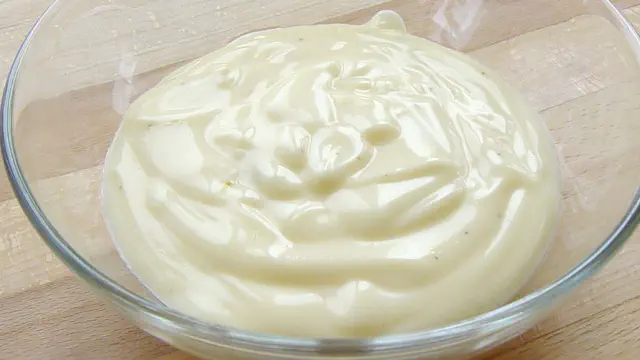
Blender Mayo - Homemade Mayonnaise
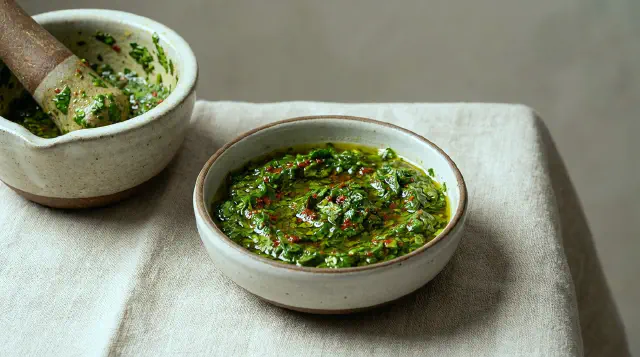
Chermoula (Moroccan Herb Marinade)
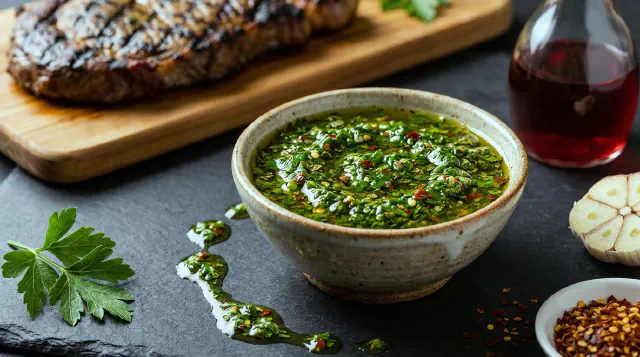
Chimichurri
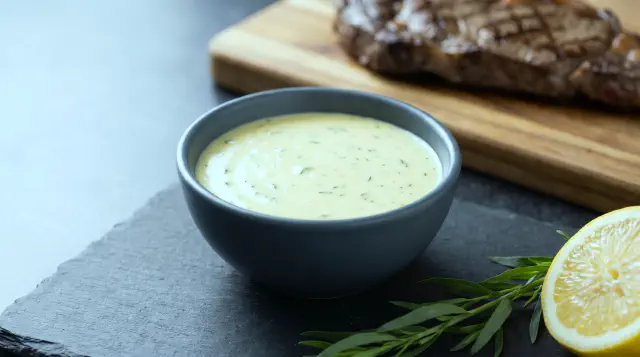
Cold Bearnaise Sauce
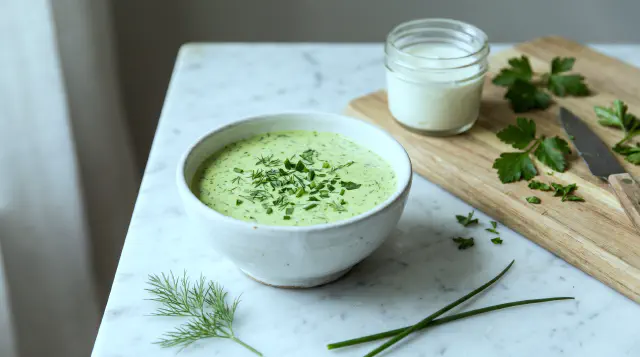
Cold Green Sauce
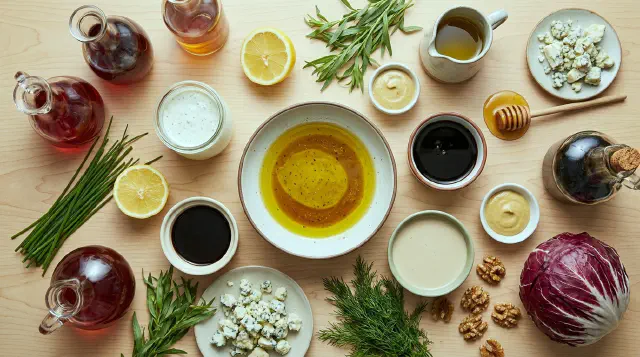
Dressings - The Complete Overview

Fish Sauce - Definitive Guide
Handmade mayonnaise and the rescuing of a separated mayo
Homemade Kewpie-Style Japanese Mayonnaise
Marinades - The Complete Overview
Romesco Sauce
Salsa Verde
Soy Sauce & Tamari - Complete Reference
Tartar Sauce