Carpaccio
Prep 15 min Total 2 hr 15 min
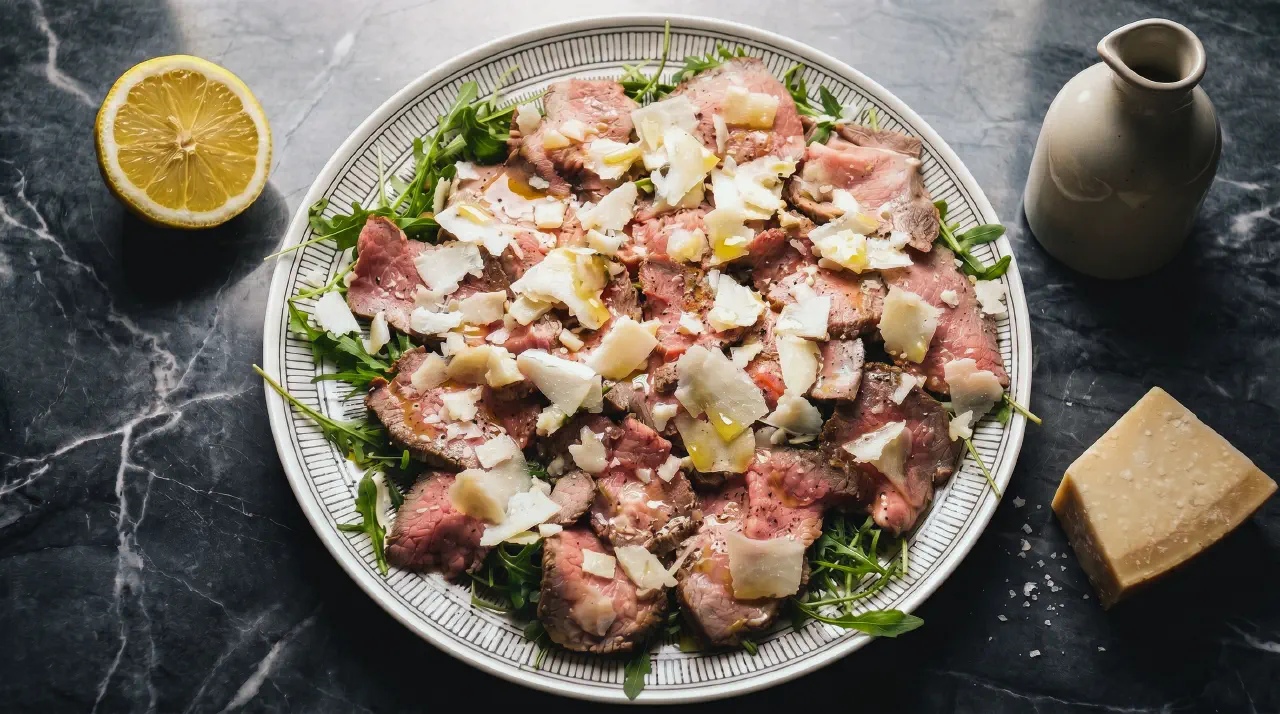
Carpaccio
Carpaccio is thinly pounded raw beef served cold, dressed with olive oil, lemon juice, arugula, and shaved Parmigiano Reggiano or Grana Padano. The beef is the whole point: a good tenderloin, sliced nearly translucent and spread across a cold plate, has a clean, almost sweet flavor that no amount of cooking can replicate.
The dish was invented in 1950 at Harry’s Bar in Venice by owner Giuseppe Cipriani, reportedly for a countess whose doctor had forbidden cooked meat. Cipriani served the beef with a thinned, Worcestershire-seasoned mayonnaise - no arugula, no cheese. He named it after the Venetian Renaissance painter Vittore Carpaccio, whose signature palette of deep reds and whites matched the plate. The arugula-and-Parmesan version came later and is now the standard in Italian restaurants worldwide.
As a starter, carpaccio works well before a pasta or a simply grilled main. It pairs naturally with good bread and a glass of light white wine or an Aperol spritz. The key to making it at home is keeping everything cold - cold beef, cold plates, cold knife - and buying the freshest possible meat from a butcher you trust, since it goes to the table raw.
Ingredients
Serves 4
- 400 g beef tenderloin (or sirloin), well-trimmed
- 60 g arugula
- 40 g Parmigiano Reggiano (or Grana Padano), for shaving
- 3 tbsp extra-virgin olive oil
- 2 tbsp fresh lemon juice
- flaky sea salt, to taste
- black pepper, freshly cracked, to taste
Directions
Wrap the beef tightly in plastic wrap and place in the freezer for 1–2 hours, until firm but not frozen through. Partial freezing makes thin, even slicing much easier at home without a meat slicer.
Remove the beef from the freezer and unwrap. Using your sharpest knife, slice the beef as thinly as possible - aim for 3–5 mm. You should get about 8–10 slices from 400 g.
Lay each slice between two sheets of parchment paper or plastic wrap. Using a meat mallet or rolling pin, pound gently from the center outward until paper-thin. Work each slice separately, then transfer to a plate and refrigerate until ready to serve.
Chill four serving plates in the refrigerator or briefly in the freezer.
Arrange the beef slices on the cold plates, overlapping slightly to cover the surface. Season lightly with flaky salt and cracked pepper.
In a small bowl, toss the arugula with 1 tbsp of the olive oil, a squeeze of lemon juice, and a pinch of salt. Pile loosely over the beef. Use a vegetable peeler to shave the cheese over the top in wide, thin curls. Drizzle with the remaining olive oil and lemon juice.
Serve immediately - the beef discolors quickly once lemon juice is applied.
Notes
Meat quality: Since the beef is served raw, buy the freshest possible meat from a butcher you trust. Ask for tenderloin or sirloin suited for carpaccio or tartare.
Food safety: Keep the beef cold throughout. Assemble only moments before serving and do not refrigerate assembled plates.
Advance prep: The beef can be sliced and pounded a few hours ahead and kept refrigerated between parchment layers. Add the dressing, arugula, and lemon only at the moment of serving.
Cipriani original (mayo version): Skip the arugula and cheese. Whisk 1 egg yolk with a squeeze of lemon juice and a pinch of salt, then slowly drizzle in 120 ml neutral oil while whisking to form a mayonnaise. Season with 1–2 tsp Worcestershire sauce, salt, and white pepper. Thin with a splash of milk until just pourable. Drizzle over the beef in thin streaks.
No meat mallet? The base of a heavy skillet or the bottom of a glass bottle works fine.
See Also
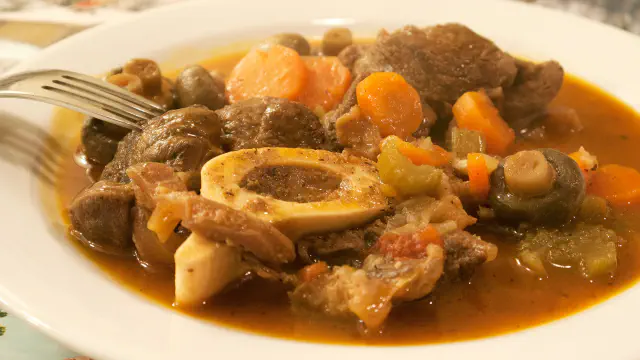
Ossobuco - Classic Italian Preparation of Veal Shank
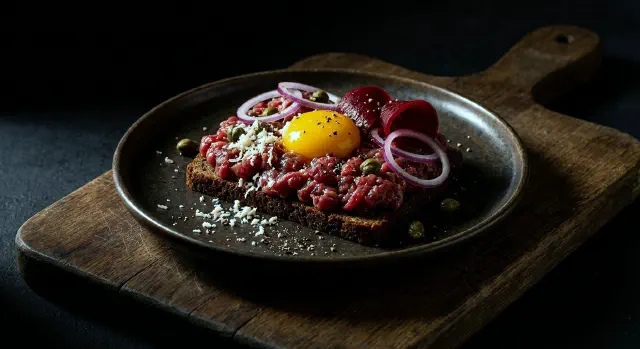
Smørrebrød with Beef Tartare, Raw Egg Yolk and Pickled Beetroot
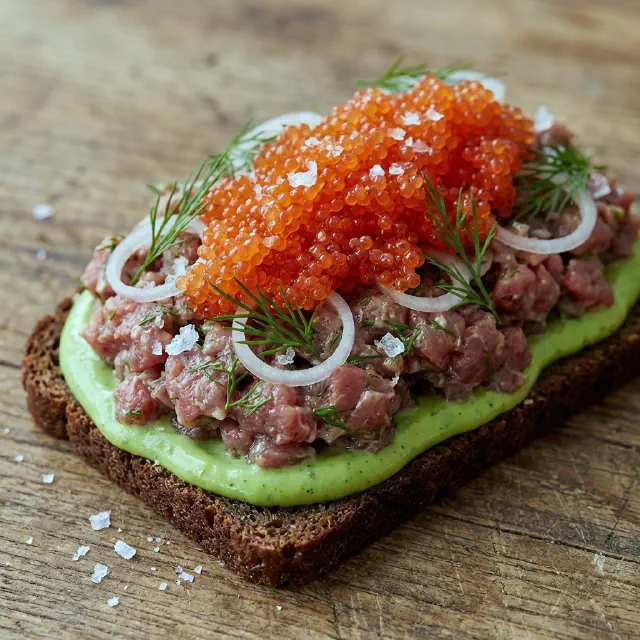
Veal Tartare with Lumpfish Roe and Asparagus Mayo
Steak - Cooking Methods Guide
Steak - Home Cook Guide