Sous Vide Carrots
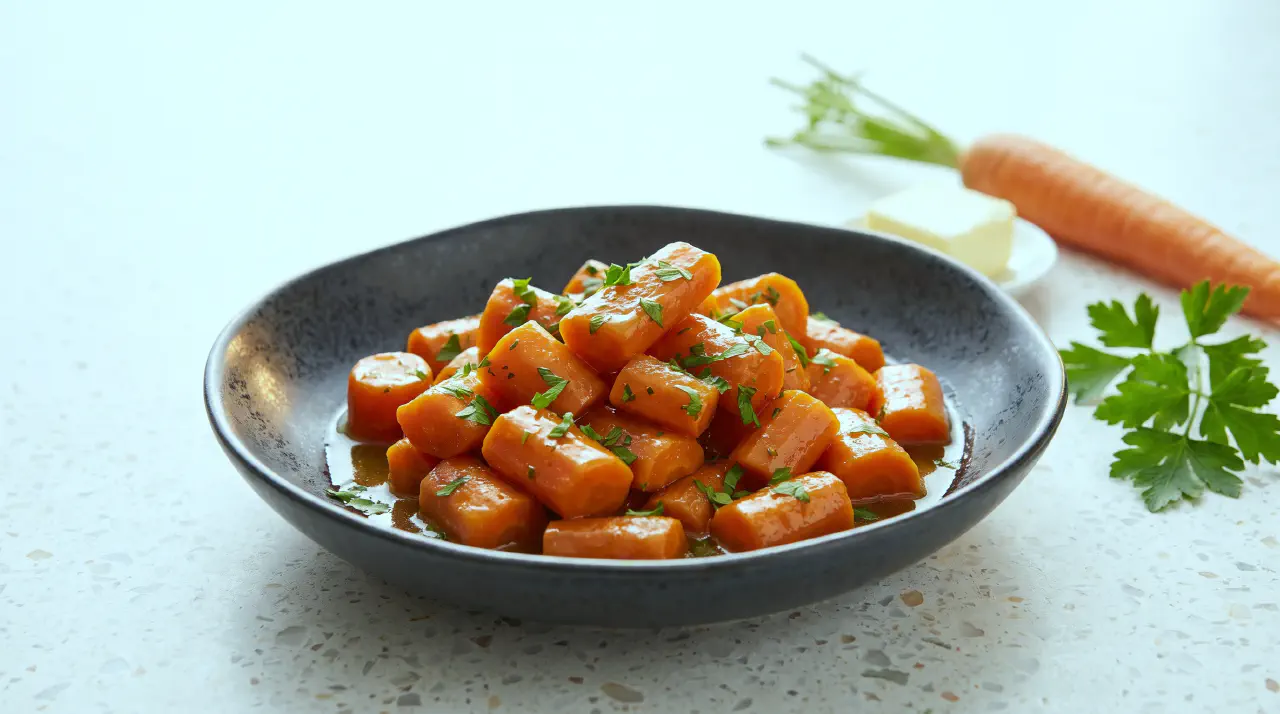
Sous Vide Carrots
Sous vide carrots are peeled carrots sealed in a bag with butter and a little sugar or honey, cooked in a hot water bath until fully tender, then finished by reducing the bag’s own liquid into a glossy glaze in a hot skillet. It’s the same butter-glazed carrot side found on countless dinner tables, just cooked with more precision than boiling or roasting allows.
The bag holds everything the carrots need: butter as the fat, sugar or honey for a little sweetness, and salt, all sealed in with the carrots so they cook directly in that liquid rather than being tossed with it afterward. Cut size matters more than exact ingredient ratios - baby carrots can go in whole, but larger carrots should be cut into even chunks so every piece finishes at the same time.
The water bath runs far hotter than it would for meat or fish, into the low 180s°F, well above any protein temperature, because carrots need that heat to break down pectin and turn tender rather than staying crunchy. Since the water never boils, the carrots keep their color and shape the whole time, and there’s little risk of the mushy texture that comes from overcooking on the stovetop.
The finishing step is what separates this from plain boiled carrots in a bag: emptying the bag into a hot skillet and reducing the liquid to a shiny glaze that coats every piece. It’s a fast last step, just a few minutes of stirring, and it’s what turns the buttery cooking liquid sweet and lightly caramelized, richer than plain boiled carrots but without the char of roasting.
Serve it alongside roast chicken, a weeknight steak, or as part of a holiday spread. It’s an easy, mostly hands-off side that can be cooked ahead and finished right before serving.
Ingredients
Serves 4
- 450 g carrots, peeled and cut into 2.5 cm chunks (or baby carrots, left whole)
- 30 g unsalted butter
- 12 g granulated sugar (or 21 g honey)
- 3 g kosher salt, plus more to taste
- black pepper, freshly ground, to taste
- 4 g fresh parsley, chopped, for garnish (optional)
Directions
Preheat a sous vide water bath to 183°F (84°C).
Peel the carrots. Leave baby carrots whole; cut larger carrots into even 1-inch (2.5 cm) chunks so every piece cooks at the same rate.
Combine the carrots, butter, sugar (or honey), salt, and a few grinds of black pepper in a vacuum bag or a zip-top bag. Spread everything into a single, even layer no more than about 1 inch (2.5 cm) thick, then seal it, either with a vacuum sealer or using the water displacement method for a zip-top bag.
Submerge the bag in the water bath and cook for 1 hour, until the carrots are fully tender when pressed through the bag. The carrots are forgiving of extra time in the bath, so there’s no harm in leaving them longer while other dishes come together.
Empty the whole bag, carrots and all the buttery liquid, into a wide skillet set over high heat. Cook, stirring or swirling constantly, until the liquid reduces to a shiny glaze that coats the carrots, 2 to 10 minutes depending on how much liquid there is.
Season to taste with salt and pepper, stir in the parsley, and serve right away. If the glaze looks greasy or breaks, add a teaspoon of water while shaking the pan to bring it back together.
Notes
Cut size decides cook time more than anything else. Baby carrots left whole, or thin 1-inch (2.5 cm) chunks, are fully tender at around 45 minutes; larger 2-inch (5 cm) pieces need closer to the full hour. Keeping the pieces uniform matters more than the exact size, since mixed thick and thin chunks in the same bag cook unevenly.
Vegetables need a much hotter water bath than meat or fish, 183–185°F (84–85°C), versus roughly 130–160°F (54–71°C) for most proteins, because that heat is what breaks down pectin and gelatinizes starch. Below it, carrots stay crunchy no matter how long they sit in the bath.
The bag can go straight into the refrigerator after cooking, still sealed, for up to a week; finish it with the skillet glaze whenever you’re ready to serve.
Honey can replace the sugar for a different glaze character. If using salted butter instead of unsalted, skip or reduce the added salt. The same time and method work for other root vegetables, including parsnips, turnips, radishes, and pearl onions.
See Also
Air Fryer Roasted Root Vegetables
Beef Cuvette - Red Meat Sous Vide
Classic Stewed Peas and Carrots
Pork Patties (Karbonader) with Stewed Peas and Carrots