Dulce de Leche
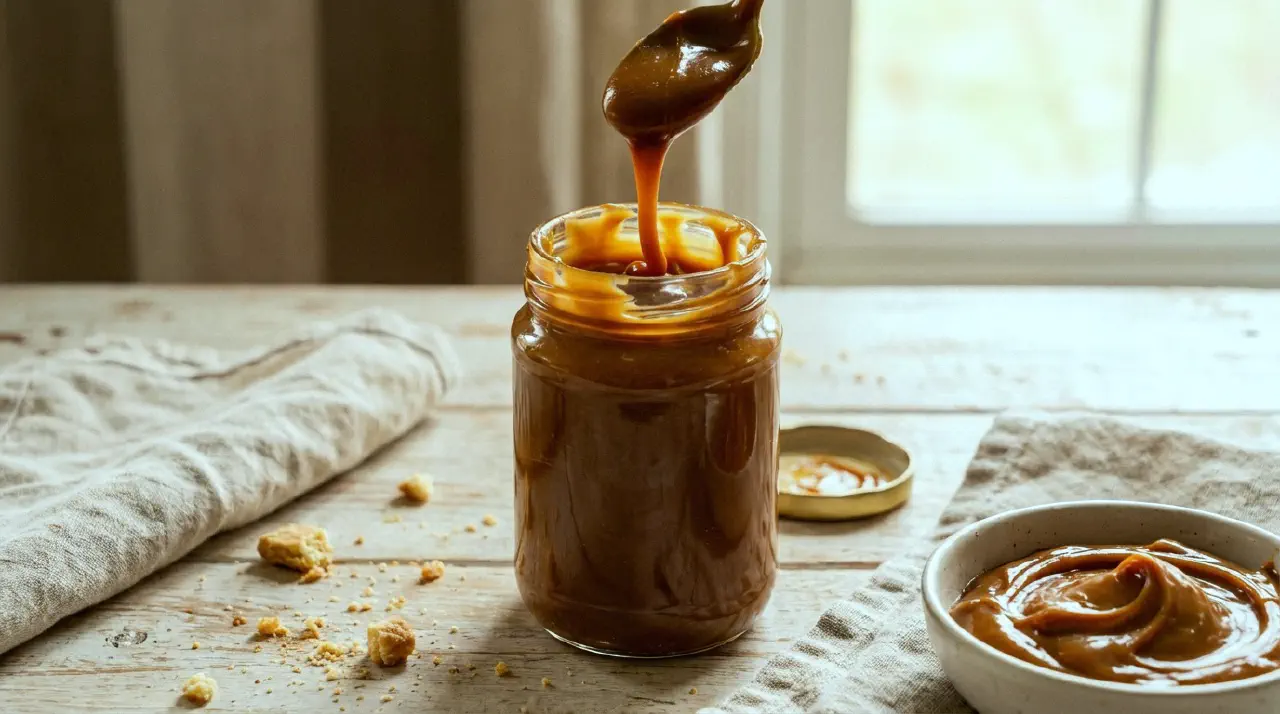
Dulce de Leche - kvalifood.com
Dulce de leche is an Argentine caramel made by slowly cooking milk and sugar until the milk proteins and sugars undergo the Maillard reaction, turning everything a deep amber color. The from-scratch stovetop method is the traditional approach. The condensed milk method is a widely used shortcut that produces a similar result with far less effort. Both versions are included here.
Spread it on toast, pancakes, or crepes, drizzle it over ice cream or flan, or use it as a filling for alfajores, cakes, and churros. In Argentina it is as common as jam or peanut butter.
Method A: From Scratch (Traditional)
Ingredients
Makes ca. 350-400 ml
- 1 L whole milk
- 230 g granulated sugar
- 1/4 tsp baking soda (sodium bicarbonate)
Directions
- Combine the milk, sugar, and baking soda in a large heavy-bottomed pot (at least 4 L capacity - it foams up considerably). Stir to dissolve the sugar.
- Bring to a boil over medium-high heat, stirring constantly.
- Reduce heat to the lowest setting so the mixture barely simmers. A few lazy bubbles breaking the surface is correct.
- Cook for 2.5 to 3 hours, stirring every 10-15 minutes and scraping the bottom and sides of the pot. The mixture will gradually reduce and darken.
- In the final 30 minutes, stir more frequently (every 5 minutes) as the mixture thickens and can scorch. It is done when it coats the back of a spoon and has a deep amber-caramel color.
- Remove from heat. If there are any lumps, blend briefly with an immersion blender.
- Pour into clean jars. The dulce de leche will thicken further as it cools.
Directions
Method A: From Scratch (Traditional)
Ingredients
Makes ca. 350-400 ml
- 1 L whole milk
- 230 g granulated sugar
- 1/4 tsp baking soda (sodium bicarbonate)
Directions
- Combine the milk, sugar, and baking soda in a large heavy-bottomed pot (at least 4 L capacity - it foams up considerably). Stir to dissolve the sugar.
- Bring to a boil over medium-high heat, stirring constantly.
- Reduce heat to the lowest setting so the mixture barely simmers. A few lazy bubbles breaking the surface is correct.
- Cook for 2.5 to 3 hours, stirring every 10-15 minutes and scraping the bottom and sides of the pot. The mixture will gradually reduce and darken.
- In the final 30 minutes, stir more frequently (every 5 minutes) as the mixture thickens and can scorch. It is done when it coats the back of a spoon and has a deep amber-caramel color.
- Remove from heat. If there are any lumps, blend briefly with an immersion blender.
- Pour into clean jars. The dulce de leche will thicken further as it cools.
Notes
- The mixture reduces to roughly a third of its original volume.
- If the final result is too thin after cooling, return to the pot and simmer gently for another 15-20 minutes.
- Do not increase the heat to speed things up - high heat causes graininess and uneven color.
- Store refrigerated, covered, for up to 1 month.
Method B: Condensed Milk (Shortcut)
Ingredients
Makes ca. 300 ml
- 1 can (397 g) sweetened condensed milk
Directions
- Remove the label from the can. Place the unopened can on its side in a large pot.
- Fill the pot with water until the level is at least 5-7 cm (2-3 inches) above the can. Place a lid on the pot.
- Bring to a boil over medium-high heat, then reduce to the lowest simmer.
- Simmer for 2.5 to 3.5 hours depending on desired result: 2.5 hours for a light, pourable caramel sauce; 3 hours for medium spreadable consistency; 3.5 hours for a thick, dark spread.
- Check the water level every 30 minutes. If needed, top up with boiling water from a kettle - never add cold water.
- When the time is up, turn off the heat and leave the can in the water until both reach room temperature. Do not remove the can while hot.
- Once completely cool, open the can and transfer the contents to a jar. Stir until smooth.
Notes
- The can must remain fully submerged at all times. An exposed can is a safety hazard.
- Never open a hot can. The contents are under pressure and will erupt.
- Cooling in the water produces a thicker final product than removing the can to cool on its own.
- This method works with multiple cans - just use a bigger pot and more water.
- Store refrigerated, covered, for up to 1 month. Unopened cooked cans keep refrigerated for several months.
See Also
August 10, 2020
Aji Colombiano (Colombian Hot Sauce)
Aji Colombiano (Colombian Hot Sauce) - kvalifood.com
Aji colombiano is a vinegar-based hot sauce served as a table …
read more
November 18, 2018
Crema de Rocoto
Crema de Rocoto - kvalifood.com
A smooth, creamy rocoto sauce made with queso fresco and evaporated milk. This is the …
read more
January 5, 2020
Leche de Tigre
Leche de Tigre - kvalifood.com
Leche de tigre (“tiger’s milk”) is the seasoned lime juice used to cure …
read more
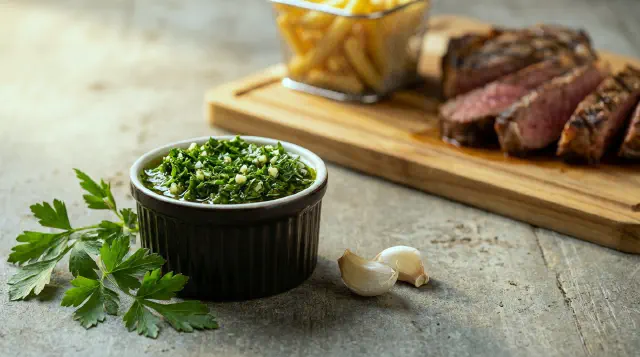
October 20, 2011
Salsa Provenzal
Salsa Provenzal - kvalifood.com
Salsa provenzal is an Argentine condiment made from just three things: fresh parsley, …
read more
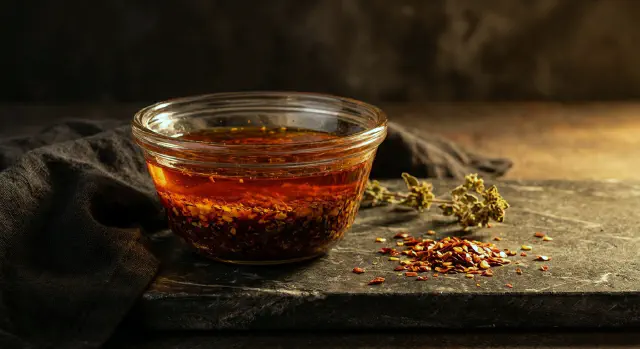
July 30, 2015
Salsa de Aji Molido
Salsa de Aji Molido - kvalifood.com
This is the spiced oil condiment found on every pizzeria table in Argentina. Called …
read more