Homemade Kewpie-Style Japanese Mayonnaise
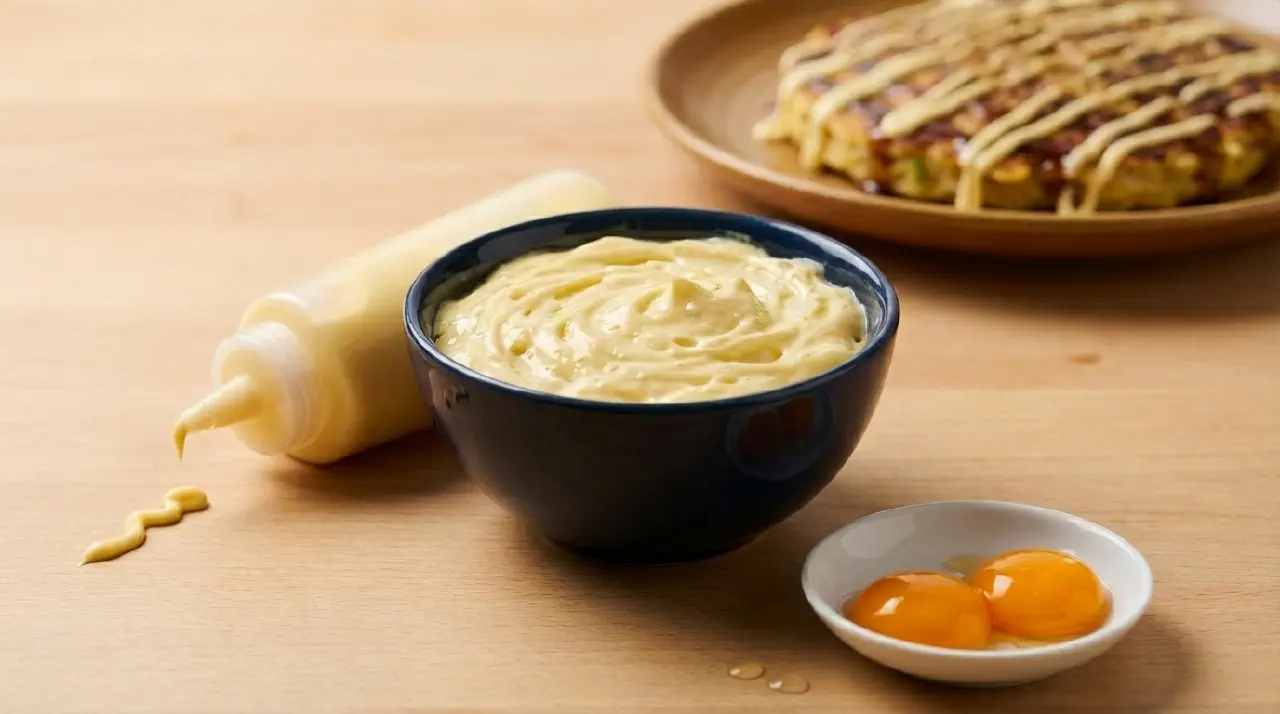
Homemade Kewpie-style Japanese mayonnaise © kvalifood.com
Kewpie mayonnaise stands apart from regular Western mayonnaise in several ways. It uses only egg yolks (no whites), which makes it richer, creamier, and more deeply yellow. The acid is rice vinegar rather than the distilled white vinegar typical in Western brands, giving it a milder, slightly sweeter tang. Umami is a deliberate component - Kewpie achieves this with MSG, while homemade versions often substitute dashi powder. The oil is always neutral (no olive oil), and the overall balance leans toward a smoother, more savory-sweet profile compared to the sharper, simpler taste of something like Hellmann’s.
In Japan, Kewpie mayo is close to a kitchen staple. It shows up on okonomiyaki (savory pancakes) and takoyaki (octopus balls), where it is squeezed on in thin lines and sometimes torched. It is mixed into Japanese potato salad, drizzled over sushi rolls, used as a dipping sauce for fried foods, and squeezed onto rice bowls and bento boxes. It is also a common base for spicy mayo (mixed with sriracha or togarashi). Outside Japan, Kewpie has picked up a following in sandwiches, burgers, poke bowls, and as a general-purpose condiment wherever a richer, more flavorful mayonnaise is wanted.
Ingredients
Yields ca. 250 ml
- 2 egg yolks, pasteurized, at room temperature
- 1 tsp Dijon mustard
- 240 ml neutral oil (canola, grapeseed, or vegetable)
- 2 tbsp rice vinegar, unseasoned
- 1 tsp lemon juice, fresh (optional)
- 0.5 tsp dashi powder (or 1 pinch MSG)
- 1 tsp sugar
- 0.5 tsp kosher salt (or 0.25 tsp fine salt)
- white pepper, pinch (optional)
Directions
Making the emulsion
Place the egg yolks and Dijon mustard in a food processor or blender. Process for about 15-20 seconds until smooth.
With the machine running, begin drizzling in the oil very slowly - a few drops at first, then a thin, steady stream. Add roughly one-third of the oil this way. The mixture should start to thicken and emulsify.
Stop the machine. Add the rice vinegar, lemon juice (if using), dashi powder (or MSG), sugar, salt, and white pepper (if using). Process briefly to combine.
With the machine running again, drizzle in the remaining oil in a slow, steady stream until fully incorporated. The mayonnaise should be thick, smooth, and glossy.
Taste and adjust seasoning - add more salt, sugar, or a squeeze of lemon as needed.
Transfer to a clean jar or squeeze bottle. Refrigerate immediately.
Notes
Oil speed matters. If you add oil too quickly before the emulsion has started, the mayo will break. Go very slowly for the first third of the oil.
Pasteurized yolks are recommended since this is a raw preparation. You can pasteurize at home with an immersion circulator at 135°F (57°C) for 75 minutes, or buy pasteurized eggs.
Storage. Keeps refrigerated in an airtight container for about 4-5 days. Homemade mayo does not keep as long as commercial.
Squeeze bottle. For the classic Kewpie experience, put the mayo in a squeeze bottle and cut a small tip so you can draw thin lines.
Dashi vs. MSG. Dashi powder gives a rounder, more complex umami. MSG gives a cleaner, more direct hit. Either works. If using MSG, about 0.5 ml is enough.
Oil choice. Canola and grapeseed are the most neutral. Avoid extra virgin olive oil, sesame oil, or anything with a strong flavor.
Immersion blender alternative. For smaller batches, put everything in a tall narrow container, add the oil on top, place the immersion blender at the bottom, and blend upward slowly.
See Also
Sambal Oelek