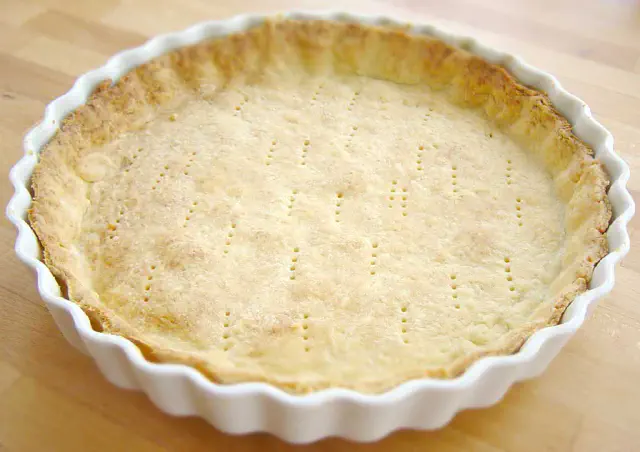
Lemon Tart
Prep 50 min Total 3 hr
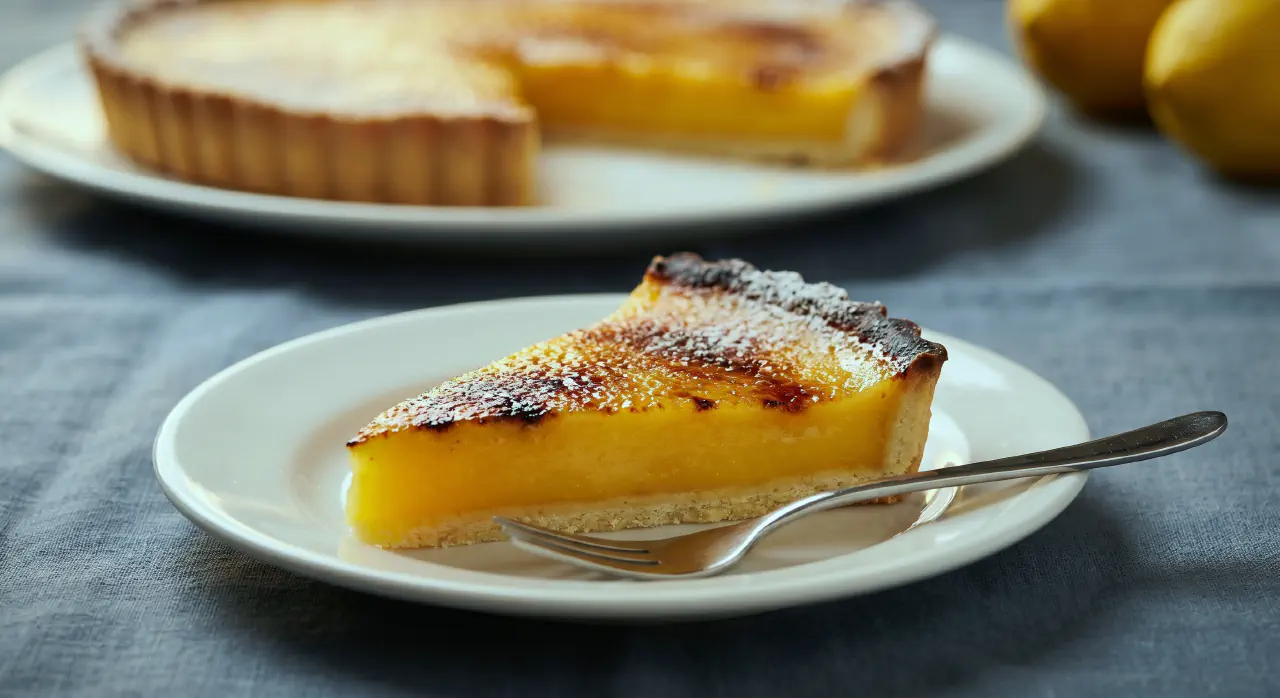
Lemon Tart
A blind-baked shortcrust case filled with a set custard of eggs, double cream, sugar, lemon zest, and lemon juice - finished with a thin layer of caramelised icing sugar.
The lemon tart has a long place in French haute pâtisserie as a dish that looks modest but exposes every technical weakness. Getting the custard right requires low oven temperature, careful timing, and a thermometer - the filling must set to a wobble, not a crack. The caramelised top is the final step and is done tableside or just before serving.
A good dessert for dinner parties and occasions where you want something that holds well. It can be made in stages: the pastry case a day ahead, the curd on the day. Serve at room temperature - cold dulls the flavour - alongside crème fraîche or on its own.
Ingredients
Serves 8
Pie crust
- 150 g flour
- 60 g icing sugar
- 75 g butter, cold, diced
- 30 g egg, beaten (about ½ medium egg)
- ½ tsp vanilla paste
- ½ lemon, zest of
- 1 egg, beaten, for egg wash
Lemon curd
- 12 medium eggs (50-60 g each)
- 600 g caster sugar
- 7 lemons, zest of
- 325 g lemon juice (about 7 lemons)
- 375 g double cream
Caramelization
- icing sugar, for dusting
Directions
Pie crust
Sift the flour and icing sugar into a food processor. Add the butter and blitz until the mixture resembles fine sand. Add the beaten egg, vanilla paste, and lemon zest and pulse briefly until the dough just comes together. Tip out, press into a flat disc, wrap, and refrigerate for at least 30 minutes or overnight.
To make by hand: sieve the flour and icing sugar together. Rub in the butter until the texture is sandy. Make a well in the centre, add the lemon zest, vanilla, and beaten egg, and bring together without overworking. Wrap and chill.
Gluten-free: Use the gluten-free ingredient list - the plain flour is replaced by a mix of gluten-free flour, oat flour, and almond flour (use certified gluten-free oats). This dough is more fragile and short; chill it well, roll between sheets of baking paper, and patch any cracks once it is in the tin.
Preheat the oven to 180°C (fan). Roll the dough out on a lightly floured surface to 3 mm thick. Let it relax for a couple of minutes, then drape it over a 28–30 cm loose-bottomed tart tin. Press into the edges by rolling down to the base and up the sides - avoid stretching the dough or it will pull back during baking. Trim leaving a small overhang. Patch any thin spots with spare dough. Prick the base with a fork. Place in the freezer for 15 minutes.
Line the frozen case with oven-safe cling film or parchment and fill with baking beans. Blind bake for 15 minutes. Remove the beans and lining and bake for a further 6–8 minutes until the base is set and has a little colour. Brush all over with beaten egg. Return to the oven for 3 minutes to seal the wash. Drop the oven temperature to 120°C.
Lemon curd
Gently mix the eggs, cream, sugar, and lemon zest together - do not whisk in air. Pass through a sieve. Stir in the lemon juice.
Place the tart case on an oven rack, making sure it is level. Pour in the lemon filling slowly. Burst any surface bubbles with a blowtorch or the tip of a skewer. Bake at 120°C until a probe thermometer reads 70°C at the centre and the tart has a clear wobble - the whole surface should move as a unit when you nudge the rack. This takes roughly 30–40 minutes. Remove from the oven and leave to cool at room temperature for at least 1 hour before slicing. Do not refrigerate while still warm.
Caramelization
Just before serving, dust the surface with a thin, even layer of icing sugar - about 1 mm. Caramelise with a blowtorch or under a hot grill.
Notes
Both the pastry dough and the unfilled custard base freeze well. Roll pastry straight from frozen, blind bake, fill, and cook from fresh - a good way to make a tart quickly once you have the components in stock.
If you do not have a probe thermometer, look for a wobble that moves the whole tart as a single piece, like a set pannacotta. A custard that ripples from the centre outward needs more time.
Double cream is the right choice here. Heavy cream works as a substitute if double cream is unavailable.
See Also
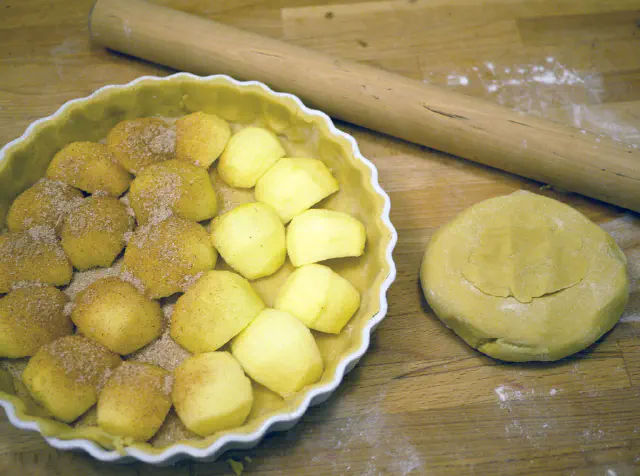
Apple Tart
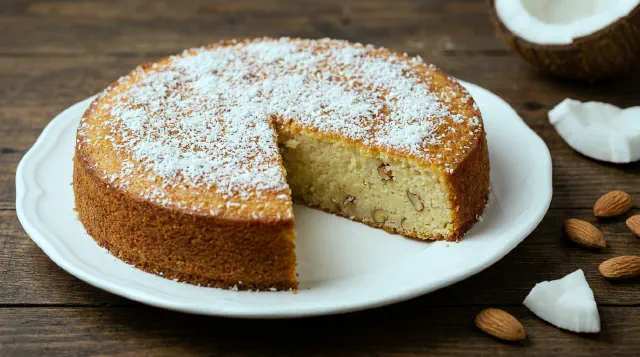
Coconut Tart
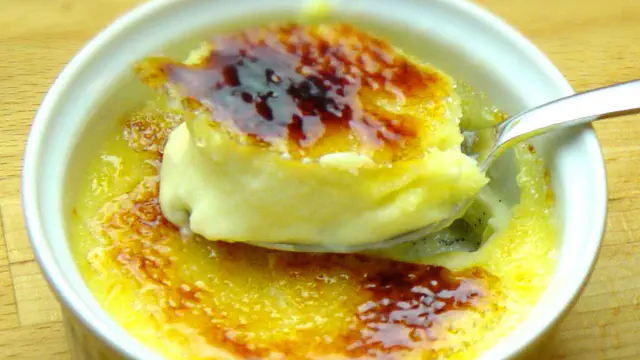
Crème brûlée
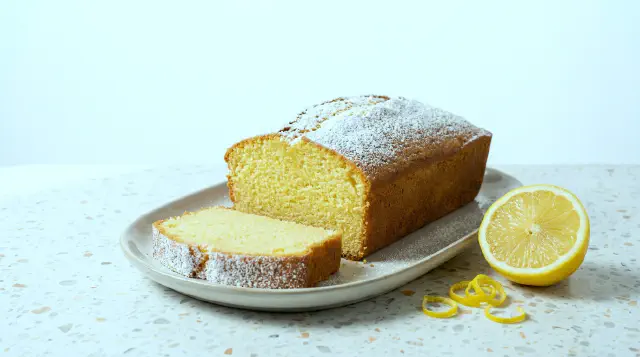
Lemon Cake
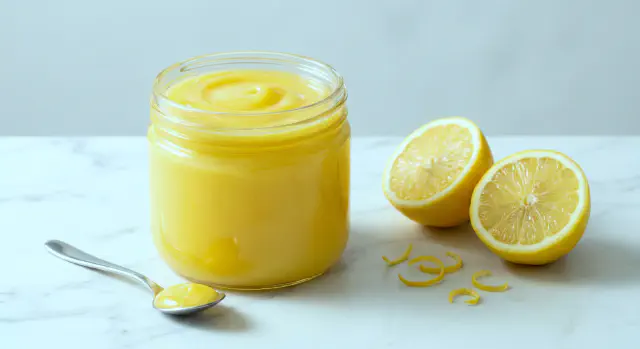
Lemon Curd
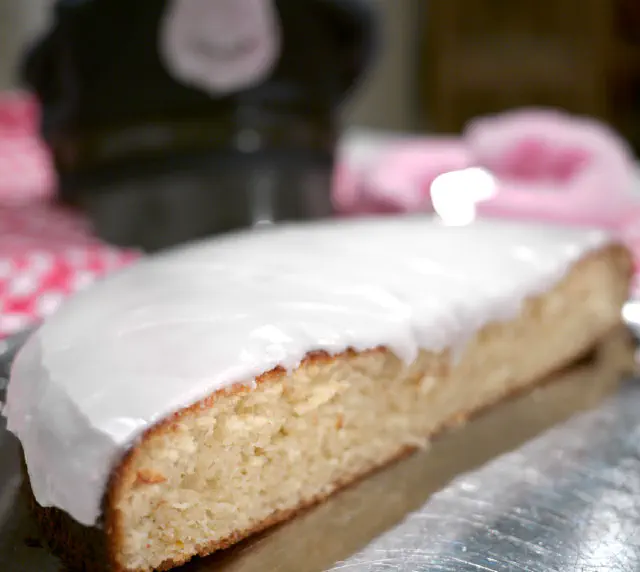
Lemon Moon - Citrus Moon - Danish 'Citronmåne'
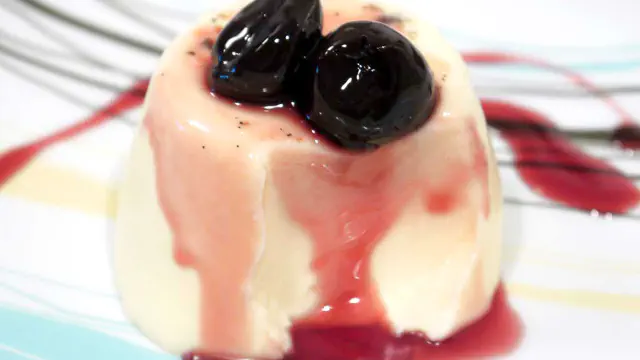
Panna Cotta - Italian vanilla pudding