Sous Vide Mushrooms
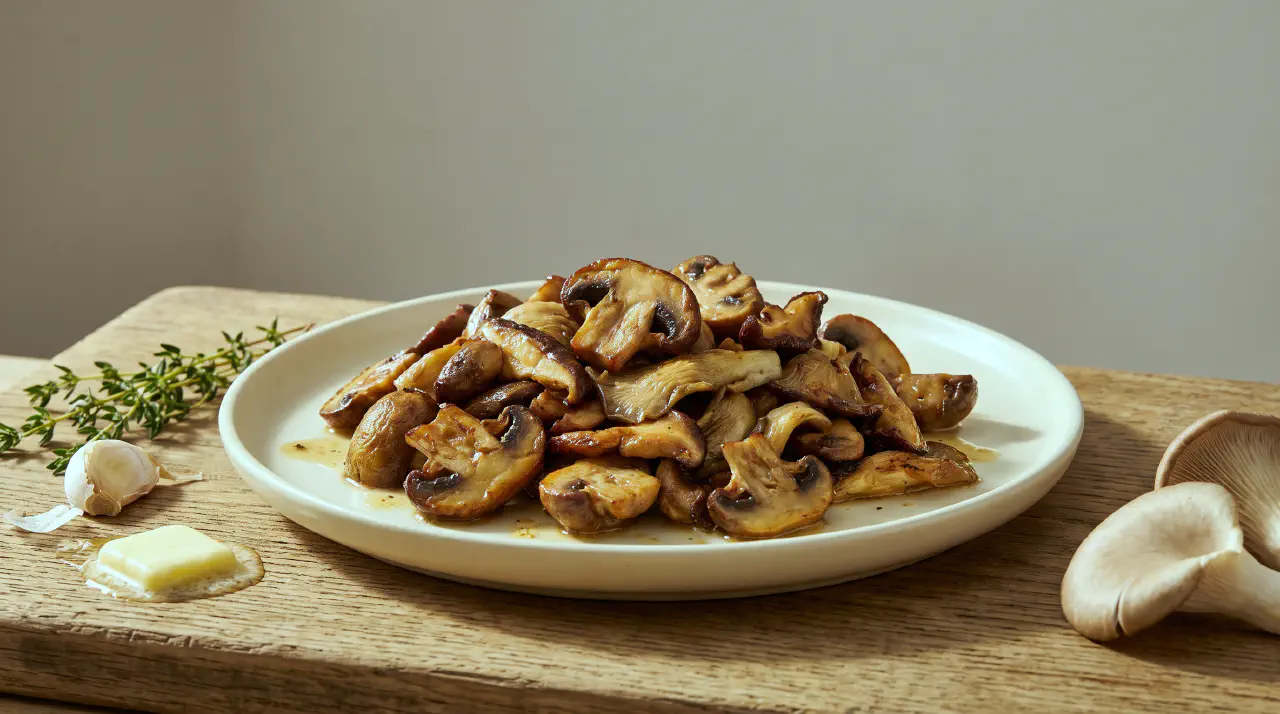
Sous Vide Mushrooms
Mushrooms are mostly water held together by a fungal, sponge-like structure, nothing like the dense plant tissue of a carrot or a potato. That is exactly why they are so easy to overcook in a hot pan: a few seconds past done and they collapse from firm to rubbery, or worse, dump so much moisture that they steam instead of brown. A water bath sidesteps the whole problem. Held at one exact temperature, the mushrooms firm up gently and evenly, with no risk of the pan running away from you.
The bath itself does no browning at all, so every source that wants color and a real seared edge treats it as a two-step job: cook first in the bag, then finish hot and fast in butter. In the bag, the mushrooms go in raw with fat and an aromatic, usually garlic and a sprig of thyme, and they release a surprising amount of their own liquid as they cook. That liquid is concentrated mushroom stock, worth keeping rather than pouring down the drain, and it carries the same deep, savory, faintly earthy flavor the sear later builds on. The one real quirk of this dish is that mushrooms float: being full of trapped air, they will not stay submerged on their own, and a full-strength vacuum seal can crush them flat before they even hit the water, so a gentler seal and a weight on the bag both matter here in a way they don’t for denser vegetables.
Sous vide is a modern precision technique, developed in restaurant kitchens and made practical at home once immersion circulators got affordable, and it doesn’t belong to any one cuisine. Mushrooms, by contrast, are about as universal an ingredient as exists in cooking, and the two pair well simply because the method removes the guesswork from an ingredient that punishes overcooking more than most.
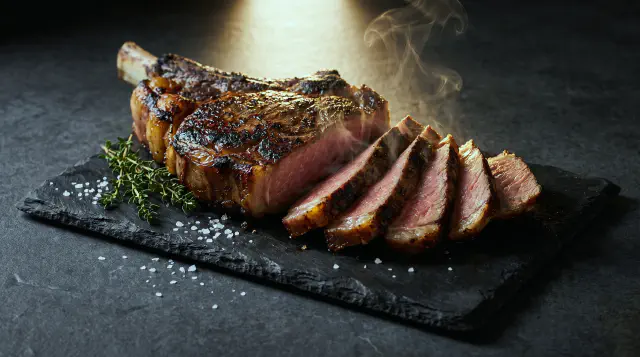
Serve the seared mushrooms hot as a side, spoon them over steak or pasta, or fold the reserved cooking liquid back into the pan as a fast sauce. The technique scales just as easily down to a light garnish as up to a whole-mushroom main.
Ingredients
Serves 4
- 450 g mixed cooking mushrooms (cremini, button, shiitake and/or oyster), stems trimmed, torn into large bite-size pieces
- 28 g unsalted butter, cubed (or olive oil), for the bag
- 2 garlic cloves, smashed
- 2-3 sprigs fresh thyme (or fresh tarragon)
- 15 ml soy sauce, for the bag, optional
- 1/2 tsp kosher salt
- 1/4 tsp black pepper, freshly ground
- 14 g unsalted butter, for searing
- 1 splash balsamic vinegar, for the pan sauce, optional
Directions
Trim the tough stem ends and wipe the mushrooms clean of grit rather than rinsing them, since they act like a sponge and soak up running water. Tear or cut them into large, even, bite-size pieces so they cook at the same rate.
Preheat the water bath to 185°F (85°C).
Arrange the mushrooms in a single layer in a vacuum-seal bag or a zip-top freezer bag with the butter or oil, garlic, thyme, soy sauce if using, salt, and pepper. If sealing with a chamber vacuum, use its gentle or moist-food setting rather than full strength, since mushrooms are full of air and a hard vacuum will crush them flat; a zip-top bag sealed by water displacement works just as well. Add a sous vide weight or clip the bag to the side of the container, because mushrooms float and won’t stay under on their own.
Submerge the bag and cook for 30 minutes.
Lift out the bag and pour off the liquid into a small bowl rather than discarding it. It is concentrated mushroom stock, and it’s worth keeping for the pan.
Pat the mushrooms very dry, which matters more than usual here since any surface moisture stops them from browning. Heat the finishing butter in a hot skillet until it foams, then add the mushrooms in a single layer and sear them mostly undisturbed, basting with the butter, until deeply golden in spots, 3 to 5 minutes.
For a quick pan sauce, deglaze the same skillet with the reserved cooking liquid and the splash of vinegar, let it bubble down for a minute, then toss the mushrooms back through to coat. Season to taste and serve hot.
Notes
Whole or large, dense mushrooms, a whole king oyster stem or a whole portobello cap, need far longer than chopped pieces: 60 to 90 minutes, sometimes at a slightly lower 158-170°F (70-77°C), so the center cooks through before the outside overcooks. Compression and floating both matter even more at this size, since a larger piece has more surface for a vacuum seal to crush and more air to make it float.
Mushrooms don’t need a specific temperature threshold to turn tender the way fibrous vegetables like asparagus or carrots do; they are already soft going in, since their cell walls are chitin-based rather than the pectin-rich plant fiber that needs heat to break down. The 176-185°F (80-85°C) range here is chosen to firm the texture slightly and concentrate flavor by driving off some moisture, not to cross a hard softening point, which is why the workable temperature band for mushrooms is wider than for most sous vide vegetables.
There’s no food-safety hold time to worry about at these temperatures. The bath is chosen entirely for texture and flavor, the same as with other sous vide vegetables.
This method scales down easily to a light garnish, 2 to 3 ounces of mushrooms per serving as a topping for steak or pasta, or up to a whole-mushroom entree portion using one or two large portobello or king oyster pieces per serving, adjusting the bath time for size as above.
See Also
Air Fryer Mushrooms
Beef Cuvette - Red Meat Sous Vide
Mushroom Sauce
Mushroom Soup