Chinese Sweet and Sour Sauce (糖醋汁)
Prep 5 min Total 15 min
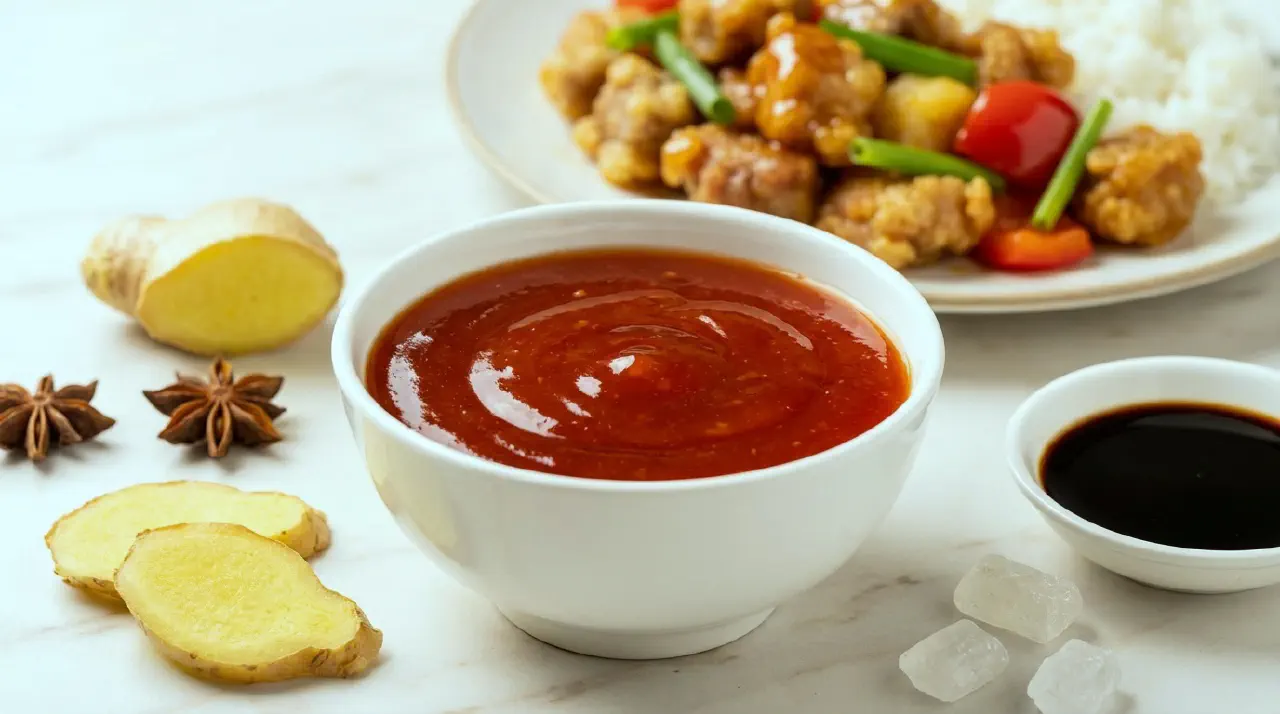
Chinese Sweet and Sour Sauce (糖醋汁) - kvalifood.com
Chinese sweet and sour sauce (tangcu) is built on the sugar-vinegar balance that defines one of Chinese cooking’s fundamental flavor profiles. This version uses Chinkiang black vinegar for depth, a small amount of caramelized tomato paste for color, and Shaoxing wine. It works as a dipping sauce or coating for fried proteins.
Makes ca. 350 mL / about 1.5 cups, enough for 4-6 servings
Ingredients
Aromatics
- 1 tbsp neutral oil (15 mL)
- 2 thin slices fresh ginger (~5 g)
- 1 whole star anise
Sauce
- 1.5 tbsp tomato paste (25 g)
- 100 g sugar (granulated or rock sugar, crushed)
- 120 mL Chinkiang (Zhenjiang) black vinegar
- 120 mL water
- 1 tbsp light soy sauce (15 mL)
- 1 tbsp Shaoxing wine (15 mL)
Thickener (for dipping sauce consistency)
- 1 tbsp cornstarch (8 g) mixed with 2 tbsp cold water (30 mL)
Directions
Heat the oil in a small saucepan over medium-low heat. Add the ginger slices and star anise. Cook until the ginger begins to turn golden, about 1 minute.
Add the tomato paste. Stir constantly for 1-2 minutes until it darkens slightly and smells caramelized. This step builds depth – do not skip it.
Add the sugar, Chinkiang vinegar, water, soy sauce, and Shaoxing wine. Stir to dissolve the sugar. Bring to a gentle simmer.
Simmer on low heat for 8-10 minutes, stirring occasionally, until the sauce lightly coats the back of a spoon. Remove and discard the ginger slices and star anise.
For dipping sauce: Stir the cornstarch slurry and pour it in slowly while stirring. Simmer 1 more minute until the sauce thickens to your preferred consistency. You may not need all of the slurry.
For coating fried foods: Skip the cornstarch. Instead, continue reducing the sauce until it reaches a light syrup consistency. Toss fried pork, chicken, or fish in the hot sauce just before serving.
Notes
- Vinegar: Chinkiang (镇江香醋) is essential. It has a malty, complex sourness that rice vinegar and white vinegar cannot replicate. Available at any Asian grocery store. If truly unavailable, use a 3:1 mix of rice vinegar and balsamic vinegar as an approximation.
- Sugar: Rock sugar (冰糖) gives a cleaner sweetness and better gloss, but granulated white sugar works well. Avoid brown sugar – it competes with the Chinkiang vinegar’s natural depth.
- Tomato paste: Used here sparingly for color and umami, not as the base of the sauce. The sauce should taste of vinegar and caramel, not tomato. If you prefer the fully traditional tangcu style (no tomato), simply omit it and increase the soy sauce to 2 tbsp.
- Sugar:vinegar ratio: This recipe uses roughly 1:1.2 by weight (100 g sugar to 120 mL vinegar). This is slightly tart, in line with the traditional Chinese balance rather than the sweeter Western versions. Adjust to taste.
- Storage: Keeps refrigerated for 2 weeks. Reheat gently before serving. If using cornstarch-thickened version, the sauce may thin slightly when reheated – add a small amount of fresh slurry if needed.
- Scaling for stir-fry use: For a quick stir-fry sauce (not standalone), halve the recipe and skip the simmering step. Just mix the sauce ingredients, pour into the wok, and thicken with cornstarch.