Tucupi
Prep 1 hr 30 min Total 19 hr 35 min
Tucupi - kvalifood.com
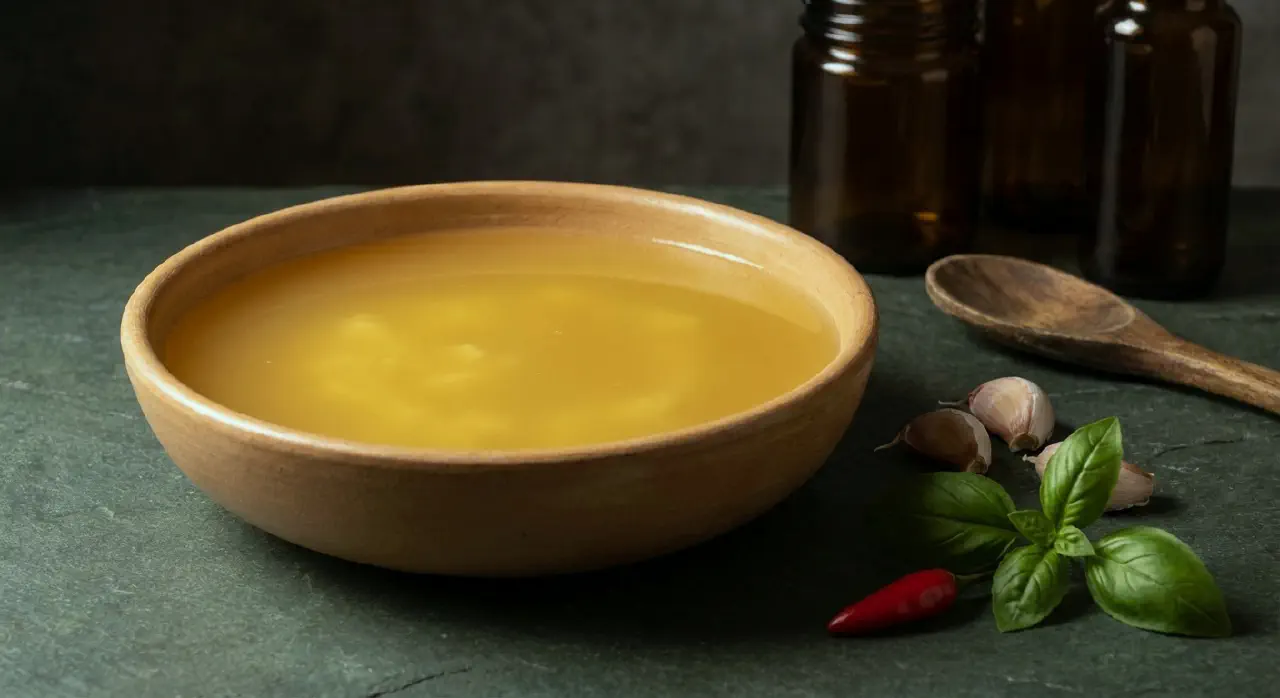
Tucupi is a fermented, boiled liquid extracted from bitter cassava, used as a broth and braising liquid in Amazonian cooking. It comes from Para state in northern Brazil, where it is the base for dishes like Pato no Tucupi (duck braised in tucupi) and Tacaca (soup with dried shrimp and jambu leaves). The process takes 2-3 days: grate the cassava, extract the liquid, let the starch settle, ferment the yellow liquid, then boil it thoroughly to eliminate cyanide compounds. Raw tucupi is poisonous - the boiling step is not optional.
Ingredients
Makes ca. 1 liter
- 3 kg cassava (bitter variety, mandioca brava or yuca brava), peeled and chopped
- 1 L water
- 2 garlic cloves (~10 g), lightly crushed
- 1 small bunch chicory (chicoria do Para), roughly chopped
- 4-5 sprigs alfavaca (Amazonian basil, Ocimum campechianum - or Thai basil as closest substitute)
- 1 pimenta-de-cheiro (fragrant pepper - or habanero/scotch bonnet), kept whole
- salt, to taste
Directions
Extraction:
Working in batches, blend the chopped cassava with the water in a powerful blender until smooth. Use just enough water to allow blending - roughly 1 liter total across all batches.
Strain each batch through a fine cotton cloth or muslin, squeezing and wringing thoroughly to extract all liquid. The goal is a milky white liquid. Discard the fibrous pulp or reserve for other uses.
Settling:
Pour the milky liquid into a tall, clear glass container. Cover loosely and leave undisturbed for 4-6 hours. White starch will settle to the bottom; a yellow liquid will sit on top.
Carefully pour or siphon off the yellow liquid into a separate container, leaving the starch behind. The settled starch is tapioca/goma - dry it for later use or discard.
Fermentation:
Cover the yellow liquid with a clean cloth and leave at room temperature for 12-24 hours minimum. The liquid will develop a sour, slightly funky aroma. Longer fermentation (up to 2-3 days) produces a more acidic, complex tucupi.
Cooking (safety-critical):
Transfer the fermented liquid to a saucepan. Bring to a boil over medium-high heat.
Boil uncovered for 20 minutes - this is the critical step that eliminates hydrocyanic acid.
Add the garlic, chicory, alfavaca, pimenta-de-cheiro, and salt. Continue boiling for another 15-20 minutes (total boiling time: 35-40 minutes).
Strain through a fine sieve. Discard the aromatics.
Cool to room temperature, then refrigerate.
Notes
- Do not taste or use the liquid before the full boiling period. Raw tucupi contains cyanide compounds that are only eliminated by sustained boiling.
- Keeps refrigerated in a sealed container for up to one week. The liquid continues to ferment slowly, so leave lids slightly loose or burp containers daily.
- Bitter cassava can be difficult to source outside the Amazon. Some Latin American or African grocery stores carry it. There is no adequate substitute - sweet cassava does not produce true tucupi.
- Traditional uses: Pato no Tucupi (duck in tucupi with jambu leaves), Tacaca (soup with tucupi, dried shrimp, jambu, and tapioca starch), or as a braising liquid for fish.
See Also
Aji Amarillo Paste
Aji Colombiano (Colombian Hot Sauce)
Crema de Rocoto
Leche de Tigre