Legumes
Legumes
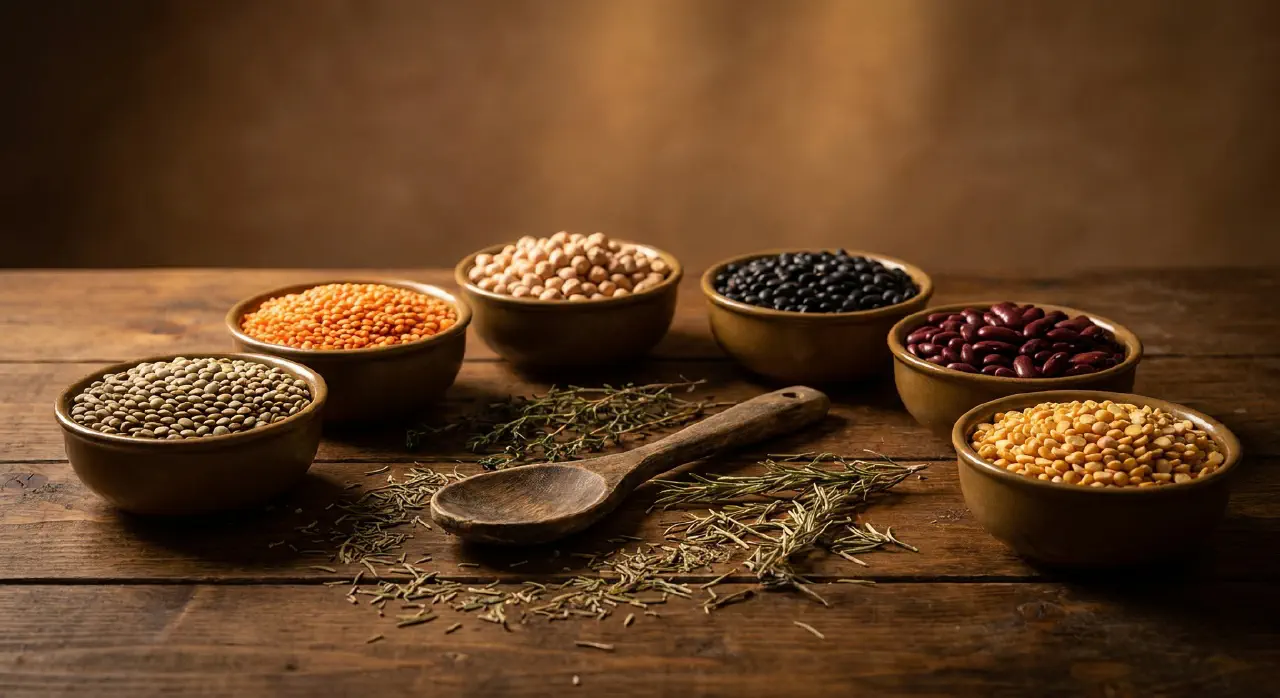
The second most important plant family in the human diet (after grasses), legumes owe their protein power to a symbiosis: soil bacteria (Rhizobium) colonize the roots and convert atmospheric nitrogen into plant-usable form, allowing legumes to accumulate 2–3× the protein of wheat or rice. Four legumes were so prominent in ancient Rome that they gave names to distinguished families — Fabius (fava), Lentulus (lentil), Piso (pea), and the most celebrated, Cicero (chickpea).
Plant Color
Plant Color

Plant pigments fall into four families, each with different chemistry, different locations in the cell, and different responses to cooking. Understanding these four families — and the enzymatic browning reaction that cuts across all of them — explains nearly every color change that happens between the garden and the plate.
The four pigment families
Chlorophyll (green)
The most abundant pigment on earth, responsible for harvesting solar energy in photosynthesis. Two forms exist: chlorophyll a (bright blue-green, dominant at 3:1 ratio) and chlorophyll b (more muted olive). Both sit in chloroplast membranes, anchored by a fat-soluble carbon tail, with a water-soluble ring structure centered on a magnesium atom — structurally similar to the iron-centered ring in myoglobin.