Meat Flavor
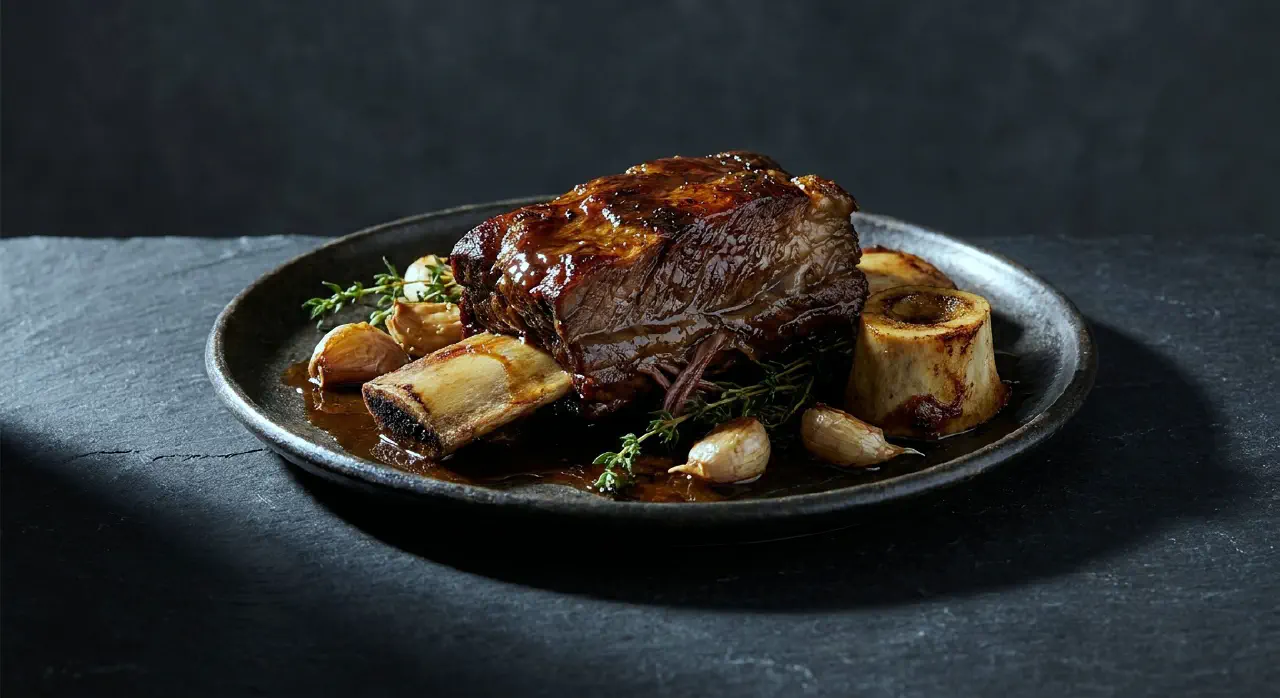
Meat flavor has two distinct components: a generic “meatiness” that comes from muscle fiber breakdown products (shared across all animals), and a species-specific character that comes almost entirely from fat. Understanding both requires understanding myoglobin, fiber types, and the chemistry of cooking.
Myoglobin and color
Myoglobin is the iron-containing pigment that gives meat its color. It exists in three forms:
Oxymyoglobin (bright red): iron atom bound to oxygen. This is what you see when fresh meat “blooms” on exposure to air.
Deoxymyoglobin (dark purple): iron without oxygen. The color of meat interiors and vacuum-packed meat.
Metmyoglobin (brown): iron oxidized, can no longer hold oxygen. Forms from prolonged light exposure, freezing, or cooking.
Color during cooking
Color changes track protein-denaturation but in a surprising sequence. At ~120°F/50°C, myosin (not myoglobin) denatures first, creating opacity - the meat lightens from red to pink even before the pigment itself changes. Myoglobin begins denaturing at ~140°F/60°C into hemichrome (tan). By ~160°F/70°C, most myoglobin is fully denatured and the meat turns brown-gray.
When color lies
Color is unreliable as a doneness indicator in several common situations:
Slow-cooked meat stays pink at 160°F+. When meat heats very gradually, other proteins denature before myoglobin becomes vulnerable. By the time myoglobin denatures, few proteins remain to react with it - so it stays intact and red. This explains pink pot roast, barbecue, and confit.
Gas and wood combustion create permanent pink rings. Nitrogen dioxide from fuel combustion dissolves at the meat surface, converts to nitric oxide, and reacts with myoglobin to form the exact same stable pink molecule found in nitrite-cured meats. The pink ring 8–10 mm deep on grilled meat is literally cured meat chemistry.
Pre-frozen meat looks brown before cooking. Freezing can denature myoglobin, making raw meat appear cooked. Always use a thermometer for safety.
The flavor of action: muscle fiber type
Well-exercised red-fiber muscles are more flavorful than pale white-fiber muscles. Red fibers carry more flavor precursors (fat droplets, cytochrome-containing membranes) and more flavor-generating machinery (iron atoms that catalyze reactions, oxygen that participates in them, enzymes that convert fat to energy).
This is why chicken leg is more flavorful than breast, why beef cheek (exclusively red fibers) is intensely savory, and why duck breast (80% red fibers) eats more like beef than like chicken. Brillat-Savarin recognized this ~200 years ago, mocking gourmets who claimed to detect which leg a sleeping pheasant rested on.
The flavor of the tribe: species-specific fat
Fat tissue is storage tissue - its contents vary by species, diet, and gut microbes. When heated, fat molecules transform into characteristic aromatic compounds:
Beef: “Cowy” flavor from forage plant compounds. Grass-fed beef is stronger-tasting (rumen microbes convert chlorophyll into terpenes - aroma relatives of herbs and spices). Grain-fed is milder but with a deeper “beefy” character.
Lamb: Branched-chain fatty acids from rumen microbes, plus thymol (a thyme-like aroma). Flavor compounds accumulate in fat with age - this is why mutton has a stronger character than young lamb.
Pork: “Piggy” character from intestinal microbes and amino acid metabolism. The perceived “sweetness” comes from lactones - the same compounds found in coconut and peach.
Duck: Gamy flavor from intestinal microbes and fat-soluble metabolism products.
Grass-fed vs grain-fed
The feeding regime shapes fat composition and therefore flavor. Grass and forage feeding produces stronger-tasting meat from odorous plant substances, reactive polyunsaturated fatty acids, and chlorophyll-derived terpenes. Skatole (a manure-smelling compound) is present but contributes to the overall character. Grain finishing for 1+ months before slaughter produces milder meat with less skatole.
Flavor compounds accumulate in fat with age - older animals taste stronger regardless of diet.
Cooking and flavor development
Raw meat is tasty (salts, savory amino acids, slight acidity) but not particularly flavorful - it has minimal aroma. Cooking transforms it through three escalating phases:
Lightly cooked (rare): Physical damage releases fluids. Maximum juice flow, minimal chemical change.
Moderately cooked: Cell molecules break apart and recombine into hundreds of aromatic compounds - esters, ketones, aldehydes producing fruity, floral, nutty, and grassy notes. IMP (inosine monophosphate, intensely savory) is released from ATP breakdown.
High-temperature surface browning: Once the surface dries and exceeds 212°F/100°C, the Maillard reaction takes over, producing hundreds of additional aromatic compounds - generic “roasted” character plus oniony, spicy, and earthy notes. This is the most flavor-intense cooking regime.
See also
- meat - structure, fibers, collagen, and the cooking contradiction
- meat-cooking - the practical implications of flavor science
- meat-aging - how enzymatic breakdown concentrates flavor over time
- maillard-reaction - the browning chemistry that generates surface flavor
- meat-curing - how preservation transforms flavor over months