Cheese
Cheese
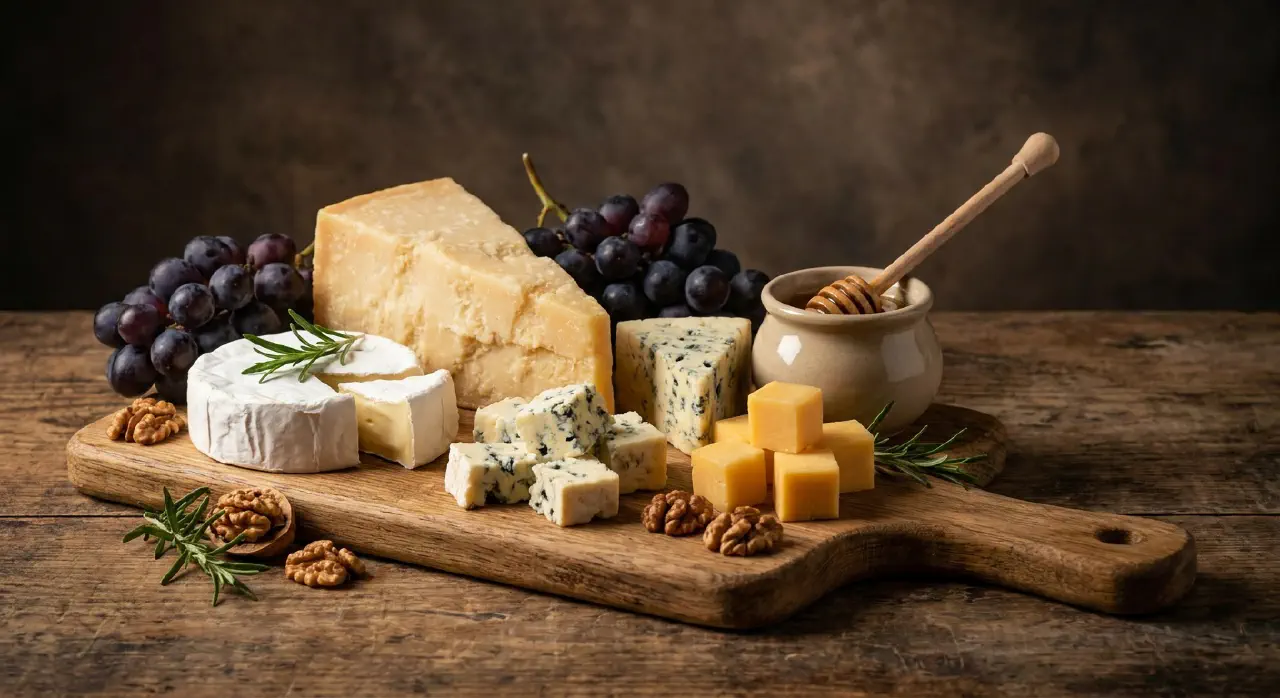
Cheese is milk made more concentrated, more durable, and more flavorful through controlled coagulation of casein proteins, removal of whey, and — in aged cheeses — prolonged enzymatic breakdown of proteins and fats. It is one of the oldest fermented foods, with archaeological evidence dating to ~2300 BCE, and one of the most diverse: France alone produces several hundred distinct varieties, each a product of local milk, climate, microbes, and tradition.
Milk
Milk
Milk is a complex suspension engineered by mammals as a complete food for rapid growth. For the cook, it’s an emulsion of fat in water stabilized by phospholipid membranes, with two fundamentally different protein families that govern most of its behavior under heat and acid.
Composition
Cow milk is roughly 87–90% water, with the remainder split between fat (3.6–5.2%), protein (3.0–3.9%), lactose (4.8–4.9%), and minerals (0.7–0.8%). These proportions vary significantly by breed — Jersey cows produce the richest milk (5.2% fat), while high-volume Holsteins are leaner (3.6%). Sheep milk is dramatically richer than cow milk (7.5% fat, 6.0% protein), and buffalo milk richer still (6.9% fat), which is why mozzarella di bufala and pecorino have such different characters from their cow-milk equivalents.