Melons
Melons
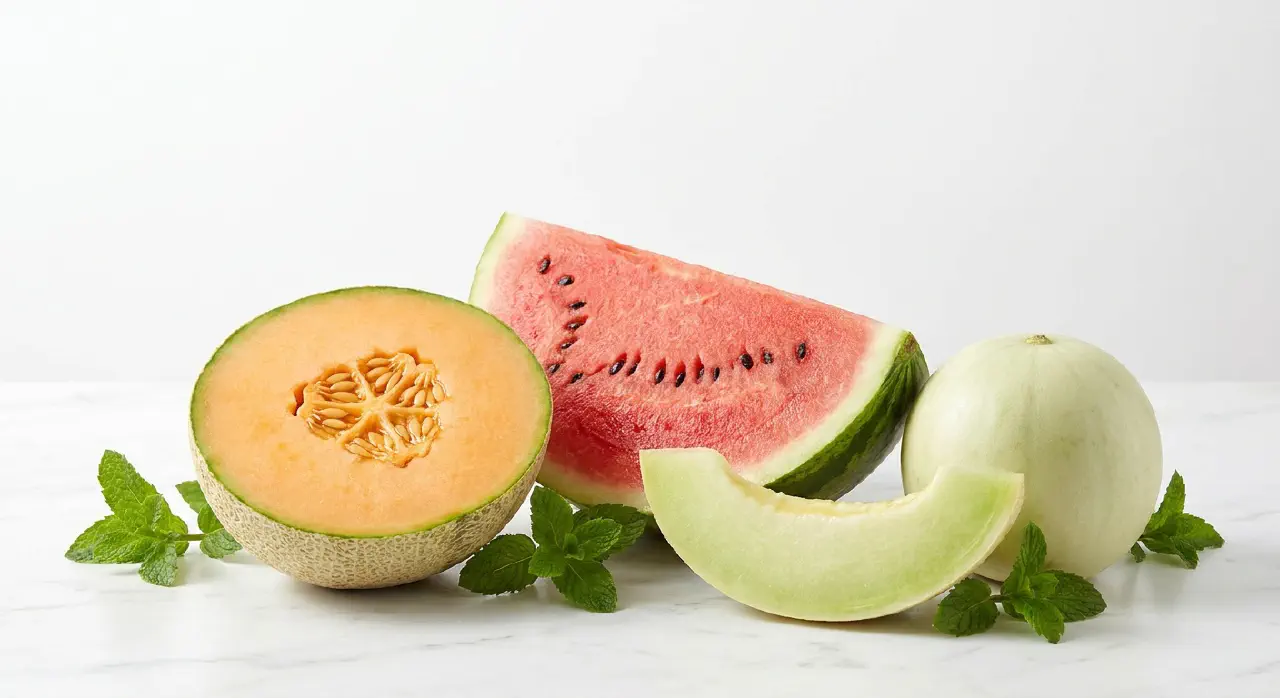
Most melons belong to Cucumis melo, a relative of cucumber, native to the semiarid subtropics of Asia. Large, rapid-growing fruits that symbolized fertility and abundance in ancient cultures. The melon family divides cleanly into two groups that mirror the climacteric/non-climacteric divide — aromatic, perishable summer melons and mild, durable winter melons — plus the distantly related watermelon, which stands alone as one of the world’s most remarkable fruits.
The fundamental rule: no starch, no post-harvest sweetening
Melons do not store starch. Sweetness is entirely fixed at harvest — a melon picked with 8% sugar will never reach 12%. Post-vine aroma may develop slightly, but it won’t match vine-ripened fruit. This makes vine-ripening critical and good sourcing the most important kitchen decision. For aromatic summer melons, a stem remnant signals premature harvest.
Squash and Cucumbers
Squash and Cucumbers
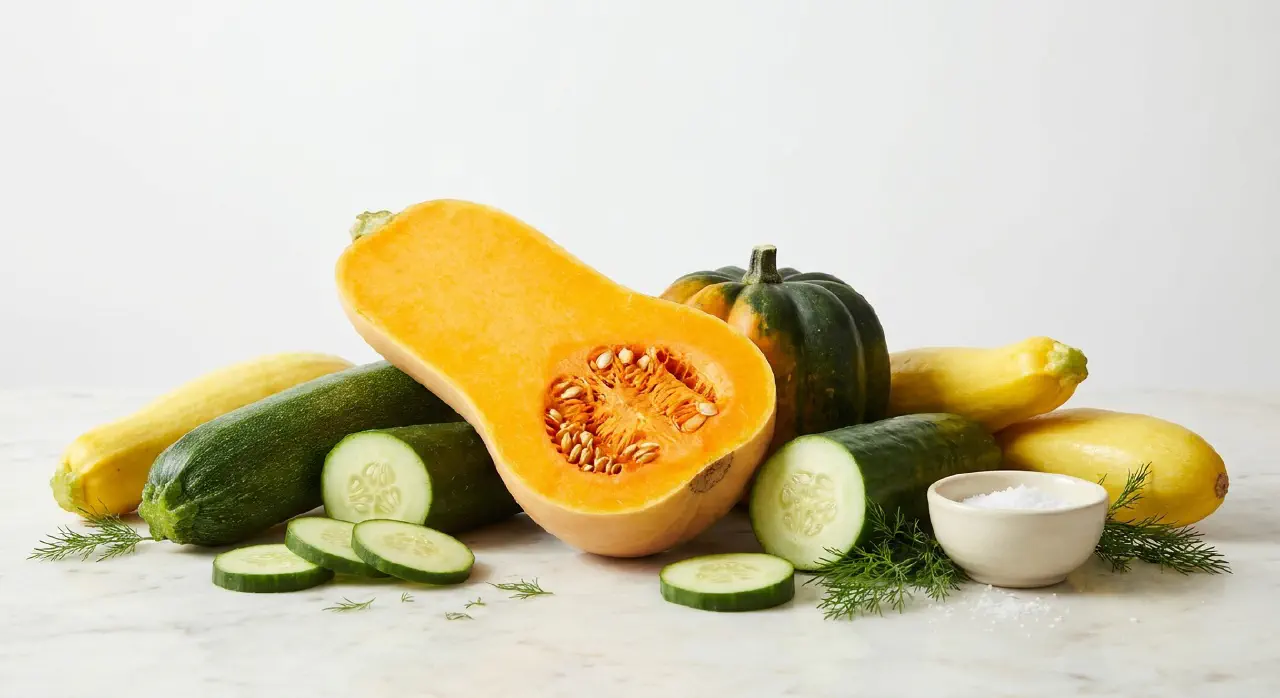
The cucurbit family has made three broad contributions to the kitchen: sweet, moist melons (a fruit story), sweet, starchy winter squashes (harvested fully mature, stored for months), and mild, moist summer squashes and cucumbers (harvested immature, used within weeks). The word “squash” comes from a Narragansett Indian word meaning “a green thing eaten raw.” All cucurbits are native to warm climates and suffer chilling injury at refrigerator temperatures.