Squash and Cucumbers
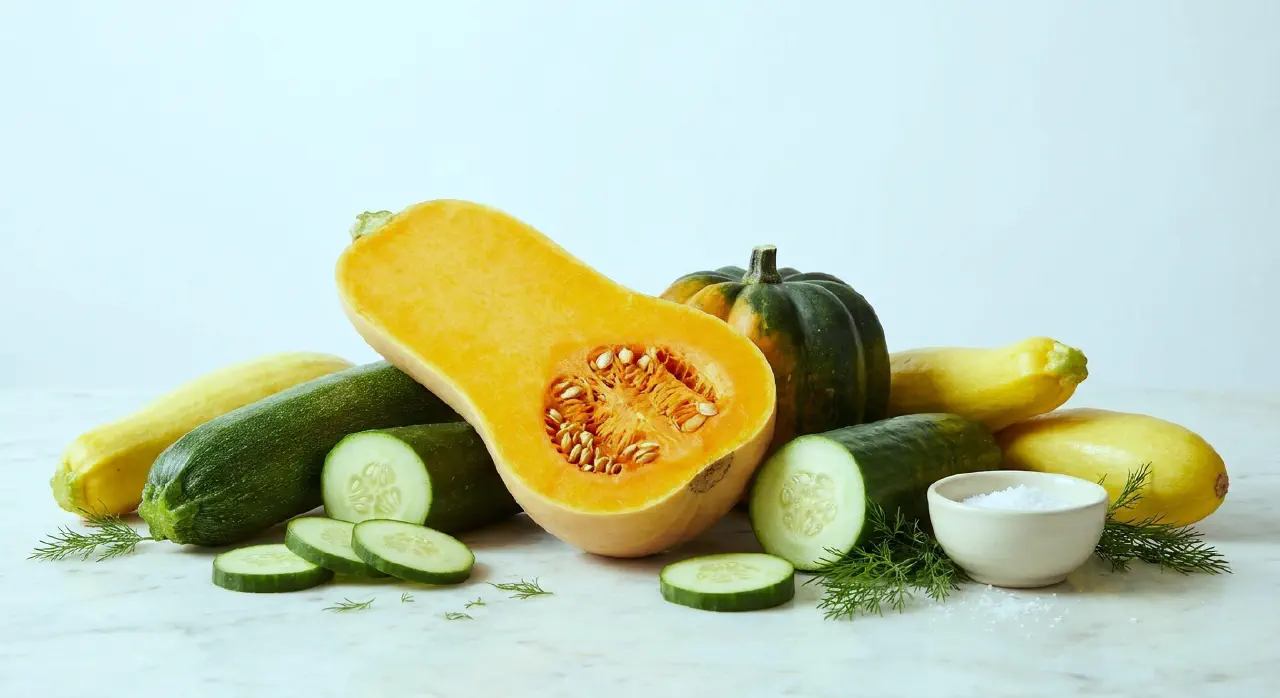
The cucurbit family has made three broad contributions to the kitchen: sweet, moist melons (a fruit story), sweet, starchy winter squashes (harvested fully mature, stored for months), and mild, moist summer squashes and cucumbers (harvested immature, used within weeks). The word “squash” comes from a Narragansett Indian word meaning “a green thing eaten raw.” All cucurbits are native to warm climates and suffer chilling injury at refrigerator temperatures.
Winter squash
Domesticated in the Americas around 5,000 BCE. Nutritious (rich in beta-carotene and other carotenoids), versatile, and long-storing - the plant world’s answer to the root cellar.
Cooking and texture
Cooked flesh has a consistency and flavor similar to sweet potato. The flesh is firm enough to sauté or stew in chunks, yet purees to a very fine consistency when soft. Moderate sweetness makes winter squash suitable for both savory and sweet preparations - soups, sides, pies, custards. Spaghetti squash is the fibrous exception.
The tough, dry skin and hollow structure encourage use as edible containers, filled with sweet or savory liquids and baked.
Storage
Store at ~55°F/15°C with 50–70% relative humidity. Prime shortly after harvest in late fall. Can keep for months under good conditions.
Key varieties
Butternut, cheese, kabocha (C. moschata): Dense, sweet, fine-grained flesh. The workhorses.
Hubbard, turban, banana (C. maxima): Can reach 300 pounds - the largest fruits of any plant.
Acorn, pumpkin, spaghetti squash (C. pepo): The most familiar species, though acorn is starchier and less sweet than butternut.
Summer squash
Bred for variety of shape - scallops/pattypans (flat, scalloped edges), crooknecks, vegetable marrows, zucchini (elongated), and many regional forms. Green-skinned or vibrantly yellow from carotenoid pigments.
Pale, delicately spongy flesh softens quickly when cooked. Sweetest when picked young. Keep a few weeks at 45–50°F/7–10°C. Like eggplant, summer squash has a mild, somewhat neutral character that takes on surrounding flavors.
Squash blossoms: Large flowers sometimes stuffed and deep-fried, or chopped for soups and egg dishes. Complex aroma: musky, green, almond, spicy, violet, and barnyard notes.
Cucumbers
Domesticated in India around 1,500 BCE. Notable for crisp, moist, mild, refreshing character - mainly consumed raw or pickled.
Aroma mechanism
The distinctive yet melon-like aroma develops when flesh is cut or chewed: enzymes break long membrane fatty-acid molecules into 9-carbon fragments. Alcohols give the melon note; aldehydes give the cucumber note. This is the same lipoxygenase mechanism that produces the green/cucumber aroma family described in plant flavor science.
Varieties
American slicing: Short, thick, tough skin, dry flesh, prominent seeds, strong cucumber flavor. Bitterness at the stem end comes from defensive cucurbitacins. Almost always peeled. Often waxed to slow moisture loss.
European greenhouse: Long, slender, thin tender skin, moist flesh, no formed seeds (no pollinating insects), mild flavor with no bitterness (cucurbitacins bred out). Wrapped in plastic for moisture retention.
Pickling varieties: Smaller, thin skin that eases brine penetration for fermentation and pickling.
Bitter gourds
Asian cultures have long prized the cucurbitacins that Western breeders eliminated from cucumbers. Pale green with irregular warty surfaces, eaten immature, sometimes blanched to remove some water-soluble bitterness. Recent studies suggest cucurbitacins may help slow cancer development - bitterness as medicine, a theme recurring throughout plant-flavor.
Other cucurbit vegetables
Chayote/mirliton: Central American vine fruit resembling a large pear. Finer texture than summer squash, longer cooking time, single large seed. Seed cavity sometimes stuffed.
Bottle gourds/calabashes: Usually dried for containers; immature fruits peeled and cooked as bland summer squash.
Luffa/angled gourds: Elongated with prominent ridges. Mild, delicate when immature. A different species produces the fibrous “sponge.”
Winter/wax/fuzzy melons: Accumulate protective wax on rinds. Cooked like summer squash; flesh becomes almost translucent. In Chinese cooking, used as edible containers for festive soup.
See also
- vegetable-cooking - cooking temperatures and methods for cucurbit flesh
- plant-biology - fruit structure, storage tissue, seed dispersal
- plant-color - carotenoids in winter squash and yellow summer squash
- plant-preservation - pickling cucumbers, fermenting squash
- potatoes - sweet potato shares the starchy-sweet-carotenoid profile with winter squash
- plant-flavor - cucurbitacins, bitterness as defense, and the green/cucumber aroma family