Fruit Ripening
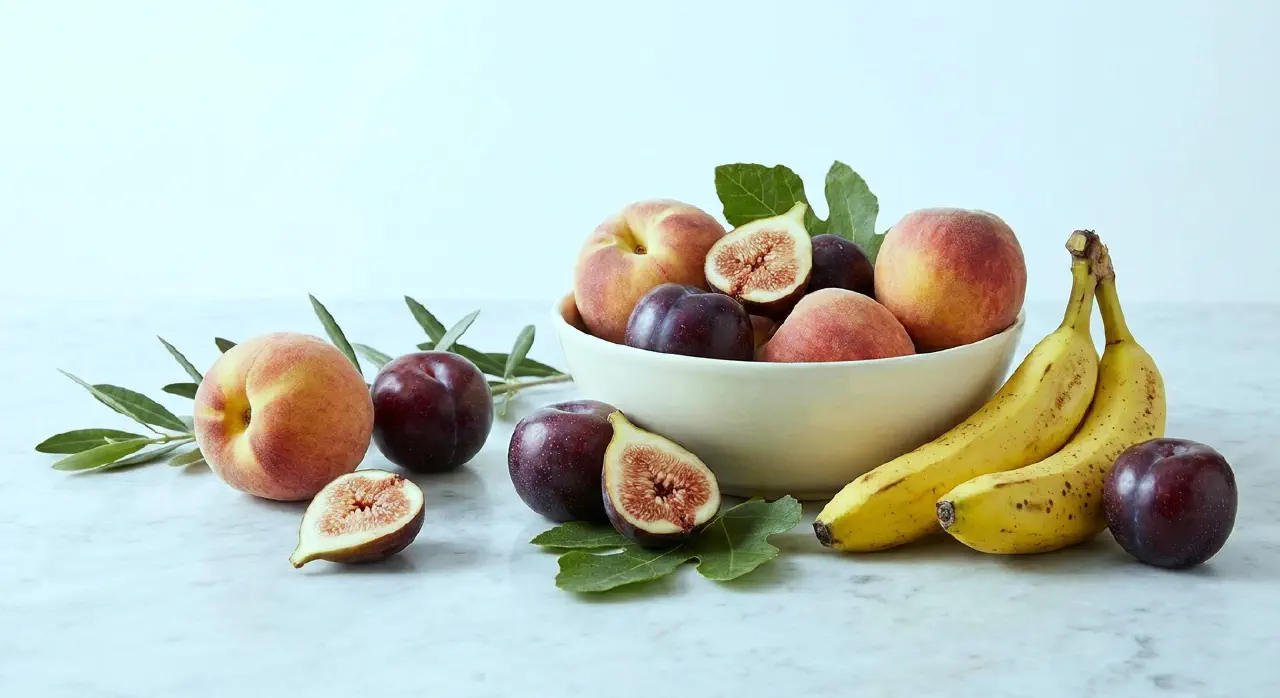
Ripening is programmed senescence - a coordinated enzymatic self-destruction that converts a seed-protecting structure into a seed-dispersing reward. Understanding the biochemistry of ripening is the single most useful piece of knowledge for buying, storing, and cooking fruit, because it determines whether a fruit can improve after harvest or is locked in at the moment it was picked.
Four stages of fruit development
Fruits develop through fertilization and hormone induction, cell multiplication (brief), cell expansion (the major growth phase, where storage cells fill with water, sugars, defensive compounds, and pre-positioned enzyme systems), and finally ripening itself. During the expansion phase, melon fruits can grow 80 cc daily; watermelon cells reach visible millimeter scale.
The ripening cascade
Ripening involves simultaneous, enzyme-driven transformations: starch breaks down to simple sugars, organic acids (mainly malic) are consumed for energy, pectin and cell-wall enzymes soften texture, defensive compounds (tannins, alkaloids) diminish, volatile aroma compounds are synthesized (primarily esters), and skin color shifts as chlorophyll degrades and anthocyanins and carotenoids are expressed. In climacteric fruits, respiration surges 2–5× during this cascade.
Ethylene: the ripening hormone
Ethylene (C₂H₄) is a simple hydrocarbon gas that triggers the entire ripening cascade in mature but unripe fruit. Discovered in the early 20th century when fruits near oranges or kerosene stoves ripened faster, identified by the 1930s. Commercially, artificial ethylene gassing accelerates ripening of mature-harvested fruit. At home, enclosing fruit in a paper bag with a ripe banana or apple concentrates ethylene around it (plastic traps moisture and encourages rot).
Ethylene is also the mechanism behind the proverb that one rotten apple spoils the barrel - see produce-handling for the double-edged ethylene problem in storage.
The climacteric divide
This is the most important practical distinction in fruit handling.
Climacteric fruits
Ethylene triggers positive feedback - the fruit responds by producing additional ethylene, creating a self-amplifying ripening cascade. These fruits show a dramatic respiration surge, can store sugars as starch (converted during post-harvest ripening), and change rapidly in flavor, texture, and color. They can be harvested mature but still hard, transported safely, then ripened at destination.
Key examples: apples and pears, bananas, mangoes, papayas, tomatoes, avocados, plums.
Exceptions to the off-tree rule: Even climacteric fruits generally taste better vine-ripened, because continued connection to the plant allows further flavor compound accumulation. However, pears, avocados, kiwis, and bananas actually gain quality from off-tree ripening.
Non-climacteric fruits
These fruits do not respond to ethylene with self-amplifying production. They ripen gradually without a respiration surge, generally lack starch reserves, and depend on continued plant connection for sugar synthesis. Once picked, they cannot improve in sweetness - other enzyme actions (softening, some aroma development) may continue, but quality is essentially fixed at harvest.
Key examples: citrus, most berries, grapes, pineapple, winter melons.
The pineapple trap: Pineapple softens and yellows on the counter, giving every appearance of ripening, but it stores no starch and cannot sweeten after harvest. What looks like ripening is just senescence.
Starch storage as the sweetening key
The ability to sweeten after harvest depends entirely on whether the fruit accumulated starch during growth. Starch-storing fruits (banana, apple, mango, breadfruit) convert that starch to sugar during ripening - banana’s ratio flips from 25:1 starch:sugar to 1:20. Stone fruits and most berries store no starch, so they can soften but never gain sugar once picked.
Flavor development: sugar, acid, and aroma
Ripe fruit flavor is a balance of sweetness (sugars, typically 12–20% in dessert fruit), tartness (organic acids, mainly citric and malic), and aroma (volatile compounds, primarily esters synthesized by enzymes concentrated in the skin). During ripening, acids are consumed for respiration energy, shifting the balance toward sweetness - this is why stored apples mellow over months.
Aroma compounds are generated from precursor molecules during ripening. The specific ester profile defines varietal character: ethyl acetate for apple, ethyl decadienoate for pear, amyl acetate for banana. Different zones within a single fruit can have notably different flavor - pear is more flavorful at the flower end, pineapple sweeter at the base.
See also
- produce-handling - ethylene management, storage temperatures, chilling injury
- plant-biology - cell wall structure, pectin, turgor pressure
- plant-color - pigment changes during ripening (chlorophyll loss, carotenoid/anthocyanin expression)
- plant-flavor - aroma families and volatile compound chemistry
- caramelization - sugar chemistry relevant to concentrated dried fruits
- fermentation-overview - microbial transformation of fruit sugars