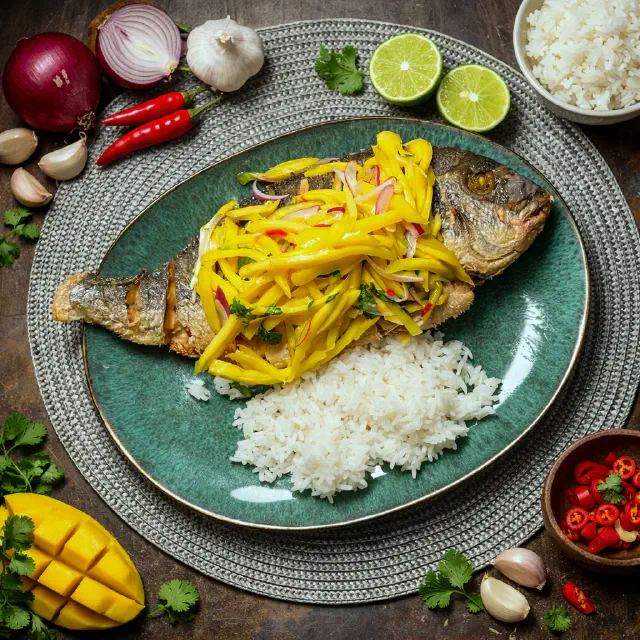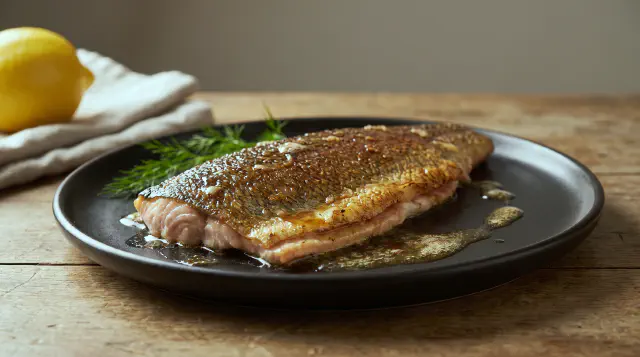
Fish
Fish
Fish is fundamentally different from land animal meat — not just milder or more delicate, but structurally and chemically distinct in ways that demand different cooking logic. Water’s buoyancy means fish never needed the heavy skeletal support and tough connective tissue that gravity imposes on land animals. The result is pale, translucent flesh with weak collagen and a layered muscle architecture unlike anything on land.
Muscle Structure: Myotomes and Flaking
Fish muscle is organized into thin sheets called myotomes — each roughly the width of a fish scale — separated by thin connective tissue layers (myosepta). A cod-sized fish has about 50 of these sheets nested in complex W-shaped folds along its length. When the collagen in myosepta dissolves during cooking (at just 120–130°F / 50–55°C), the sheets separate into the characteristic “flakes” of cooked fish. Each flake is a complete myotome. This is completely unlike land animal muscle, where fibers run continuously through unified muscles.
Fish Cooking
Fish Cooking
Cooking fish requires different logic than cooking meat. Fish proteins are adapted to cold water, unfold and coagulate more readily, and reach every thermal milestone about 20°F lower than land animal muscle. This means fish reaches target texture in minutes, overcooks in seconds, and responds to heat in ways that sometimes contradict meat-cooking intuition.
Temperature Targets
| Target | Temperature | Texture | Best For |
|---|---|---|---|
| Maximum succulence | 120°F (50°C) | Translucent, jelly-like | Dense fish: tuna, salmon |
| Standard | 130–140°F (55–60°C) | Firm but moist | Most fish and shellfish |
| Safety minimum | 140°F (60°C) | Thoroughly firm | Bacteria/parasite elimination |
| Enzyme deactivation | 160°F (70°C) | Drier but intact | Mush-prone species cooked slowly |
| Virus inactivation | 185°F (83°C) | Very dry | Rarely needed |
Collagen-rich species (shark, skate) benefit from 140°F+ to convert collagen to gelatin. See cooking-temperatures for the broader Arrhenius framework.
Fish Flavor and Freshness
The flavor chemistry of fish is driven by an elegant adaptation: ocean fish must counterbalance the saltiness of seawater (about 3% salt) while their cells function optimally at ~0.8%. The molecules they accumulate for this osmotic balancing act are the same molecules that create their distinctive taste — and, eventually, their distinctive smell when they go off.
The Osmotic Strategy: Why Ocean Fish Taste Better
Ocean fish accumulate two main classes of osmolyte: amino acids (sweet glycine, savory glutamic acid) and TMAO (trimethylamine oxide, largely tasteless). Saltwater fish contain three to ten times more free amino acids than beef or freshwater fish, with shellfish especially rich. This explains the inherently savory, complex flavor of ocean seafood.
Fish Safety
Fish Safety
Fish presents a wider range of safety concerns than land animal meat, spanning industrial toxins that accumulate over years, biological pathogens, algal toxins that survive cooking, and parasites. The tradeoff is significant: fish also delivers unique health benefits — particularly omega-3 fatty acids — that make thoughtful consumption worthwhile.
Omega-3 Fatty Acids
Cold ocean water requires fish to maintain highly unsaturated fats that stay liquid at low temperatures. These omega-3 fatty acids (kinked at the third carbon from the end) are essential to human brain and retina development, and the body transforms them into anti-inflammatory immune signals (eicosanoids) that limit heart disease, reduce cancer risk from chronic inflammation, lower stroke incidence, and reduce blood cholesterol.
Preserved Fish
Preserved Fish
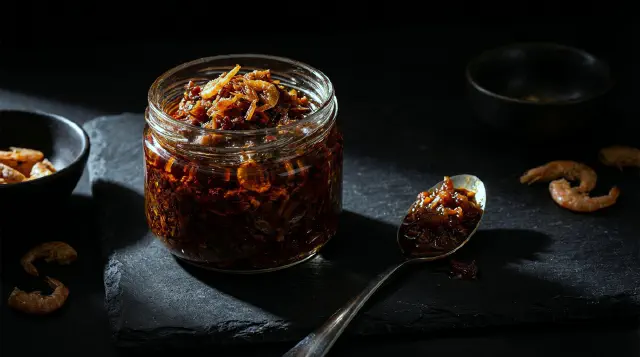
Fresh fish is about 80% water and spoils faster than any other animal protein. Before refrigeration, most harvested fish required immediate preservation — and the methods developed to solve this problem created some of the most complex flavors in any cuisine. Drying, salting, smoking, and fermenting didn’t just preserve fish; they transformed it into tradeable commodities that built European maritime prosperity and underpin Asian flavor systems to this day.
Quick Thawing
Room-temperature thawing feels intuitive but fails on every axis — slow, uneven, and dangerously long in the bacterial zone. The physics-based solution is a 30°C water bath: water is 24× more thermally conductive than air, and 30°C maximizes the temperature gradient without cooking the food’s surface.
The Conductivity Advantage
Water is roughly 24× more thermally conductive than air. Far more molecules collide with frozen surfaces per second, making even cold tap water (~10°C) faster than room-temperature air. At 30°C water, a 250g item thaws in 15-20 minutes versus 60-90 minutes in cold water or 3-4 hours on the kitchen counter — roughly 10-12× faster than air thawing.
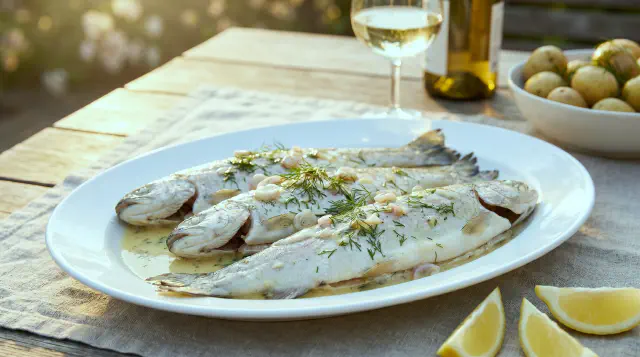
Steam-Baked Trout
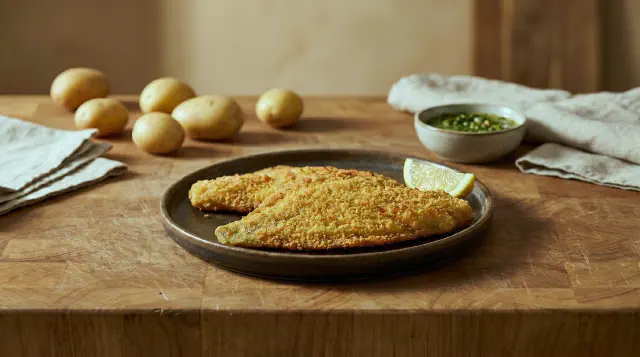
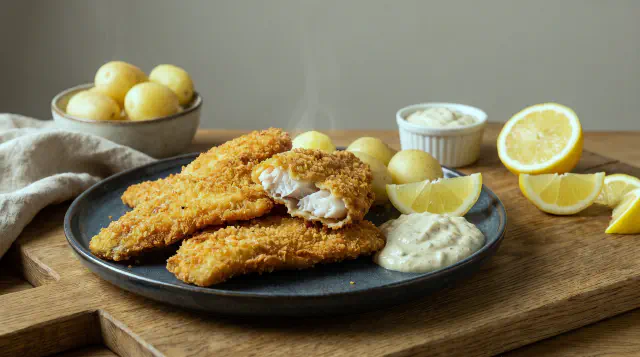
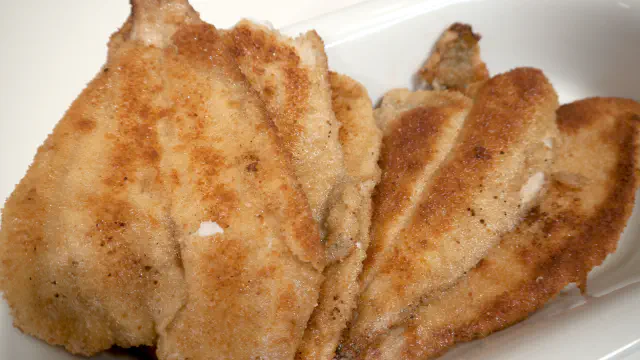
Classic Fried Fish Fillets
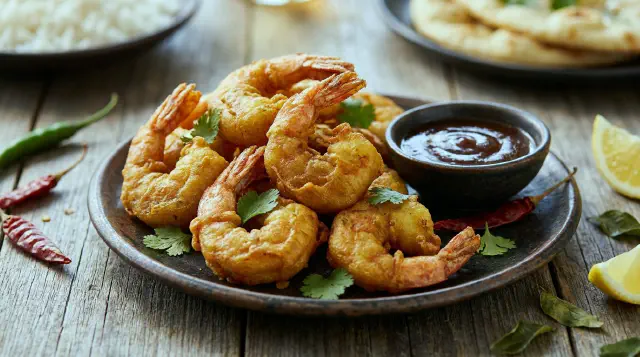
Spiced Prawns
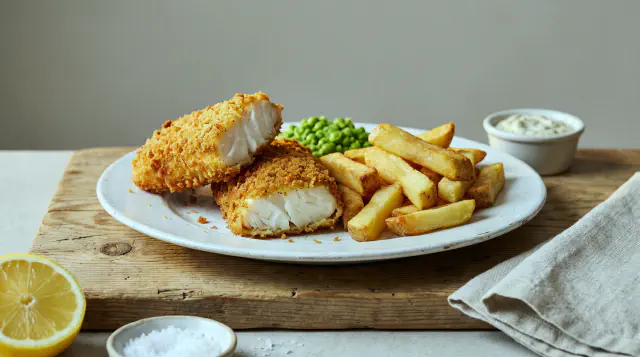
Deep-Fried Fish Fillets - Double Breaded with Breadcrumbs
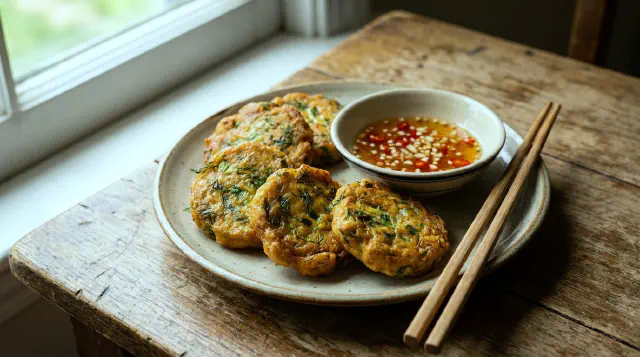
Fish Cakes