Cooking Science Wiki
 read more
Lipid Chemistry
Lipid Chemistry
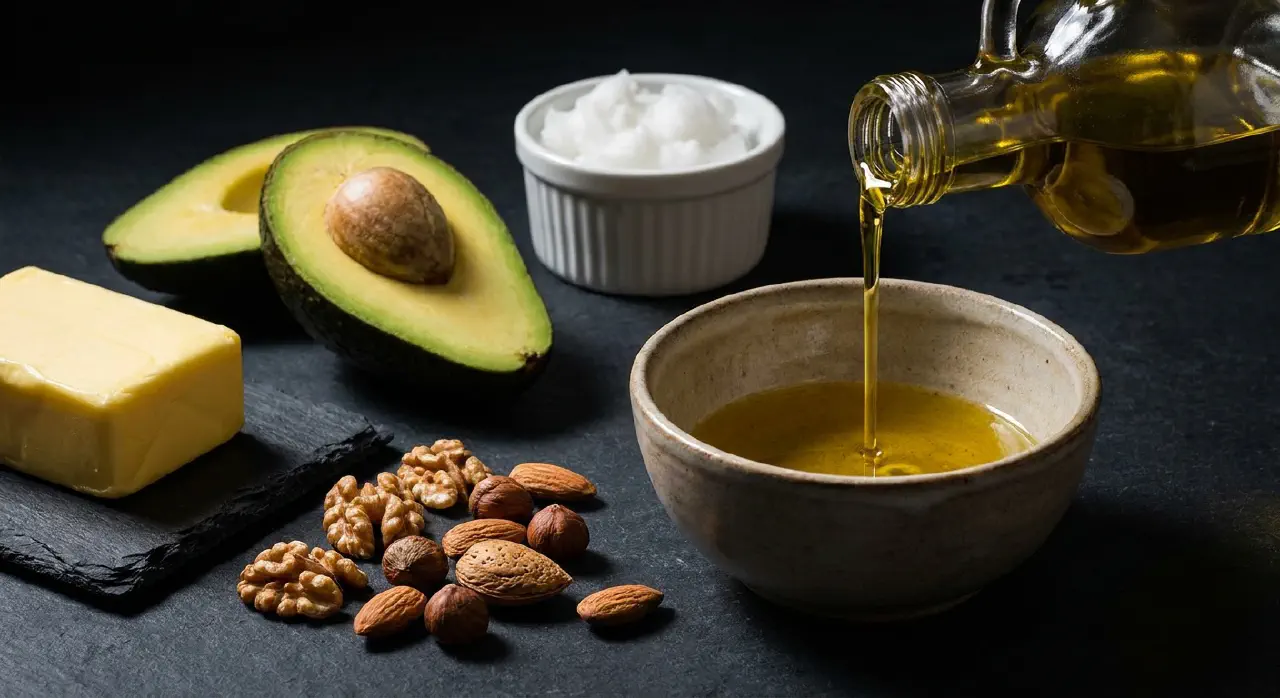
Lipids (from Greek for “fat”) are a large chemical family — fats, oils, phospholipids, pigments (carotenoids, chlorophyll), vitamin E, cholesterol, waxes — all consisting mainly of long carbon chains with projecting hydrogen atoms. Their defining property is hydrophobia: carbon-hydrogen bonds are nonpolar (atoms pull with equal force on electrons), so lipids cannot form hydrogen bonds with water. When mixed, polar water molecules bond with each other and nonpolar lipids segregate, minimizing contact. This single property — the oil-water divide — explains emulsions, fat rendering, oil-based extraction of aromas, and why fats float.