Pungent Spices
Pungent Spices
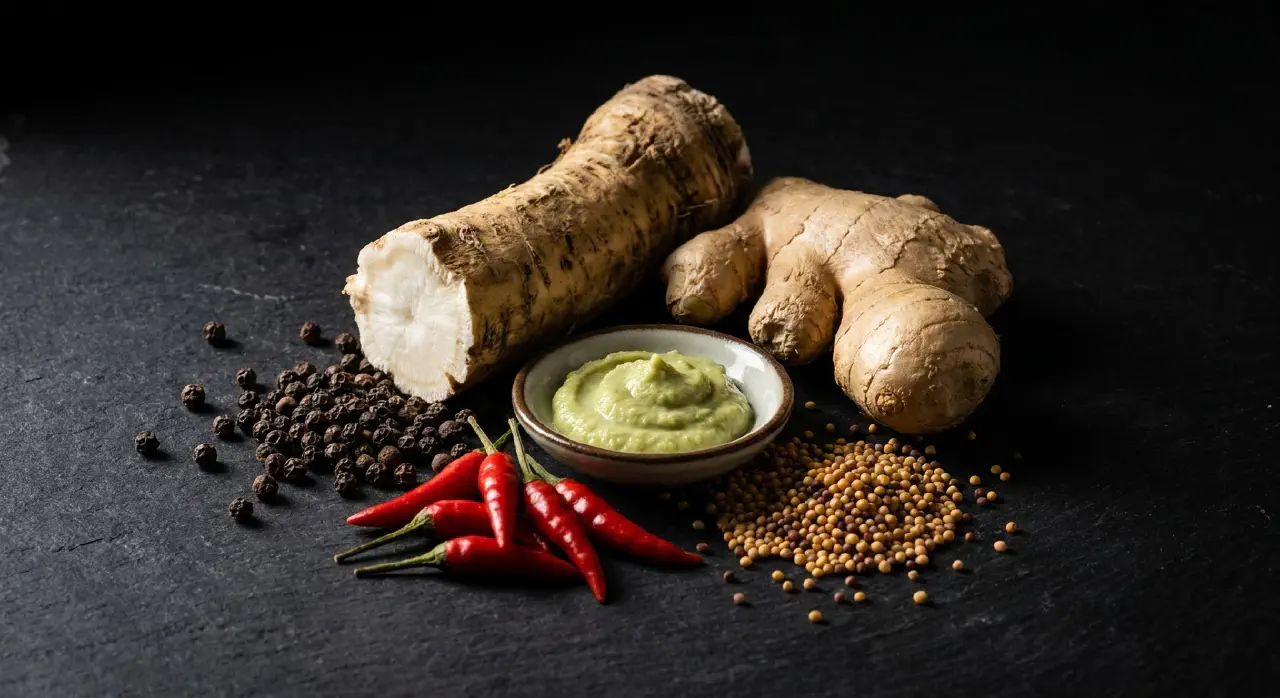
The heat-producing spices — black pepper, chillis, ginger, mustard, horseradish, and wasabi — are defined by compounds that activate pain receptors rather than taste or smell receptors. They divide into two fundamentally different pungency mechanisms: preformed alkyl-amides (pepper, chilli, ginger) that mainly affect the mouth and survive cooking, and enzyme-generated thiocyanates (mustard, horseradish, wasabi) that are volatile enough to irritate the nose and are destroyed by cooking.
Black pepper
The most traded spice from Asia historically, still preeminent in European/North American cooking. Native to tropical southwest India; 3,500+ years of sea and overland trade. Piperine (~100× less pungent than capsaicin) provides moderate heat while a rich terpene profile (pinene, sabinene, limonene, caryophyllene, linalool) gives fresh, citrusy, woody, warm, floral character — making pepper a universal background seasoning like salt.
Tomatoes, Peppers, and Eggplant
Tomatoes, Peppers, and Eggplant
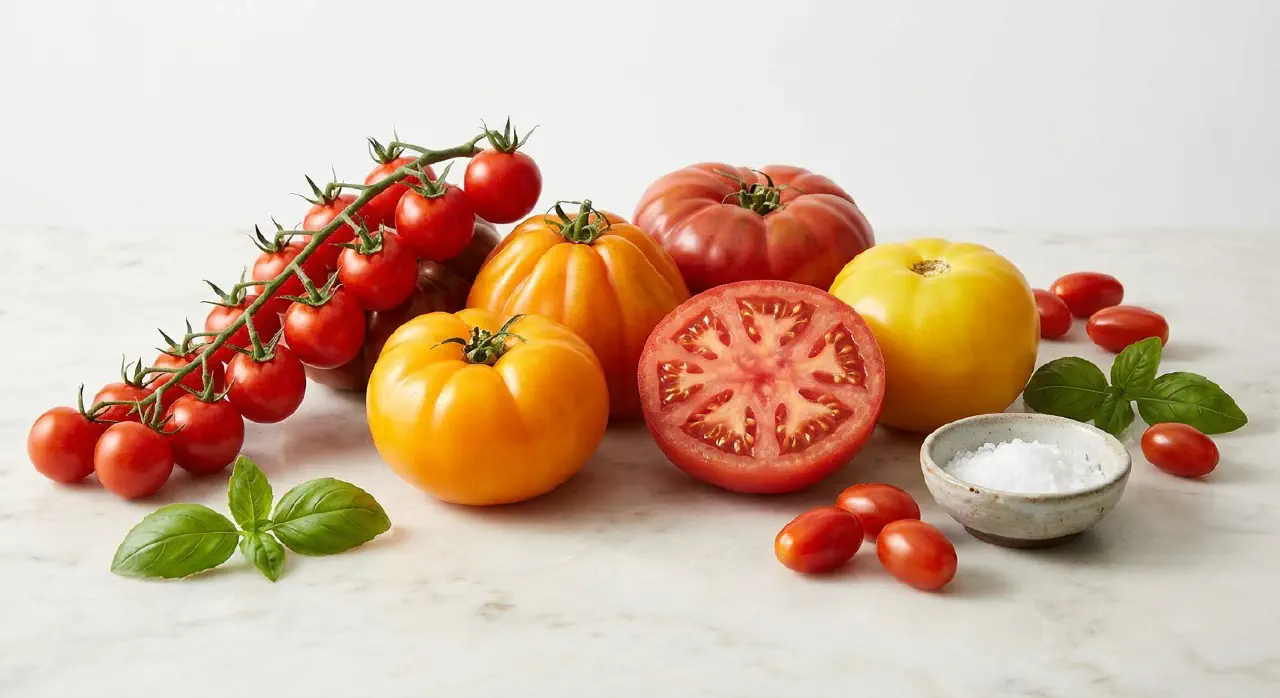
The nightshade family includes both deadly poisons (nightshade, tobacco) and some of the kitchen’s most important ingredients. Tomatoes, sweet peppers, and eggplants are all nightshade fruits — botanically berries — that took many generations of breeding to reduce their defensive alkaloids to safe levels. Each has unique chemistry that defines how it should be cooked.
Tomatoes
Small, bitter berries on west coast South American desert bushes, domesticated in Mexico (from the Aztec tomatl, “plump fruit”). European suspicion of the nightshade resemblance lasted into the 19th century. Now the second most popular vegetable in America after the potato.