Tomatoes, Peppers, and Eggplant
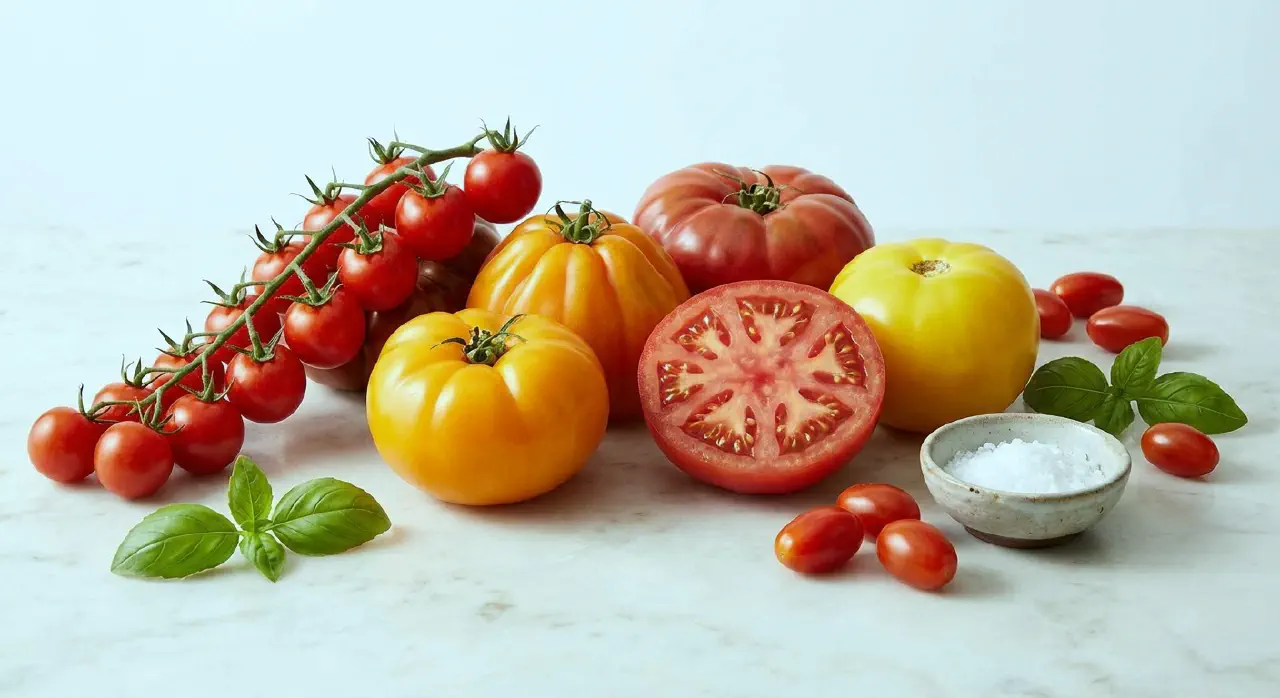
The nightshade family includes both deadly poisons (nightshade, tobacco) and some of the kitchen’s most important ingredients. Tomatoes, sweet peppers, and eggplants are all nightshade fruits - botanically berries - that took many generations of breeding to reduce their defensive alkaloids to safe levels. Each has unique chemistry that defines how it should be cooked.
Tomatoes
Small, bitter berries on west coast South American desert bushes, domesticated in Mexico (from the Aztec tomatl, “plump fruit”). European suspicion of the nightshade resemblance lasted into the 19th century. Now the second most popular vegetable in America after the potato.
Why tomatoes behave like meat
Tomatoes are unusual among fruits: low sugar (3%, comparable to cabbage), but high in glutamic acid (0.3% by weight - more typical of meat than plant tissue) plus aromatic sulfur compounds. Glutamic acid plus sulfur aromas are the signature of meat flavor. This is why tomatoes naturally complement meat in sauces, and why they can add depth and savory complexity even without meat present. The affinity is chemical, not cultural.
Anatomy and flavor
A tomato slice contains four distinct tissues with different flavor contributions:
Outer fruit wall: Most sugars and amino acids. The main sweet-savory carrier.
Skin/cuticle: Most aroma compounds. Removing it refines texture but sacrifices aroma.
Seed jelly and juice: Double the acid concentration of the wall. Removing seeds and juice shifts flavor toward sweetness.
Central pith: Structural, less flavorful.
Many cooks remove skin, seeds, and jelly for a refined, less watery result - but this sacrifices acidity and aroma. Restoration technique: cook skins, jelly, and juice together until reduced, then strain into the flesh.
Ripening and the supermarket problem
Vine-ripened tomatoes accumulate more sugar, acid, and aroma compounds - including furaneol, a compound with sweet-savory caramel character also found in ripe strawberries and pineapples. Supermarket tomatoes picked green and reddened with ethylene gas develop little of this chemistry. The result is the byword for flavorless produce.
Cooking
Cooking adds rose-and-violet-like notes from carotenoid pigment fragmentation, but loses fresh “green” notes from unstable fatty acid fragments. Some cooks add tomato leaves toward the end of cooking to restore fresh-tomato aroma - the leaves have pronounced aromatic oil glands. The defensive alkaloid tomatine in the leaves binds tightly to cholesterol, and the body absorbs neither - potentially reducing net cholesterol intake.
Canned tomatoes: Canners frequently add calcium salts to firm cell walls. This helps pieces hold shape but can interfere with sauce-making - check labels and choose brands without added calcium for fine-textured results.
Storage
Warm-climate origin means refrigeration damages flavor. Green tomatoes below 55°F/13°C suffer membrane damage that prevents proper flavor development and causes blotchy, mealy texture. Even fully ripe tomatoes lose flavor enzymes in the cold. Let refrigerated tomatoes recover at room temperature for 1–2 days before eating.
Tomatillos
Tomato relative cultivated before tomatoes in Mexico. Remains green when ripe, with a sticky skin, tart flavor, and relatively firm, dry texture. Usually cooked and pureed into sauces with other ingredients providing depth.
Sweet peppers (Capsicum)
New World fruits domesticated in South America. Essentially hollow berries with thin, crisp walls. The dozens of mild varieties grown as vegetables (rather than spice) range across colors, shapes, sweetnesses, and aromas.
Green vs. ripe color
Green bell peppers have a strong, distinctive aroma from isobutyl methoxypyrazine - the same compound that produces the green-vegetable note occasionally found in cabernet sauvignon and sauvignon blanc wines.
Ripening to red: The green pyrazine disappears, chlorophyll breaks down, and carotenoid pigments accumulate - capsanthin, capsorubin, beta-carotene. Red peppers are among the richest carotenoid sources available (paprika powder exceeds 1% pigment by weight) and are rich in vitamin C. Yellow and mature varieties are good sources of lutein, which protects against oxidative eye damage.
Cooking
Fresh and rehydrated dried peppers develop a thick, smooth consistency when cooked and pureed - their cell walls are rich in pectin. This makes them natural thickeners for soups and sauces without added starch.
Eggplant
The only major nightshade vegetable from the Old World - probably floated from Africa to India/Southeast Asia, where it was domesticated. Small, intensely bitter varieties are still prized as condiments in the region. The name “aubergine” traces from Sanskrit through Arabic and Spanish, mirroring the vegetable’s westward journey.
The sponge problem
Eggplant’s interior is spongy - many tiny air pockets between cells. This creates two cooking consequences:
- Shrinkage: When cooked, air pockets collapse and flesh consolidates dramatically.
- Oil absorption: Fried raw eggplant soaks up oil catastrophically, with the spongy structure wicking oil into every air pocket.
Fix: Collapse the sponge before frying. Either precook (microwaving works well) or salt slices to draw moisture from cells into the air pockets. Both methods reduce the empty space available for oil absorption.
Varieties and texture
Asian varieties tend toward creamy texture when cooked; European varieties toward meaty. The classic preparations exploit these differences: Greek moussaka and Italian parmigiana use firm European slices that retain structure, while Middle Eastern baba ghanoush grills the eggplant until the flesh melts for a smooth puree.
Storage
Tropical origin; internal chilling damage (browning, off-flavors) develops within days in the refrigerator. Store at room temperature and use promptly.
See also
- plant-flavor - glutamic acid, sulfur aromatics, and the five aroma families
- plant-color - lycopene in tomatoes, carotenoids in peppers, anthocyanins in purple eggplant
- vegetable-cooking - frying temperatures, the pectin cliff, and general cooking principles
- alliums - the aromatic base that combines with tomatoes in mirepoix/soffrito
- maillard-reaction - browning in roasted and fried nightshade vegetables