Pome Fruits
Pome Fruits
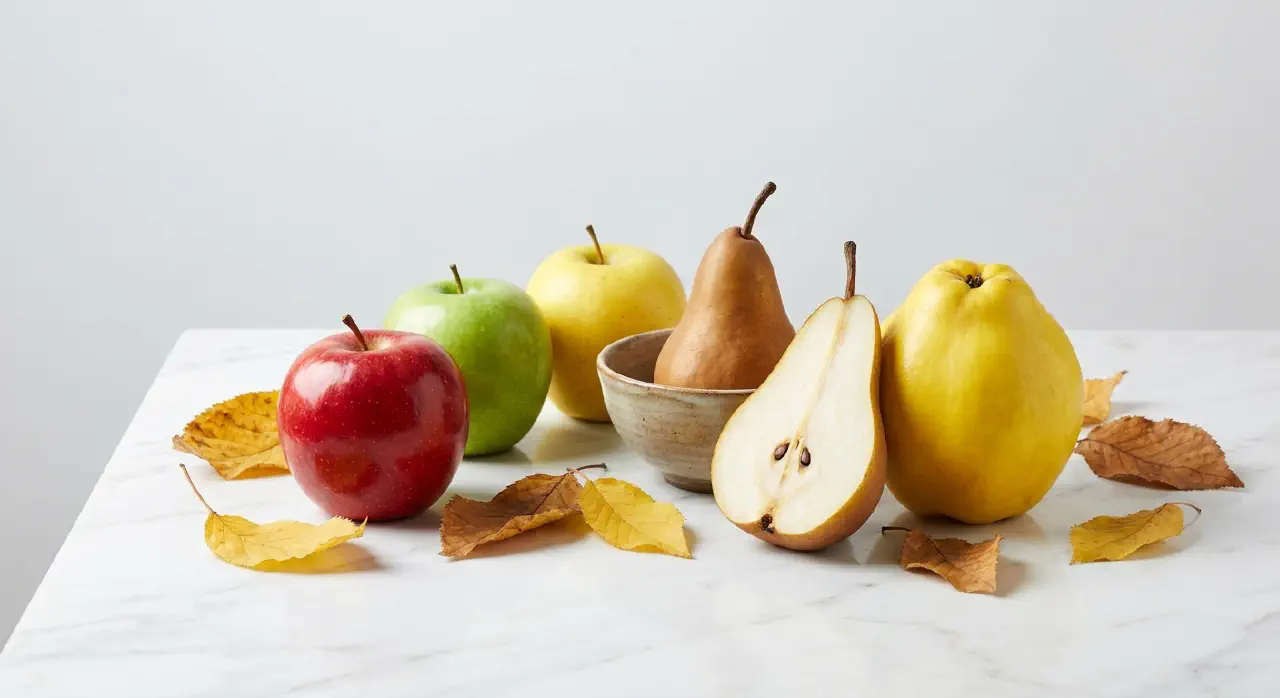
The pome fruits — apples, pears, quince, and their relatives — are all members of the rose family (Rosaceae), native to Eurasia. The defining structure is a thick fleshy portion derived from the enlarged flower stem tip (not the ovary alone), surrounding an inner tough-walled core containing seeds. All are climacteric, storing starch that converts to sugar during ripening, making them the temperate world’s most storable and versatile fresh fruits.
Stone Fruits
Stone Fruits
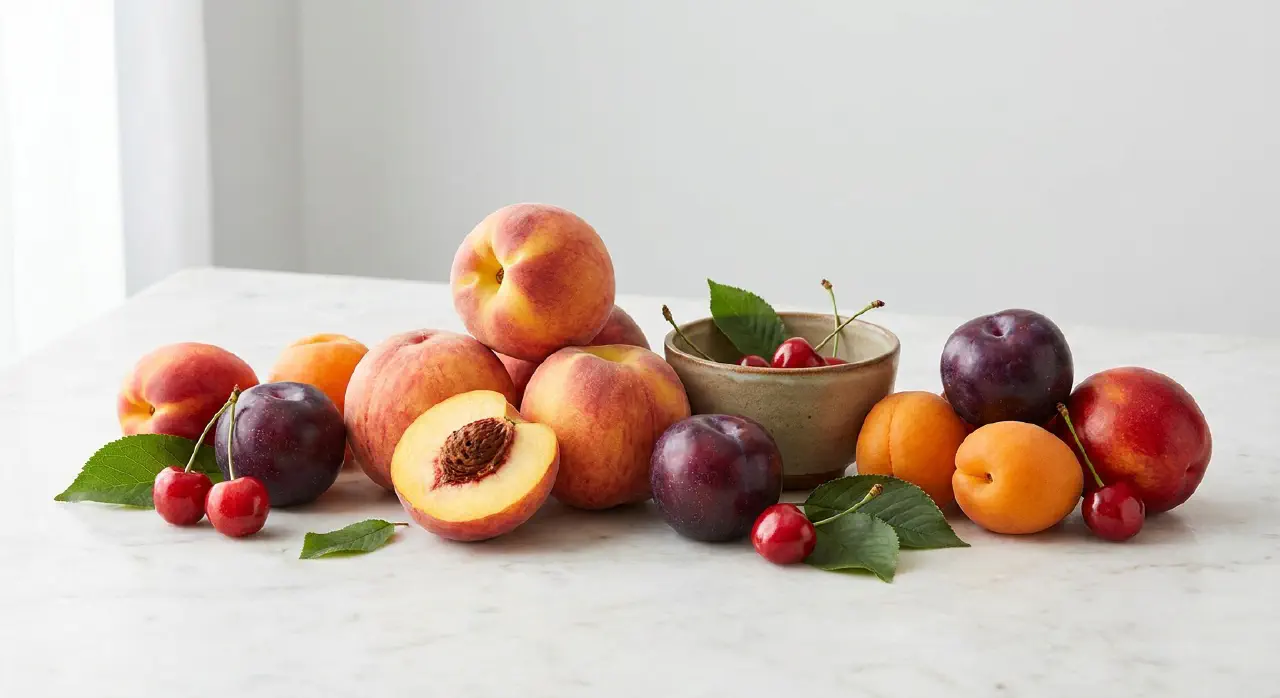
All species of genus Prunus in the rose family, defined by a stone-hard shell surrounding a single large central seed. Mostly Asian in origin, with ~15 species found across the northern hemisphere. The critical difference from their pome fruit relatives: stone fruits do not store starch — they cannot get sweeter after harvest. Ripening continues post-harvest (softening, aroma development), but the sugar level is locked in at picking. This makes them more seasonal and more dependent on good sourcing than the storable, sweetening pome fruits.