Cookware Materials
Cookware Materials

The material a pan is made from determines how it transfers heat to food — how fast it heats, how evenly it distributes energy across its surface, how quickly it responds to temperature changes, and whether it reacts with acidic or alkaline foods. The same electron-mobility mechanism that makes metals good electrical conductors makes them good thermal conductors, which is why all serious cookware is metal. But the metals differ enormously, and each involves tradeoffs between conductivity, reactivity, weight, and cost.
Salt
Salt
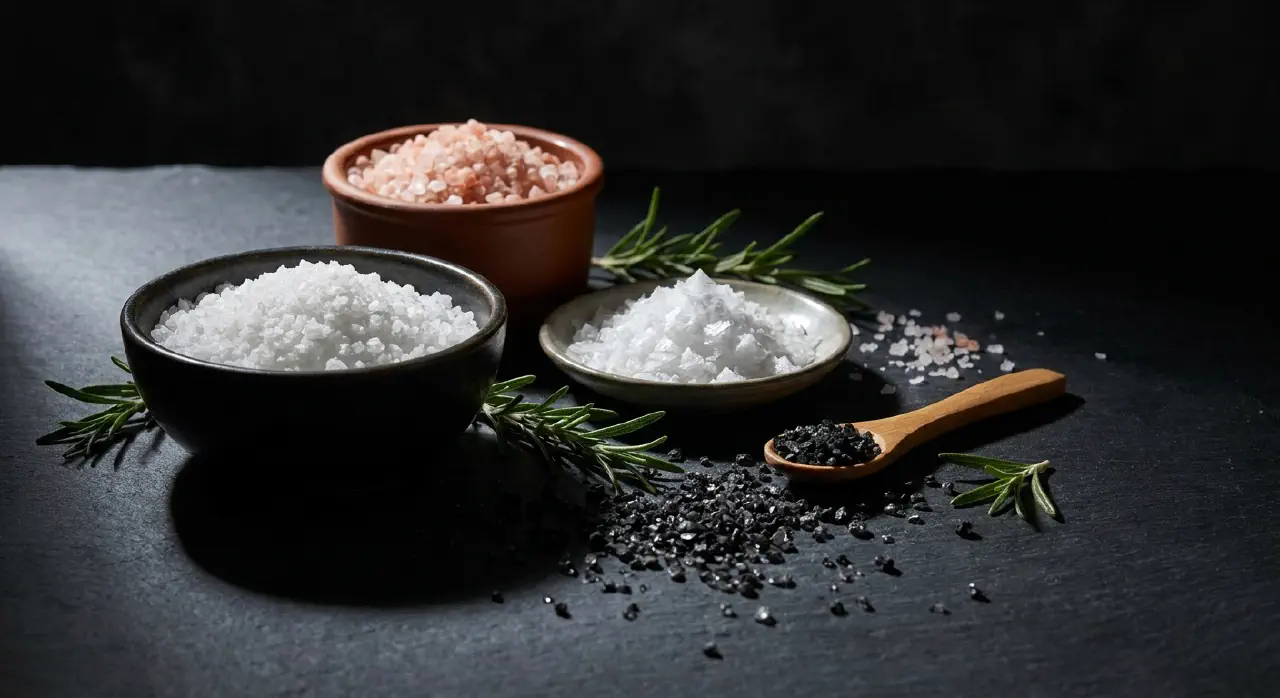
Salt (sodium chloride) is the only mineral we eat in pure form and the most fundamental seasoning in cooking. But its effects extend far beyond taste — salt alters protein behavior, controls water activity, preserves food, and modifies texture in ways that make it one of the most scientifically important ingredients in the kitchen.
Effects on proteins
Salt dissolves into sodium and chloride ions that cluster around charged portions of protein molecules, neutralizing their mutual electrical repulsion. This has two major consequences: