Aromatic Seeds and Tropical Spices
Aromatic Seeds and Tropical Spices
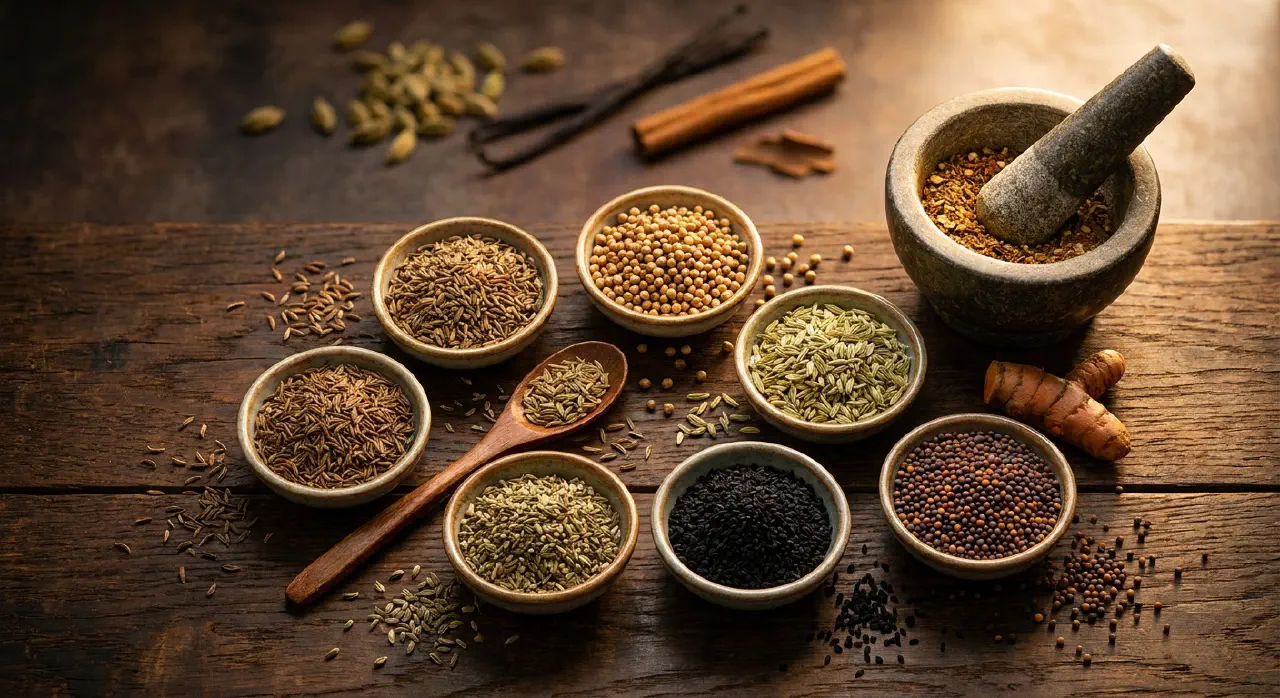
A diverse group united by the fact that the flavoring comes from seeds, roots, rhizomes, stigmas, or pods rather than leaves or bark. Includes the workhorses of Indian, Middle Eastern, and Latin American spice blends (cumin, coriander, cardamom), the world’s two most expensive spices (saffron, vanilla), and several of the most chemically unusual flavorings in the kitchen (asafoetida, fenugreek).
Carrot family seeds (Apiaceae)
Seeds with distinctive ridged surfaces containing aromatic oil in canals beneath the ridges. Many of these plants also provide culinary herbs from their leaves.
Seed Biology
Seed Biology
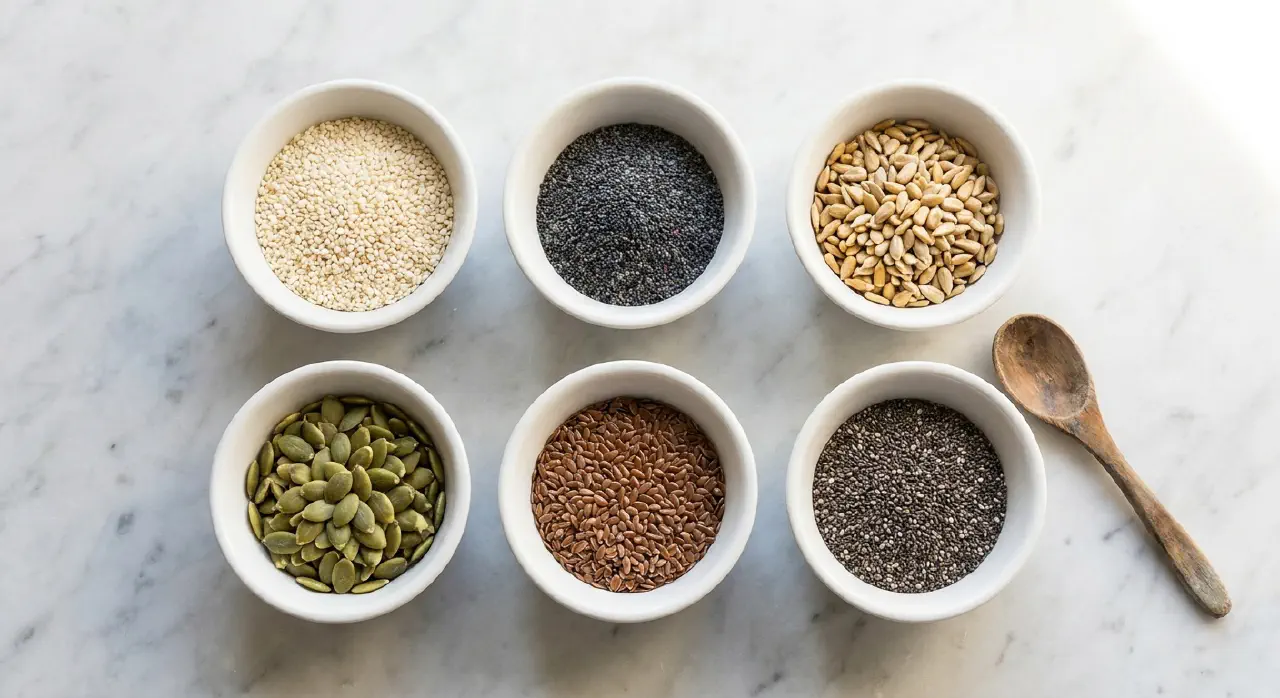
Seeds are the driest, most shelf-stable foods in the kitchen — concentrated parcels of energy locked behind a water-resistant coat, requiring both moisture and heat to become edible. The same three-part structure (protective coat, embryo, storage tissue) appears across all seeds, and understanding how starch, protein, and oil behave within that structure explains nearly every cooking property of grains, legumes, and nuts.
Seed structure
Every seed consists of three functional components: