Shellfish — Crustaceans
Shellfish — Crustaceans
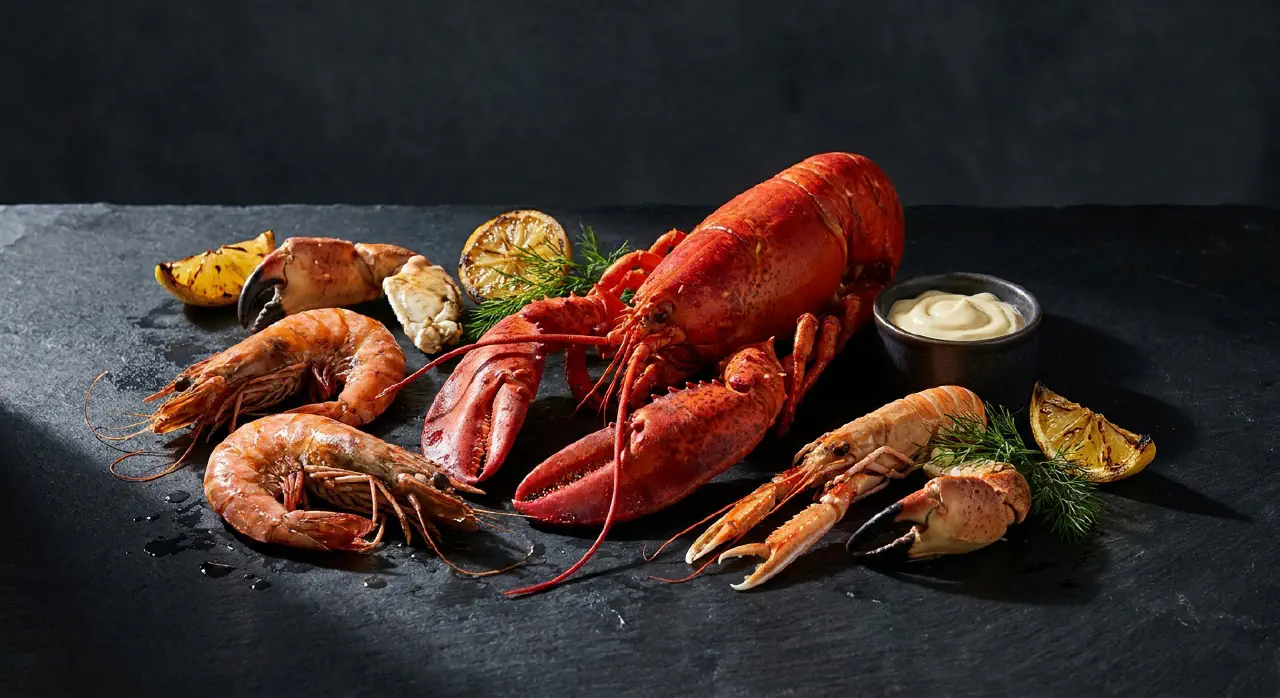
Shrimp, lobster, crab, and crayfish share a two-part body plan: a cephalothorax (“head”) containing organs and flavor, and an abdomen (“tail”) providing the main edible muscle. Their cooking science is dominated by two forces: destructive enzymes from the hepatopancreas that can turn flesh to mush, and an unusual flavor chemistry that produces maillard-reaction aromas at unexpectedly low temperatures.
The Hepatopancreas: Flavor and Danger
Biologists call it the midgut gland; cooks call it the liver. This organ stores fatty materials, supplies digestive enzymes, and is one of the richest, most flavorful body parts — especially prized in lobster and crab. But its fragile tubes rupture easily after death, releasing enzymes that spread into muscle tissue and break it into mush. This is why crustaceans must be kept alive until cooking or fully cooked immediately: there is no middle ground. Shrimp are often sold as tail-only with the head (and its enzyme-laden liver) removed for extended shelf life.
Shellfish — Mollusks
Shellfish — Mollusks
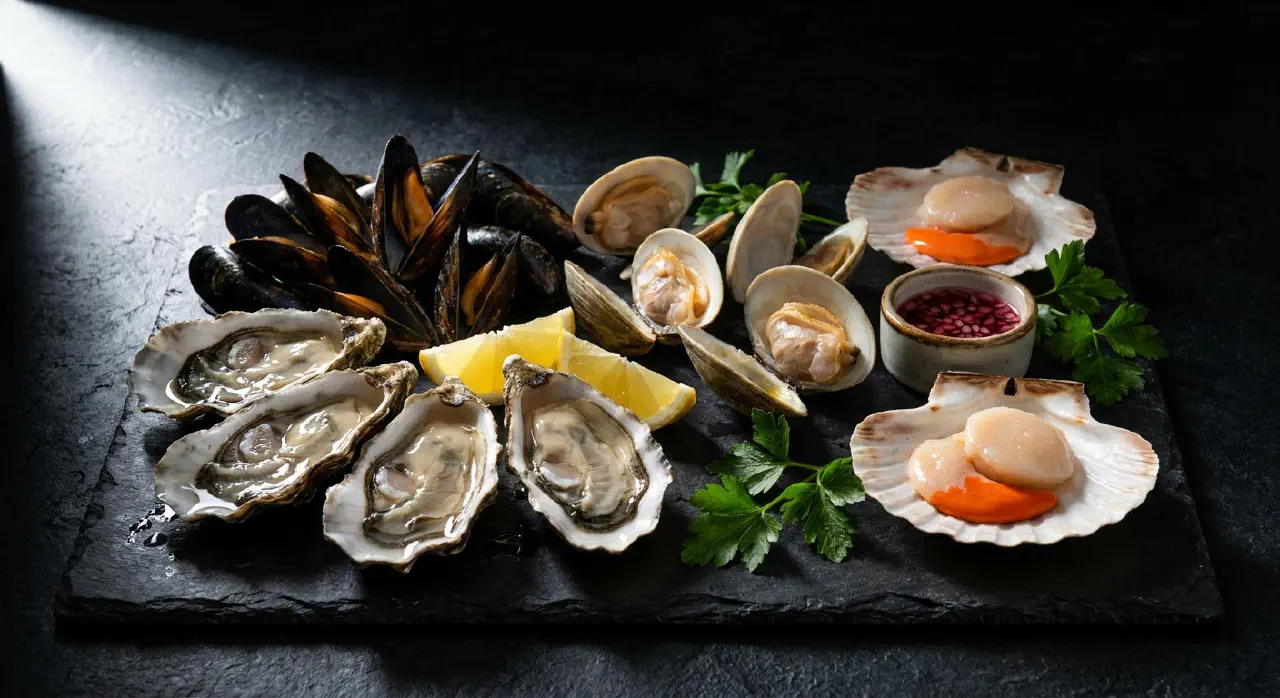
Mollusks are the strangest creatures humans eat, and among the most delicious. Shell mounds document human consumption 300,000+ years back. The phylum spans 100,000 species — double the number of all vertebrates — from millimeter snails to giant squid. All share three body parts combined in vastly different ways: a muscular foot, a complex organ assembly, and a versatile mantle that secretes shell material.
The Adductor Muscle System
Bivalves (clams, mussels, oysters, scallops) open their shells with a spring-like hinge ligament and close them with adductor muscles. These muscles have two functionally different portions: