Shellfish - Crustaceans
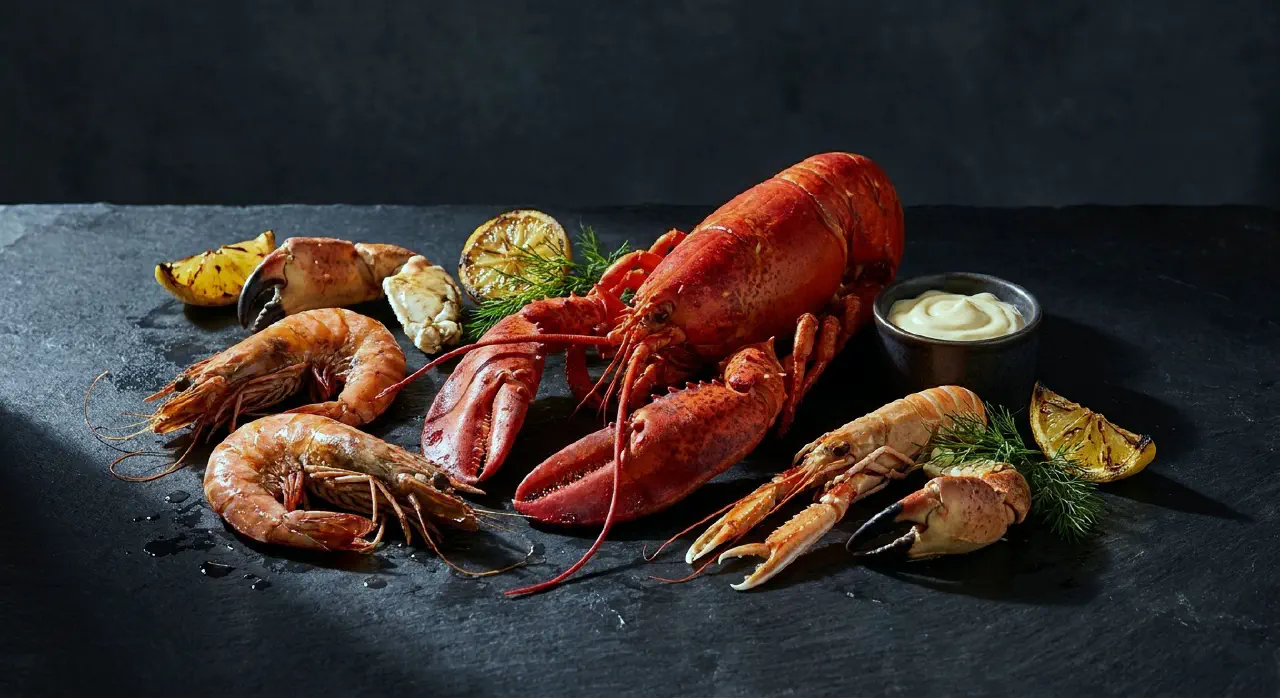
Shrimp, lobster, crab, and crayfish share a two-part body plan: a cephalothorax (“head”) containing organs and flavor, and an abdomen (“tail”) providing the main edible muscle. Their cooking science is dominated by two forces: destructive enzymes from the hepatopancreas that can turn flesh to mush, and an unusual flavor chemistry that produces maillard-reaction aromas at unexpectedly low temperatures.
The Hepatopancreas: Flavor and Danger
Biologists call it the midgut gland; cooks call it the liver. This organ stores fatty materials, supplies digestive enzymes, and is one of the richest, most flavorful body parts - especially prized in lobster and crab. But its fragile tubes rupture easily after death, releasing enzymes that spread into muscle tissue and break it into mush. This is why crustaceans must be kept alive until cooking or fully cooked immediately: there is no middle ground. Shrimp are often sold as tail-only with the head (and its enzyme-laden liver) removed for extended shelf life.
Shell, Molting, and Quality
The hard outer cuticle is made of chitin, hardened with calcium minerals in larger species. Crustaceans grow by molting - constructing a new flexible shell beneath the old, squeezing out, pumping up with water (gaining 50–100% body weight), then gradually replacing water with muscle tissue. This means quality is highly variable: actively growing animals are dense and meaty; newly molted ones may be half water. Wild harvests are seasonal for this reason.
Soft-shell crabs are the exception - freshly molted blue crabs harvested and fried whole before the new shell hardens (which takes just 2–3 days).
Color Change
The brilliant orange-red of cooked crustaceans comes from carotenoid pigments, accumulated from planktonic diet, that are normally bound to proteins in muted camouflage patterns. Heat denatures the protein bonds, freeing the pigments to show their true color. These carotenoids are fat-soluble - to extract color for sauces, cook shells in butter or oil-enriched liquid.
The Low-Temperature Maillard Anomaly
Boiled shrimp, lobster, and crab develop nutty, popcorn-like pyrazines and thiazoles - compounds normally produced only when amino acids and sugars react at temperatures far above boiling. In crustaceans, these reactions apparently occur at lower temperatures due to the unusual concentration of free amino acids and sugars in the muscle tissue. This is why boiled shrimp tastes “roasted” in a way that boiled chicken never could.
Crustaceans favor glycine accumulation for osmotic balance, which gives their meat a characteristic sweetness distinct from the savory umami of bivalves (which rely on glutamic acid).
Cooking Strategies
Speed is critical. Protein-breaking enzymes peak at 130–140°F (55–60°C) - the same danger zone as in mush-prone fish. Boiling and steaming are standard precisely because they’re the fastest heating methods. Cook quickly through the enzyme danger zone.
Properly cooked crustacean meat is firm and opaque. Overcooking produces rubbery, fibrous texture - unlike fish, which just dries out. Crustacean meat is more tolerant of freezing than most fish, with frozen shrimp being particularly good quality.
Cooking in the shell enhances flavor: the cuticle reduces leaching of flavor compounds and concentrates proteins, sugars, and pigment molecules that flavor the outer flesh layer.
Species Notes
Shrimp: Most commonly available shellfish worldwide (~300 species). About 1/3 of world production is farmed, mainly in Asia. Best cooked rapidly in shell. Polyphosphate-treated shrimp look plump and glossy but lose flavor and weep liquid when heated.
Lobster: American lobster claws can amount to half total body weight. Claw meat is richer than tail meat (more slow-twitch red fibers requiring more stamina). Liver (turns green when cooked) and coral (turns red-pink) are crushed into sauces for color and flavor. Small lobsters have finer muscle fibers and finer texture.
Crab: Tailless body plan with massive cephalothorax. The large digestive gland (“butter” or “mustard”) lends rich flavor to sauces but can accumulate algal toxins - regulators monitor levels. King crab legs span 4–6 feet and are usually sold frozen.
Crayfish: Over 500 species. Louisiana crayfish prime season is winter through spring. Most easily cultured crustacean, raised in natural ponds for 200+ years.
Humane Handling
Crustaceans lack a central nervous system - each body segment has its own nerve cluster. Whether and how they experience pain is uncertain. Marine biologist consensus recommends anaesthetizing in iced salt water for 30 minutes before killing.
See Also
- shellfish-mollusks - Bivalves and cephalopods
- fish - Comparison with fin fish
- fish-cooking - Shared enzyme danger zone
- maillard-reaction - The low-temperature anomaly
- protein-denaturation - Coagulation science