Condiments
Condiments
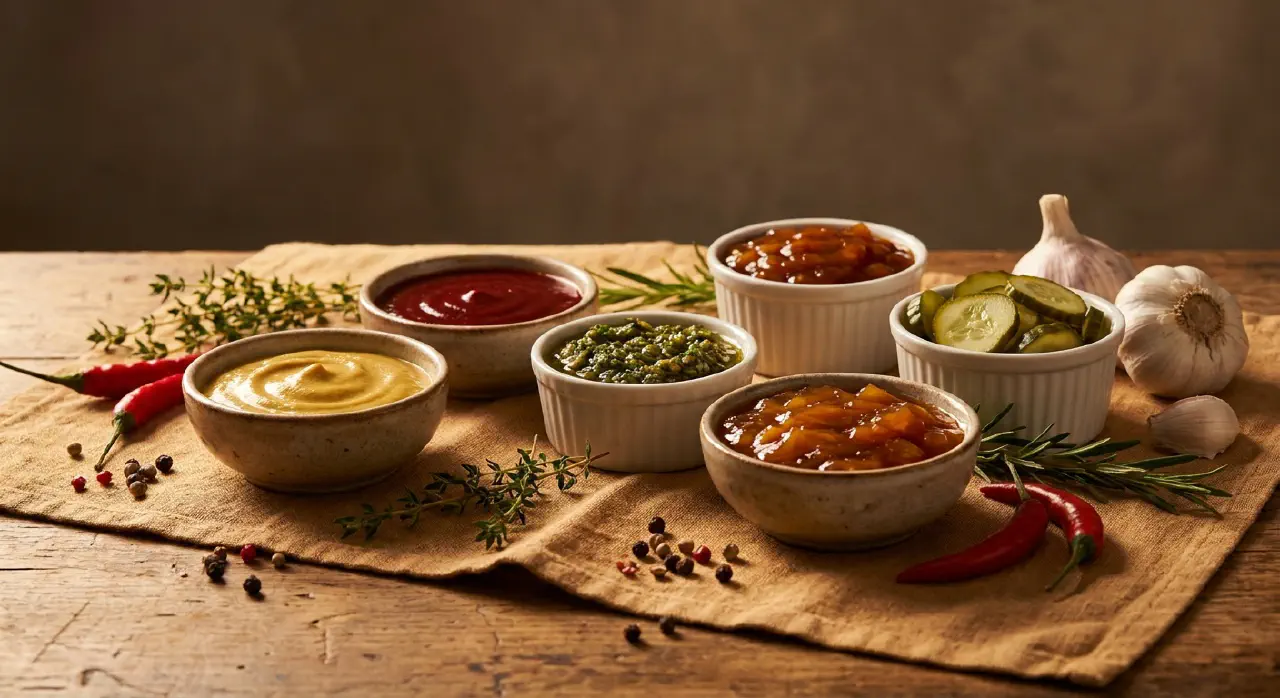
Condiments are the sauces that come to the table rather than the stove — flavor concentrates meant to contrast, brighten, or deepen the food they accompany. They divide broadly into fresh preparations (salsas, pesto, vinaigrettes) and fermented or preserved preparations (mustard, ketchup, soy sauce, fish sauce, vinegar, chutneys). The fermented condiments represent some of the oldest food technologies: salt and time converting perishable ingredients into shelf-stable, intensely flavored liquids.
Vinegar
Vinegar

Vinegar is alcohol’s natural sequel — acetic acid bacteria use oxygen to metabolize ethanol into acetic acid, a far more potent antimicrobial agent than alcohol itself. The French name says it plainly: vin aigre, “sour wine.” Our ancestors discovered wine and vinegar together, since fermented plant juices naturally sour on air exposure; the major winemaking challenge for millennia has been delaying this transformation. Babylonians were making vinegar from dates, raisins, and beer by ~4000 BCE. Pliny considered it unmatched as a seasoning.