Alcohol Science
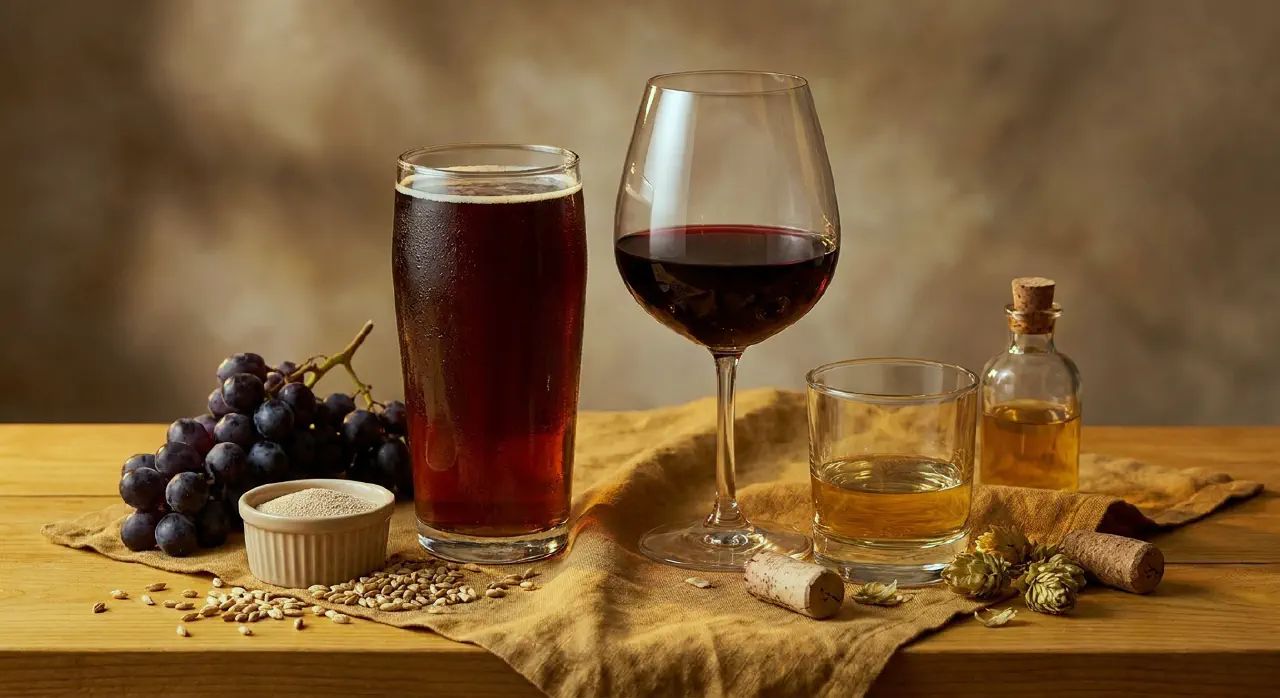
Ethanol - the alcohol in wine, beer, and spirits - is a small, dual-natured molecule: one end resembles a fatty-acid chain, the other resembles water. This amphipathic structure makes ethanol a universal solvent, a third cooking medium alongside water and oil, and a potent drug that penetrates cell membranes. Understanding ethanol’s physical properties explains everything from why distillation works to why flambé retains most of its alcohol.
Fermentation chemistry
About 160 species of Saccharomyces (“sugar fungus”) yeasts convert glucose to ethanol and CO₂ under anaerobic conditions. Beyond ethanol, yeasts produce a constellation of flavor compounds: savory succinic acid, fruity esters (from combining alcohols with acids), longer-chain “higher” alcohols from amino acid metabolism, and sulfur compounds reminiscent of cooked vegetables and toast. Dead yeast cells (lees) release enzymes that generate still more flavor. This is why fermentation is not just preservation - it is flavor creation.
Ethanol’s physical properties
| Property | Ethanol | Water |
|---|---|---|
| Boiling point | 176°F / 78°C | 212°F / 100°C |
| Freezing point | –173°F / –114°C | 32°F / 0°C |
| Density | 80% of water | - |
The low boiling point enables distillation - heating a fermented liquid sends alcohol-rich vapor off preferentially, which is then condensed into a more concentrated liquid. The very low freezing point enables freeze concentration (applejack, ice wine) - water freezes into removable crystals while alcohol-enriched liquid remains. The low density enables layered cocktails.
Alcohol as solvent and aroma modifier
Ethanol dissolves both water-soluble and fat-soluble compounds, making it excellent at extracting aromas and pigments from plant cells - the basis of tinctures, extracts, and infusions. But its effect on aroma volatility is concentration-dependent and paradoxical:
At low concentration (~1% or less): Alcohol enhances the release of fruity esters and other aromas into the air, intensifying perceived fragrance.
At high concentration (distilled spirits): Alcohol traps volatile molecules in solution, reducing their release. This is why diluting whiskey with a splash of water often opens up its aroma - it shifts the equilibrium toward release.
Cooking with alcohol
Alcoholic beverages bring acidity, sweetness, savoriness (glutamic and succinic acids), and a distinctive aromatic dimension to cooking. Alcohol provides a third liquid medium (alongside water and oil) for dissolving and extracting flavor molecules - particularly useful for fat-soluble aromas that water alone can’t capture.
Evaporation is slower than expected. A common myth holds that cooking “burns off” all alcohol. In reality: long-simmered stews retain ~5% of added alcohol, briefly cooked dishes retain 10–50%, and flambés retain as much as 75% despite their dramatic blue flames. Complete elimination is difficult because ethanol forms a low-boiling mixture (azeotrope) with water that resists full separation.
Flambé ignites heated alcohol vapors from spirits or high-proof wines, producing spectacular blue flames. The technique burns off some alcohol and gives a lightly singed flavor, but its main purpose is theatrical - the fire is brief and superficial.
Challenges: Alcohol’s pungent, slightly medicinal quality is heightened in hot foods. Red wine astringency and beer bitterness require careful handling - reduction and long simmering mellow both.
Alcohol and health
Ethanol delivers ~7 calories per gram (between sugar at 4 and fat at 9). The body metabolizes 10–15 grams per hour - roughly one standard drink per 60–90 minutes. Food delays absorption and reduces peak blood alcohol by ~50%; carbonation (sparkling wine, beer) accelerates it by an unknown mechanism.
Higher alcohols (fusel oils) - longer-chain molecules produced during fermentation - are more potent narcotics and more irritating than ethanol. They concentrate in cell membranes and contribute to the severity of hangovers. Congener-rich spirits (bourbon, brandy) tend to produce worse hangovers than congener-poor spirits (vodka).
Antimicrobial effects
Ethanol penetrates cell membranes and disrupts protein function. At sufficient concentration it kills most microbes - which is why distilled-spirits and fortified wines don’t spoil after opening, while table wines and beer do. In the presence of acid or sugar, alcohol’s antimicrobial effect is amplified.
See also
- fermentation-overview - microbial sugar-to-alcohol conversion
- wine - grape fermentation and winemaking
- beer-brewing - grain mashing, hopping, and brewing
- sake - simultaneous mold-and-yeast fermentation of rice
- distilled-spirits - concentration of alcohol through distillation
- vinegar - alcohol’s natural sequel: acetic acid bacteria oxidize ethanol
- barrel-aging - how alcohol extracts flavor from wood