Vinegar
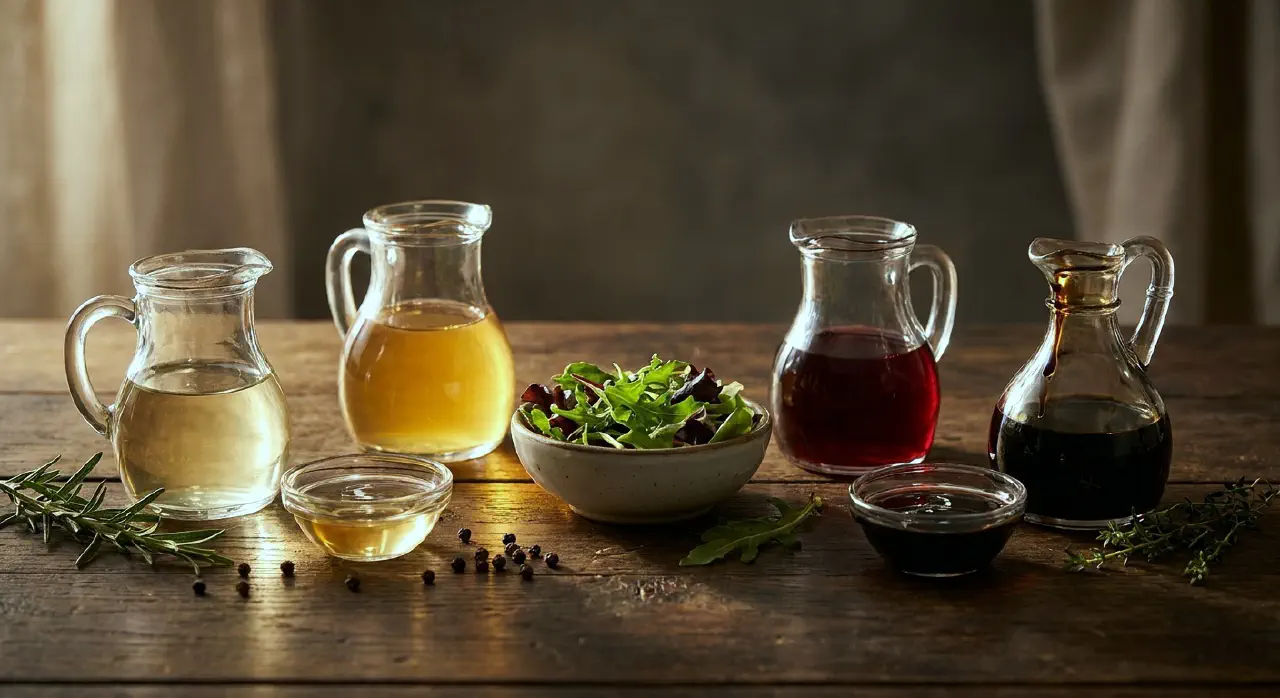
Vinegar is alcohol’s natural sequel - acetic acid bacteria use oxygen to metabolize ethanol into acetic acid, a far more potent antimicrobial agent than alcohol itself. The French name says it plainly: vin aigre, “sour wine.” Our ancestors discovered wine and vinegar together, since fermented plant juices naturally sour on air exposure; the major winemaking challenge for millennia has been delaying this transformation. Babylonians were making vinegar from dates, raisins, and beer by ~4000 BCE. Pliny considered it unmatched as a seasoning.
The acetic fermentation
Three ingredients are required: an alcoholic liquid, oxygen, and bacteria (Acetobacter or Gluconobacter, mainly A. pasteurianus and A. aceti). The bacteria live on the fermenting liquid’s surface, forming a film sometimes called the “mother” - Acetobacter xylinum creates especially thick films by secreting cellulose. They thrive at 82–104°F/28–40°C.
About 5% alcohol produces ~4% acetic acid - strong enough to be self-preserving. Higher alcohol concentrations yield stronger vinegar but slow fermentation because the alcohol itself inhibits bacterial activity. For speed, 10–12% wines are usually diluted with water first, though patient vinegar makers ferment straight for richer flavor.
Acetic acid’s virtues
Acetic acid is pungent on the nose and tart on the tongue, with these two effects governed by different molecular forms: intact acetic acid molecules are volatile and detectable by smell; dissociated acetate ions provide tartness. Alkaline ingredients (egg whites, baking soda) shift the equilibrium toward dissociation, diminishing aroma. Even a 0.1% solution inhibits many microbes.
The molecule is also a useful solvent - one half is more fat-like than water-like, making vinegar better than water at extracting aroma compounds from herbs and spices. It boils at 236°F/118°C (above water), so boiling concentrates rather than evaporates it.
Production methods
Orléans process (oldest, slowest, finest) - Perfected in medieval Orléans, where spoiled wine barrels bound for Paris were salvaged. Wood barrels partly filled with diluted wine are inoculated with “mother” from a previous batch. Fermentation is limited to the wine surface exposed to air, taking about two months to fill a barrel. The slow pace allows flavor-building reactions between alcohol, acetic acid, and other molecules.
Trickling method - Wine poured repeatedly over a porous, air-rich matrix (wood shavings or synthetic material) colonized by acetic bacteria. The vastly increased surface area ferments wine in a few days.
Submerged culture (industrial) - Free-swimming bacteria supplied oxygen via air bubbled through a tank. Converts alcohol to acetic acid in 24–48 hours.
Nearly all vinegars are pasteurized at 150–160°F/65–70°C afterward - essential because acetobacteria, deprived of alcohol, will metabolize their own acetic acid into water and CO₂, weakening the vinegar. Most are then aged a few months to mellow.
Types of vinegar
Wine vinegars carry winey character from yeast fermentation byproducts, notably buttery diacetyl and butyric acid. Cider vinegars feature apple aroma components and volatile phenols; their malic acid may undergo malolactic fermentation, softening acidity. Malt vinegar is made from unhopped beer - the standard in Britain, originally called alegar. Asian rice and grain vinegars use mold-digested grains (not sprouted) fermented in continuous contact with grain solids, often aged with molds, yeasts, and bacteria - Chinese vinegars are especially flavorful and savory. White vinegar is fermented from pure distilled alcohol with no aging - the purest acetic acid source, dominant in American pickle manufacture.
Vinegar strength varies widely: US industrial vinegars are standardized at 5% acetic acid; many wine vinegars reach 7%+; Japanese rice vinegars may be only 4%; black Chinese vinegars as little as 2%. A spoonful may deliver half or double the expected acidity depending on type.
Balsamic vinegar
Traditional balsamic (Aceto Balsamico) from Emilia-Romagna is almost black, syrupy, sweet, and remarkably complex - the product of decades-long fermentation, aging, and concentration. White Trebbiano, red Lambrusco, and other grape juices are boiled to ~one-third volume (concentrating sugars to ~40%), then placed in the first of a sequence of progressively smaller barrels made from various woods (oak, chestnut, cherry, juniper), kept in attics exposed to climate extremes.
The fermentation is unique: no initial alcoholic fermentation precedes acetification. Instead, a mixed culture of yeasts and bacteria simultaneously converts a portion of the abundant sugars to alcohol, which then becomes acetic acid. The process takes years because the high sugar and acid concentrations inhibit all microbial growth. Unusual yeasts (Zygosaccharomyces bailii or bisporus) adapted to these extreme conditions do the work. Summer heat drives Maillard browning between concentrated sugars and amino acids. Evaporation removes ~10% per barrel yearly; each barrel is replenished from the next younger. Minimum average age: 12 years. By one estimate, ~70 lb of grapes produce a single cup of traditional balsamic.
The final composition is striking: 20–70% unfermented sugars, ~8% acetic acid, up to 12% glycerol (contributing velvety viscosity), and 1% aroma-enhancing alcohol. Mass-produced versions range from partially authentic (some cooked must, aged ~1 year) to simple wine vinegar colored with caramel and sweetened with sugar.
Sherry vinegar
Between ordinary wine vinegar and balsamic in quality and complexity. Made from young sherry wine (no residual sugar), blended with older batches and matured for years or decades in partly-filled barrels - concentration by evaporation, extended microbial and wood contact, high levels of savory amino acids and organic acids, viscous glycerol. In old soleras, acetic acid can reach 10%+.
See also
- alcohol-science - ethanol properties, the precursor to acetic acid
- wine - grape fermentation, the starting point for wine vinegar
- beer-brewing - the base for malt vinegar
- fermentation-overview - microbial metabolism, yeast and bacterial fermentation
- condiments - vinegar as a fundamental condiment ingredient
- barrel-aging - wood contact during vinegar maturation
- maillard-reaction - browning reactions in balsamic concentration