Fermentation
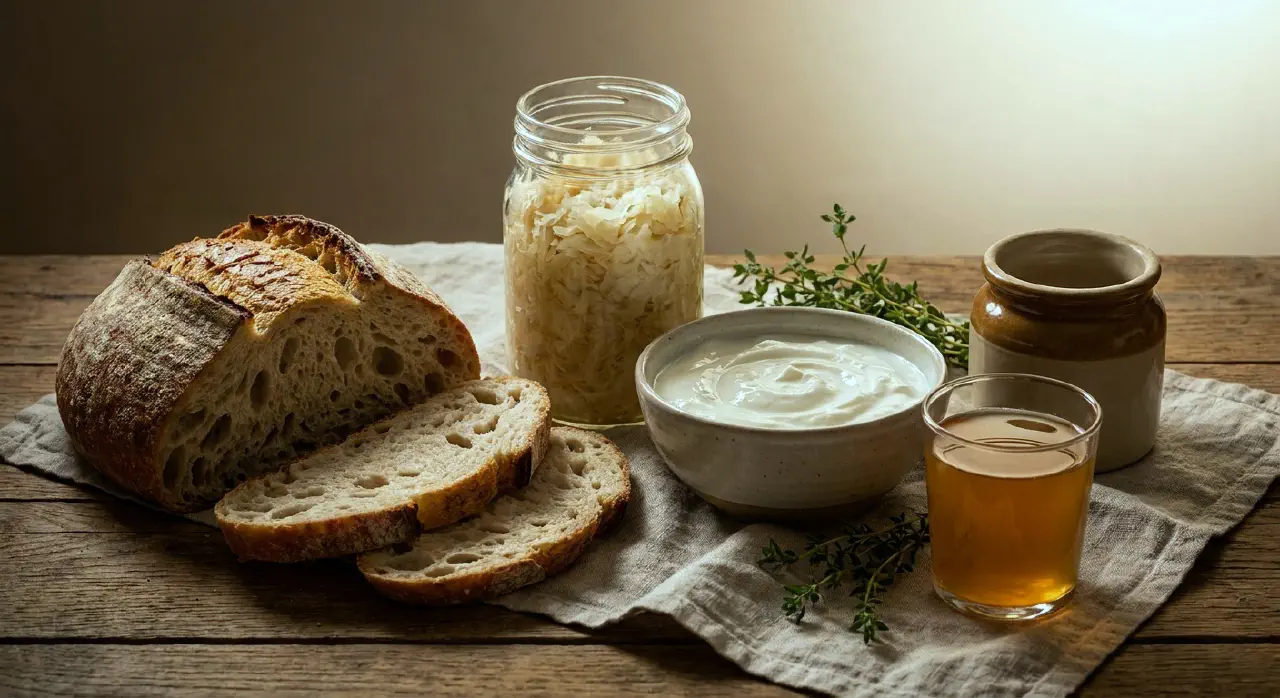
Fermentation is the transformation of food by microorganisms - yeasts, bacteria, and molds. It is one of the oldest and most consequential food technologies: bread, cheese, yogurt, wine, beer, soy sauce, vinegar, chocolate, coffee, and kimchi are all fermented foods. In every case, microbes do work that humans cannot - breaking down complex molecules into simpler, more flavorful, more digestible, or more preserved forms.
The basic mechanism
Fermentation in the strict biochemical sense is anaerobic metabolism - organisms extracting energy from sugars without oxygen, producing alcohol or organic acids as byproducts. In culinary use, the term is broader, encompassing any microbial transformation of food.
Alcoholic fermentation: Yeasts (primarily Saccharomyces cerevisiae) convert sugars to ethanol and CO₂. This is the basis of bread-baking (CO₂ leavens the dough), winemaking, and brewing.
Lactic acid fermentation: Lactic acid bacteria convert sugars to lactic acid. This acidifies and preserves food while generating tangy flavors. The basis of yogurt, sauerkraut, kimchi, and sourdough’s tang.
Acetic acid fermentation: Acetobacter bacteria convert alcohol to acetic acid (vinegar). This requires oxygen - it’s why wine left open eventually becomes vinegar.
Why fermentation matters for flavor
Microbes generate flavor compounds that cooking alone cannot produce. Lactic acid bacteria create diacetyl (buttery aroma in cultured butter), yeasts produce esters (fruity notes in wine and beer), and molds generate complex umami compounds (the depth of miso and soy sauce).
Fermentation also breaks proteins into free amino acids - including glutamic acid (MSG), which is why aged cheeses, fish sauce, and soy sauce are umami powerhouses. The longer and more complex the fermentation, the deeper the flavor.
Fermentation as preservation
Acid production (lactic or acetic) drops the pH of food below levels where most pathogens can grow. Salt further inhibits unwanted microbes while allowing salt-tolerant fermenters to thrive. Alcohol above ~14% is self-preserving. These are the three ancient preservation strategies enabled by fermentation - and they all predate refrigeration by millennia.
Fish fermentation
Eastern Asia is the world center of fish fermentation, serving two purposes: preserving abundant small coastal fish and providing concentrated savory flavors for rice-based diets. Simple fermentation (small fish + 10–30% salt, sealed 1–24 months) produces fish sauces and pastes - nam pla, nuoc mam, patis, garum. Mixed fermentation (fish + rice or grain) uses microbial acids to preserve fish while contributing tart, rich, complex flavor. The most influential example is narezushi, the original sushi - the tartness modern sushi retains through vinegar added to rice. See preserved-fish for full coverage.
Plant fermentation
Vegetable fermentation is among the oldest and simplest preservation techniques, requiring only a container, salt, and time. Lactic acid bacteria naturally present on plant surfaces flourish in brine, consuming sugars and producing lactic acid, CO₂, and alcohol that suppress spoilage. The process preserves vitamin C (protected by CO₂) and often adds B vitamins. Sauerkraut, kimchi, olives, and pickles are the classic examples, with microbial succession from mild Leuconostoc to more acidic Lactobacillus driving flavor complexity. See plant-preservation for full coverage of fermentation conditions, salt variables, and common problems.
See also
- bread-baking - yeast fermentation as leavening; pre-ferments and retarded fermentation
- leavening - yeast biology, sourdough culture science, fermentation vs chemical leavening
- flatbreads-specialty - sourdough breads, panettone’s sourdough base, enriched bread fermentation
- butter - cultured butter and the role of lactic fermentation
- eggs - century eggs use alkaline fermentation
- preserved-fish - fish sauces, pastes, narezushi, and katsuobushi
- plant-preservation - vegetable fermentation, pickling, and sugar preserves
- soy-products - koji/brine two-stage fermentation (miso, soy sauce, tempeh, natto)
- legumes - oligosaccharide reduction through sprouting and fermentation
- yogurt-and-fermented-dairy - lactic acid fermentation in dairy
- chocolate - cacao’s three-phase fermentation (yeast → lactic → acetic bacteria)
- wine - grape fermentation, tartaric acid advantage, winemaking
- beer-brewing - malting, hops, four-stage brewing, ale vs lager
- sake - simultaneous mold+yeast fermentation, koji vs chhü
- distilled-spirits - yeast fermentation as the starting point for distillation
- vinegar - acetic acid bacteria oxidizing ethanol, balsamic’s unique simultaneous fermentation
- barrel-aging - barrel-fermented character from yeast enzyme action on toasted oak
- alcohol-science - ethanol production, fermentation chemistry, flavor compounds
- precision-fermentation - temperature control in fermentation