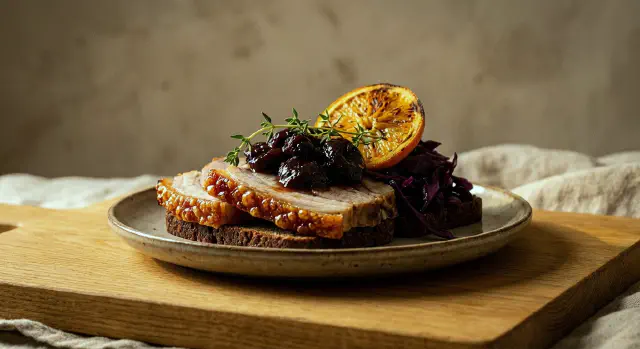
Air Fryer Ribbensteg (Danish Pork Rib Roast)
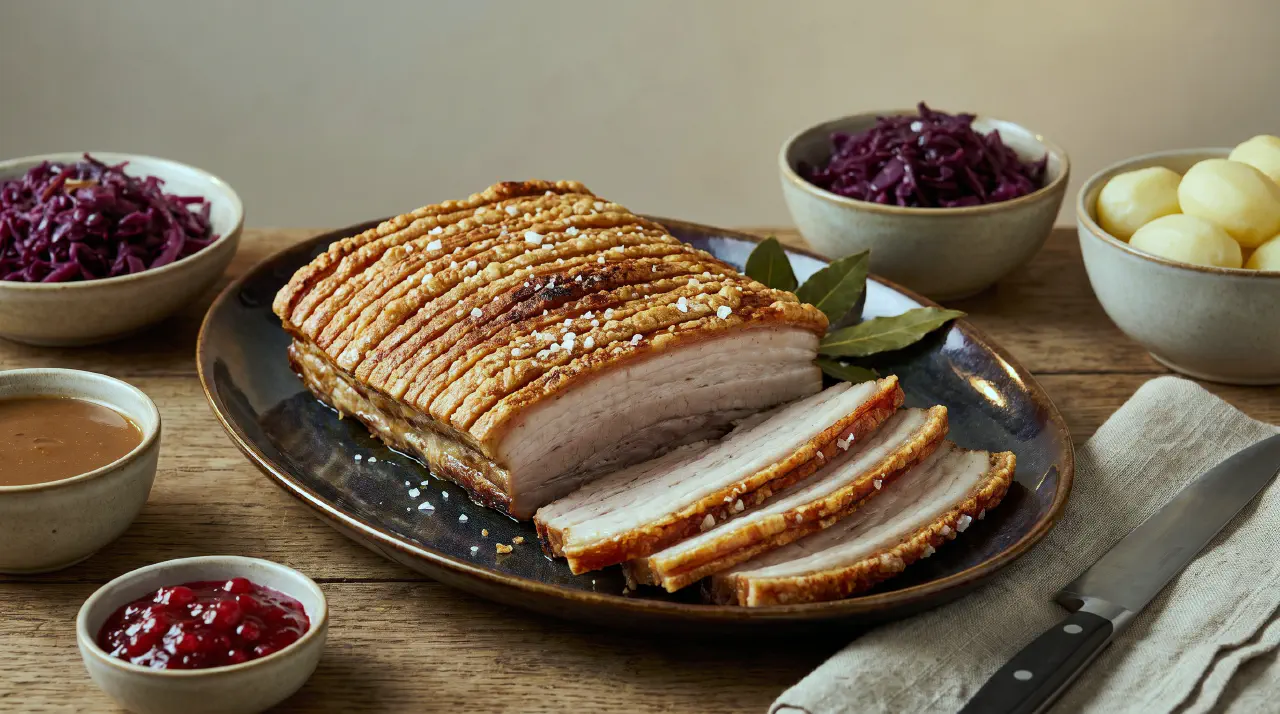
Air Fryer Ribbensteg (Danish Pork Rib Roast)
Ribbensteg is the flat belly cut of the pig with the rind on - thinner and flatter than flæskesteg from the loin, and most often sold ready-scored by the butcher. In the air fryer it gets the same two-stage treatment as in the oven: a gentle roasting phase controlled by the internal temperature, and a short, hot finish that pops the rind crisp.
The dish belongs to Christmas and the Christmas lunch. Classically it comes with brown gravy, white or browned potatoes, red cabbage and redcurrant jelly, and the next day it tastes just as good cold on rye bread with red cabbage.
The key to crisp rind is the same as always: dry rind, plenty of coarse salt massaged down into the scoring, and a short high-temperature finish at the end. Water in the bottom of the drawer collects the drippings and keeps the smoke down, but it must never touch the rind - wet rind won’t crisp.
Ingredients
Serves 4
- 1.2 kg ribbensteg with rind (preferably ready-scored by the butcher)
- 1-2 tbsp coarse salt (flaky salt or coarse sea salt)
- 2-3 dl water, for the bottom of the air fryer
- 2-3 bay leaves (optional, in the water)
- black pepper (optional, on the meat side)
Directions
Take the ribbensteg out of the refrigerator in good time, and pat the rind thoroughly dry with paper towel.
Check the scoring. The rind should be scored all the way through rind and fat, but not down into the meat. Score again with a sharp knife where needed, with about 0.5-1 cm between the cuts.
Massage plenty of coarse salt down into all the cuts and over the rind. Salt and, if you like, pepper the meat side too.
Pour 2-3 dl water into the bottom of the air-fryer drawer, ideally with a couple of bay leaves. The water must not reach up to the rind. Place the roast on the rack with the rind facing up, so it lies flat and the air can circulate freely.
Roast at 340°F (170°C) for about 50-55 minutes, until the internal temperature is 145-150°F (62-65°C). Insert a meat thermometer into the thickest part of the meat, and top up with a little water if it steams away during cooking.
Turn it up to 390-400°F (200°C) and roast for another 10-15 minutes, until the rind has popped, golden and crisp all over. Keep an eye on it, so it doesn’t burn, and reposition the roast if needed for even crispness.
Take the roast out when the internal temperature is 150-160°F (65-70°C), and let it rest uncovered for 10-15 minutes. The rind becomes even crisper while it rests.
Carve the roast so each portion gets crisp rind, and serve immediately. The drippings from the bottom can be boiled up into brown gravy.
Notes
As a guide, count on about 50-55 minutes at 340°F (170°C) plus 10-15 minutes at 390-400°F (200°C) for a roast of 1-1.2 kg. Reckon on 45-55 minutes per kilo in phase 1 as a rule of thumb, but always go by the internal temperature rather than the clock.
If the rind is chewy after phase 2, give it a few more minutes at 400°F (200°C). Dry rind, plenty of salt in the scoring and a short high-temperature finish are what make the rind crisp.
If the roast doesn’t fit in the basket, cut it into 2-4 square pieces - they crisp up faster.
Serve with brown gravy, white or browned potatoes, red cabbage and redcurrant jelly. Cold on rye bread with red cabbage the next day is just as classic.
See Also
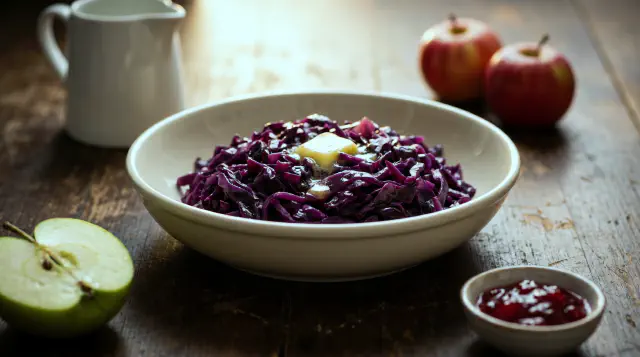
Braised Red Cabbage
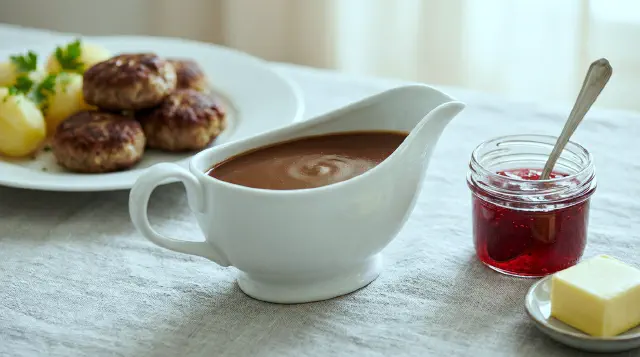
Brun Sovs (Danish Brown Gravy)
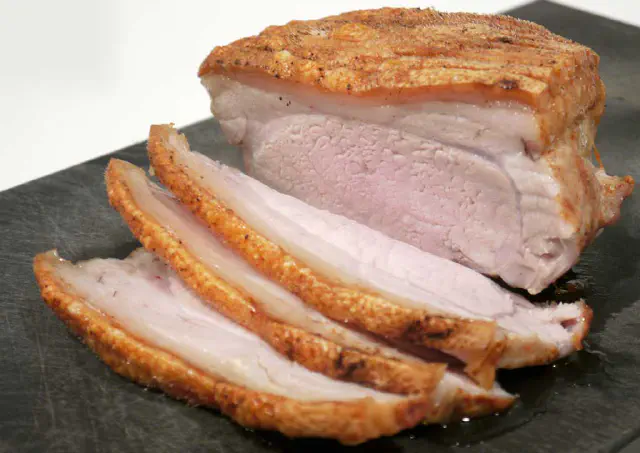
Danish Pork Roast with Crispy Crackling
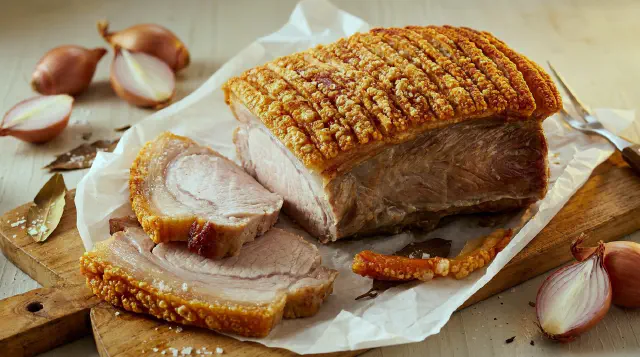
Danish Roast Pork with Crackling