Sous Vide Beef Brisket
Sous Vide Beef Brisket
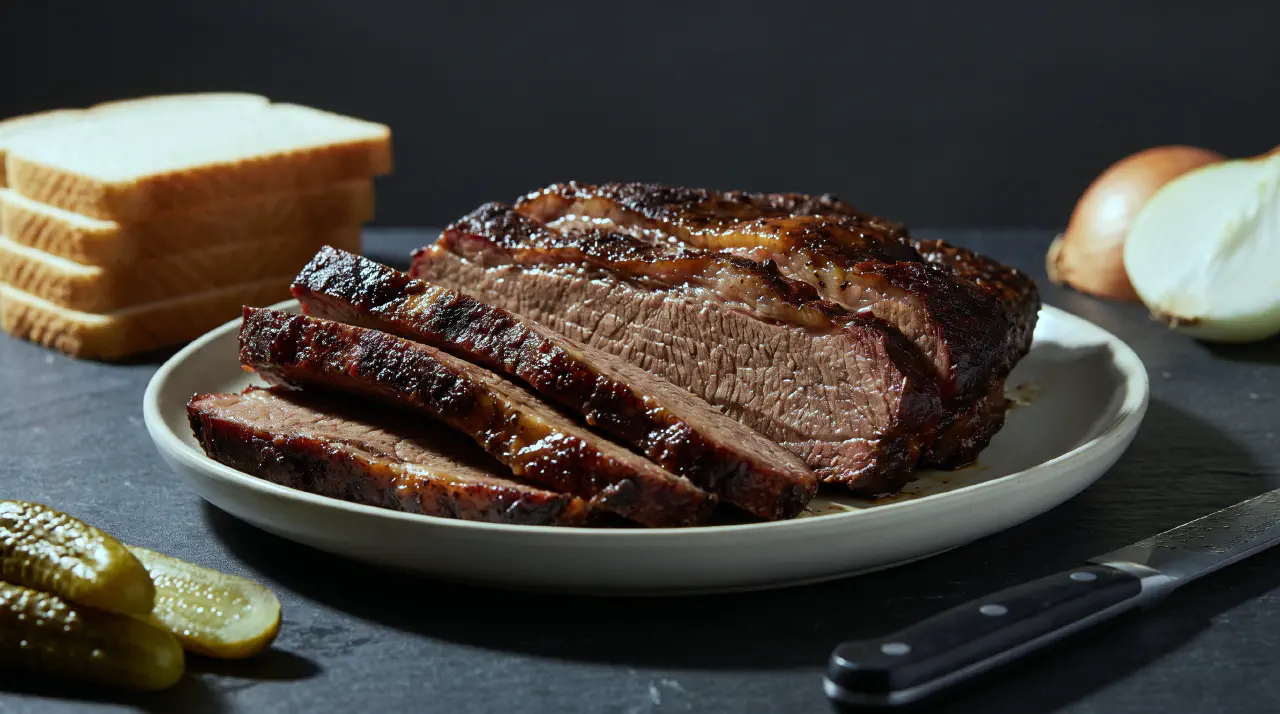
Brisket is the toughest cut on the cow, which is exactly why pitmasters spend ten or twelve hours babysitting a smoker to break it down. A sous vide bath does the same job with none of the guesswork: a whole brisket, rubbed with nothing more than salt and coarse black pepper, spends a day and a half at a steady 68°C (155°F) until the connective tissue that would otherwise make it chewy has melted into gelatin. What comes out of the bag is already fork-tender - it just needs an hour or two of real heat to build the dark, crusty bark that gives brisket its flavor and color: a peppery, almost bitter crust around meat that tastes rich, deeply beefy, and faintly smoky underneath.
That finishing step is non-negotiable. Sous vide cooks meat evenly but never browns it, so the brisket goes from bag to a hot oven or a smoker loaded with hardwood chunks, where the surface dries out and darkens into the mahogany crust barbecue is known for. The interior, protected by the low, even cook that came before, stays moist the whole time - the classic failure mode of an oven-only or grill-only brisket, drying out long before the middle turns tender, simply doesn’t happen here.
This is a deliberate departure from a pit-smoked brisket, and it solves a real problem: a smoker’s temperature drifts, stalls, and depends on weather and attention span, while a water bath holds 68°C for as long as it takes without anyone watching it. The trade-off is a shorter, less intense smoke - the bark that forms in two or three hours in an oven or smoker is real, but it’s not the same as ten hours of continuous wood smoke. It’s a compromise that favors the moist, fall-apart texture people actually want to eat, and it works particularly well for anyone without a dedicated smoker.
Serve it the way you’d serve any Texas brisket: sliced against the grain, piled on a platter, with nothing more elaborate than white bread, pickles, and raw onion on the side. It holds up well alongside coleslaw, baked beans, or mac and cheese, and it’s a good make-ahead centerpiece for a crowd, since the long cook happens a day or two before anyone needs to be fed.
Ingredients
Serves 6-8
- 2.25-2.7 kg beef brisket, flat cut, fat cap trimmed to 0.5 cm (or flat with part of the point attached)
- 2 tbsp kosher salt (or 1 tbsp fine table salt)
- 2 tbsp black pepper, coarsely ground
- 1/4 tsp liquid smoke (optional, omit if finishing on a real smoker)
Directions
Trim the brisket’s fat cap down to about 0.5 cm (1/4 inch) - any thicker and it won’t render properly during the long cook. Combine the salt and coarsely ground pepper and rub it over every surface of the meat.
Seal the brisket in a vacuum bag, splitting it crosswise into two pieces first if it doesn’t fit in one. Add the liquid smoke to the bag if using, then seal.
Heat a sous vide water bath to 68°C (155°F). Submerge the bagged brisket, weighting it down if it floats, and cover the bath with a lid or foil to cut down on evaporation over such a long cook. Cook for 24 to 36 hours.
Lift the bag out of the bath and let the brisket cool to room temperature in the bag, or chill it briefly in an ice bath. This firms the meat up and makes it much easier to handle before finishing. Once cooled, remove the brisket from the bag and pat it completely dry with paper towels.
To finish in the oven, preheat to 150°C (300°F). Set the brisket on a wire rack over a baking sheet and roast for about 2 hours, until a dark, mahogany bark forms over the surface. To finish on a smoker instead, preheat it to 135-150°C (275-300°F) with hardwood chunks - oak or hickory both work - and smoke the brisket for about 3 hours, until the same deep, dark bark develops.
Rest the brisket for 15 minutes, then slice against the grain and serve.
Notes
Two temperature schools exist for sous vide brisket. This recipe uses 68°C (155°F) for 24 to 36 hours, which gives the moist, traditionally fall-apart texture of a pit-smoked brisket. For a firmer, more steakhouse-sliceable result, cook instead at 57°C (135°F) for 36 to 72 hours - the texture lands closer to a well-done steak than to pulled barbecue. Avoid 63°C (145°F) as a standalone finishing temperature: it’s a dead zone that dries the meat out without breaking down enough connective tissue to compensate.
Liquid smoke stands in for real wood smoke when finishing in the oven. Leave it out entirely if you’re finishing on a smoker with real wood.
For a sweeter, more complex rub, swap the salt and pepper for a fuller spice blend - paprika, garlic powder, cumin, coriander, chipotle, and a little brown sugar. It’s a valid variation, just not the classic Texas profile, which is salt and pepper only.
Save any liquid that collects in the sous vide bag; reduced on the stovetop, it makes a simple pan sauce.
Leftover brisket that hasn’t been through the finishing step keeps refrigerated for up to 5 days, or frozen for up to 3 months.
See Also
Beef Cuvette - Red Meat Sous Vide
Kansas City BBQ Sauce
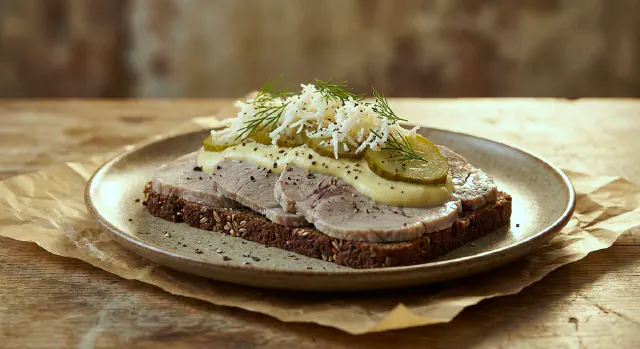
Smørrebrød with Beef Brisket, Mustard and Pickled Cucumber