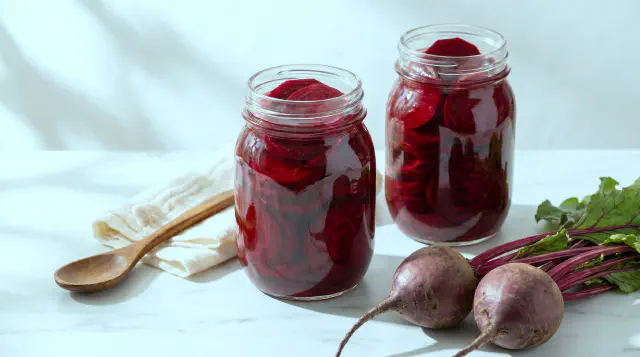
Sous Vide Beets
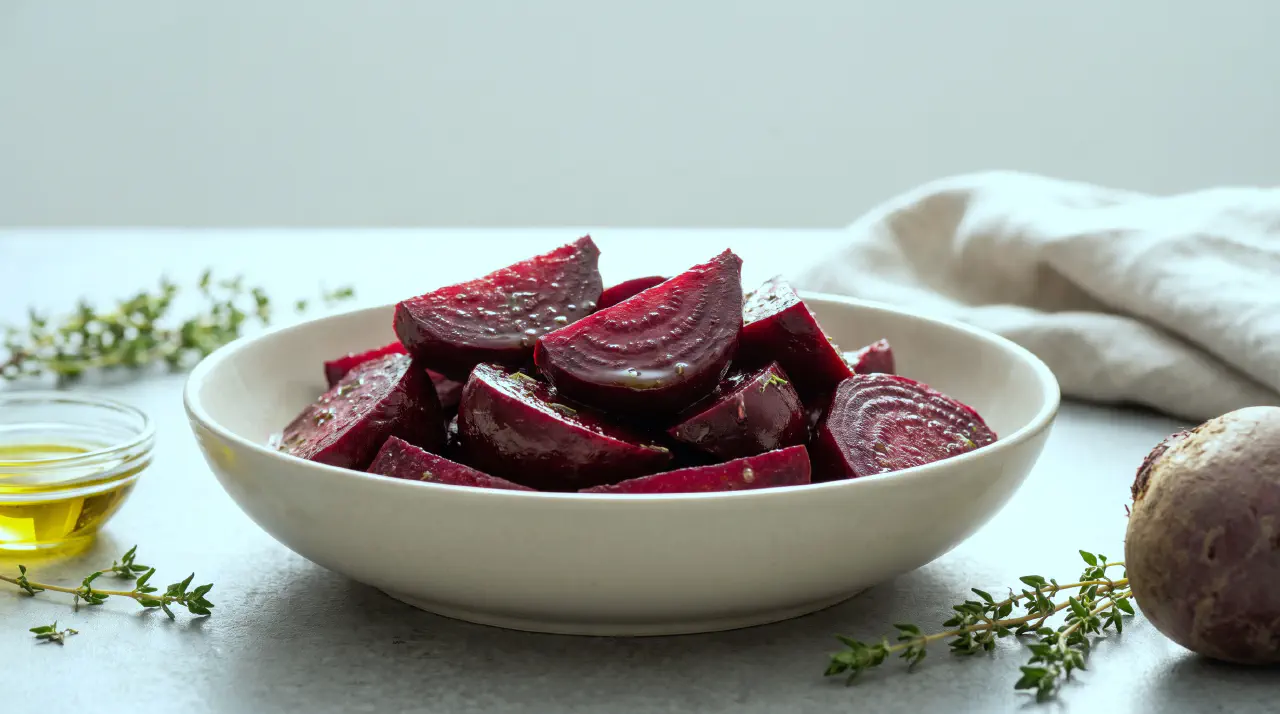
Sous Vide Beets
Whole, unpeeled beets go into a sealed bag with olive oil, vinegar, and thyme, then spend several hours in a water bath held at a single, exact temperature. Nothing escapes into the bag except what the beets naturally release as they cook, and nothing gets diluted by standing water the way it does on the stovetop. The beets come out fork-tender edge to edge, the skins loosen enough to rub off with a paper towel, and the color and sugar that would normally leach into a pot of boiling water stay right where they started.
Boiling or roasting a whole beet forces a trade-off: turn up the heat and the outside overcooks before the center gives up its resistance, or hold back and the whole thing takes forever anyway. Sous vide sidesteps the problem by holding the water at exactly the temperature the beet needs, for as long as it takes, with no risk of scorching or drying out. The result tastes more like a beet - deeper and a little sweeter than a boiled one - because none of that flavor had anywhere to go.
Sous vide isn’t tied to any one cuisine; it’s a precision method that moved out of professional kitchens once immersion circulators became affordable at home, and it works on beets the same way it works on anything else dense and root-like - low and slow, at a temperature tuned to the texture that’s being chased. Whole beets take the long route, four to six hours at a higher temperature, and reward the wait with a firmer, more concentrated result. Peeling and cutting them first cuts that time down to about an hour, at a slightly lower temperature, at the cost of a messier prep and a flatter flavor.
Serve the beets warm with the herbed cooking liquid they cooked in, or let them cool and build a composed salad around them - goat cheese, walnuts, a handful of bitter greens, and a squeeze of citrus all work well against beets’ sweetness. They also keep for a week in the refrigerator, so they’re worth cooking well ahead of whatever they end up next to.
Ingredients
Serves 4
- 900 g beets, trimmed and scrubbed, left whole and unpeeled (5-7.5 cm diameter)
- 3 tbsp extra virgin olive oil
- 2 tbsp vinegar (white wine or sherry vinegar)
- 8 sprigs fresh thyme
- 1 1/2 tsp salt
- 1/2-1 tsp black pepper, freshly ground
Directions
Trim and scrub the beets, but leave the skin on and don’t cut them - keeping them whole holds in color and moisture through the long cook, and the skin protects the flesh until it’s ready to slip off on its own.
Heat the water bath to 191°F (88°C).
Put the beets, olive oil, vinegar, thyme, salt, and pepper in a large zip-top freezer bag. Press out as much air as possible with the water-displacement method - lower the bag slowly into a bowl of water so the pressure forces air out through the top seal before you close it - then place that bag inside a second one and seal it too. The cook runs for hours, and a seam that gives out partway through means starting over.
Submerge the bag in the water bath. Beets float, so weigh it down with something heavy, a few spoons or a small plate, or clip the corner to the side of the container so the whole bag stays underwater.
Cook for 4 to 6 hours, until a paring knife slides into the center of the largest beet without resistance. Smaller beets, toward the 2-3 inch (5-7.5 cm) end, are usually done closer to 4 hours; anything larger needs the full 6.
Lift the bag out and set it aside until the beets are cool enough to handle. Pour the cooking liquid into a bowl and set it aside too - it’s already seasoned and worth keeping. Rub the skins off the beets with a paper towel; they should come away easily. Beets stain on contact, so work over parchment or wear gloves if pink fingers aren’t part of the plan.
Cut the peeled beets into wedges and toss them with the reserved cooking liquid. Taste and adjust the salt, then serve warm, or let them cool and serve chilled.
Notes
For a faster version, peel the beets raw, cut them into 1/4-inch (0.5 cm) slices or 1-inch (2.5 cm) cubes, and cook at 183-185°F (84-85°C) for 60 to 90 minutes instead of the long whole-beet cook. Scale the oil and vinegar down to match the smaller volume of beets, and skip the double-bagging - a single bag holds up fine over a shorter cook. Peeling raw beets is messier and stains more than rubbing the skins off after cooking, so this version trades a longer prep for a shorter bath.
Cooked beets keep well in their sealed bag for up to a week in the refrigerator: cool them in an ice bath first, then chill. Bring back to room temperature, or warm gently, before serving.
Beets stain hands, cutting boards, and towels on contact. Working on parchment paper or wearing gloves during peeling saves the cleanup.
See Also
Beef Cuvette - Red Meat Sous Vide
Beetroot Horseradish Relish (Ceklas Torma)
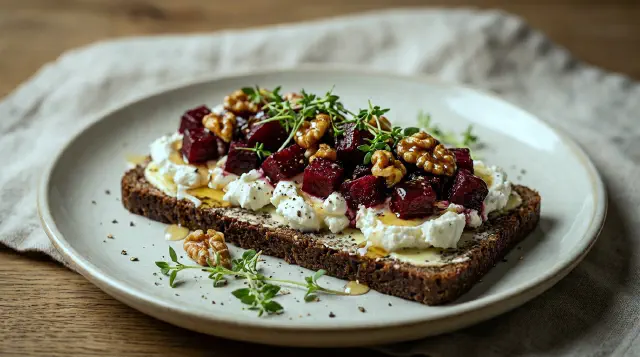
Smørrebrød with Goat Cheese, Beetroot, Honey and Walnuts