Sous Vide Butternut Squash
Sous Vide Butternut Squash
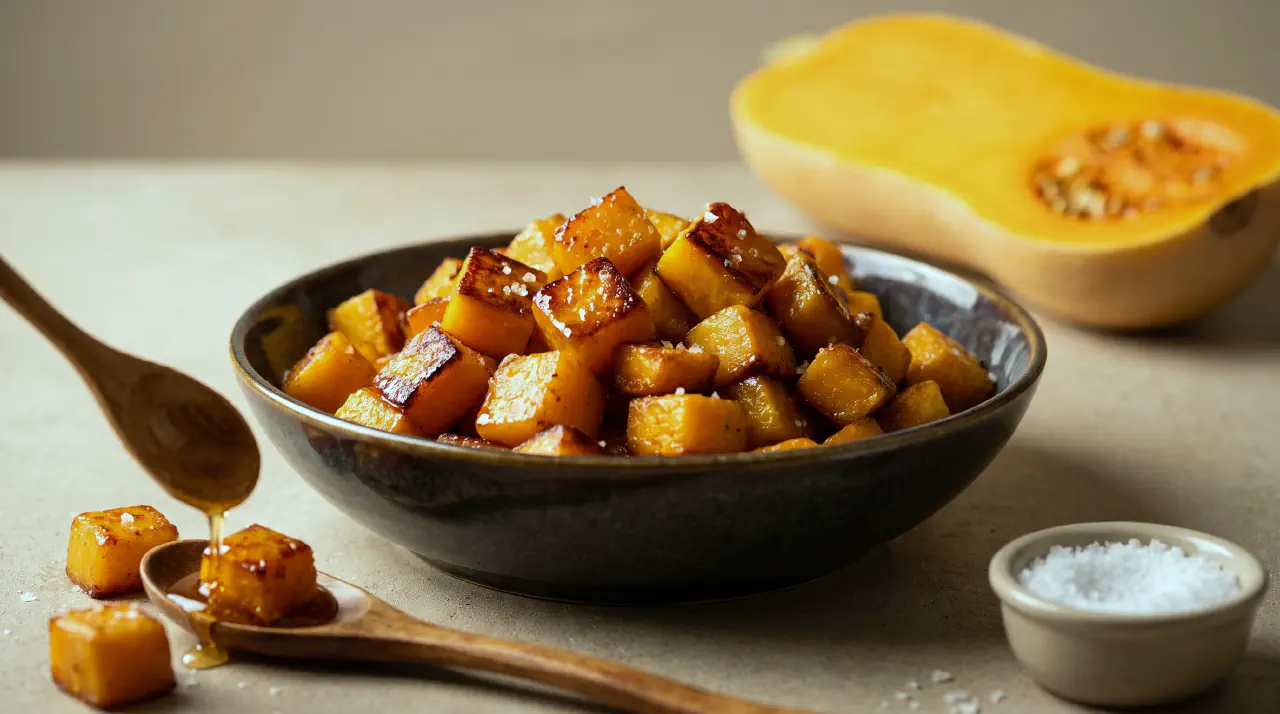
Butternut squash goes into the water bath as cubes and comes out fork-tender all the way through, with no soft outer layer collapsing before the center catches up the way it can in a pot of boiling water or a hot oven. A short honey-butter toss before bagging seasons the squash from the inside, and a hard sear afterward in avocado oil brings back the browning that the bath itself can’t produce, laying a caramelized edge over the squash’s naturally sweet, mild flavor.
The bath runs far hotter than any sous vide meat or fish, which surprises people who know the technique only from steak. Squash needs that heat to break down the pectin in its cell walls; below roughly 183°F (84°C), the cubes stay firm almost indefinitely no matter how long they sit in the water. Squash also floats, so the bag has to be weighted down or the top layer ends up cooking unevenly, sitting proud of the water instead of fully submerged. And because sous vide never gets hot enough for the Maillard reaction, none of the caramelized flavor or color happens in the bag itself; it all comes from the skillet afterward.
Squash is an old crop, native to the Americas long before Europeans arrived, and it has always been cooked simply, roasted, boiled, or braised in butter and sugar. Sous vide is the newer half of this pairing, a precision method borrowed from restaurant kitchens and made practical at home once immersion circulators became affordable. Applying it here doesn’t change what squash tastes like, just how evenly it cooks before the sear takes over.
This is a natural fit for a fall or winter table, alongside roast chicken, pork, or a holiday turkey, and it scales easily since the bath itself does the same job whether the bag holds one portion or ten. Cooked past caramelizing and pushed instead toward a smoother texture, the same base method turns into a squash puree; see the note below for that variation.
Ingredients
Serves 4
- 900 g butternut squash (about 1 medium), peeled, seeded, and cut into 2.5 cm cubes
- 14 g unsalted butter (or neutral oil)
- 3 g kosher salt, plus more, to taste
- black pepper, freshly ground, to taste
- 21 g honey, optional, for deeper caramelization
- 13 g avocado oil (or other high-smoke-point oil), for searing
- flaky sea salt, for serving, optional
Directions
Toss the squash cubes with the butter, salt, pepper, and honey if using, coating them evenly.
Preheat the water bath to 185°F (85°C).
Seal the squash in a vacuum bag, or a zip-top bag using the water displacement method, spreading the cubes into as close to a single layer as possible. Submerge the bag and weight it down with a rack, a trivet, or another heavy, food-safe object, since squash floats and an unsubmerged bag cooks unevenly. Cook for 45 to 60 minutes, until the squash is fork-tender all the way through.
Remove the bag from the bath. Drain the squash into a bowl, keeping the liquid if a glaze is wanted.
Heat a skillet over medium-high heat with the avocado oil. Add the squash in a single layer and sear for 2 to 3 minutes per side, until browned and caramelized; work in batches rather than crowding the pan, which steams the squash instead of browning it.
For a glaze, pour the reserved cooking liquid into the same pan once the squash is out and simmer it down until it thickens enough to cling to the cubes, then toss the squash back through it.
Finish with flaky sea salt and serve.
Notes
For a puree instead of caramelized cubes, raise the bath to 190-200°F (88-93°C) and cook for 1 to 1½ hours, well past the point that would hold a cube’s shape. Blend the squash directly with a little of the bag’s cooking liquid until smooth; there’s no sear step in this version, since a puree has no surface left to brown.
Cook time is forgiving at 185°F (85°C): the squash can sit in the bath for a couple of hours past the 60-minute mark without turning mushy, since a fixed water-bath temperature can’t overcook it the way a stovetop or oven can.
Don’t skip weighting the bag down. Squash floats reliably enough that an unweighted bag rides at the surface, and cubes near the top end up undercooked while the submerged ones finish on time.
See Also
Air Fryer Butternut Squash
Air Fryer Roasted Root Vegetables
Air Fryer Spaghetti Squash
Beef Cuvette - Red Meat Sous Vide