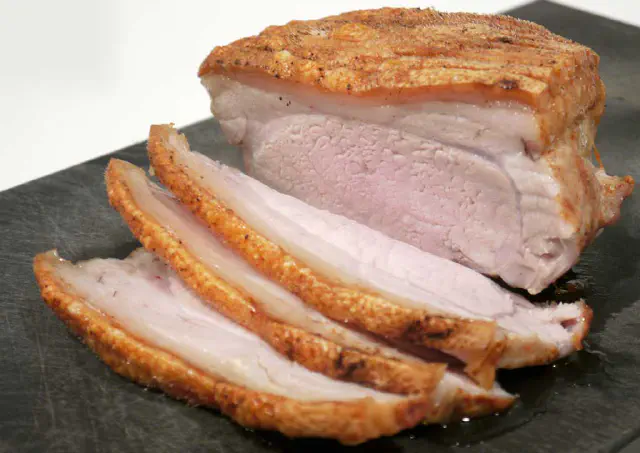
Sous Vide Flæskesteg (Danish Roast Pork)
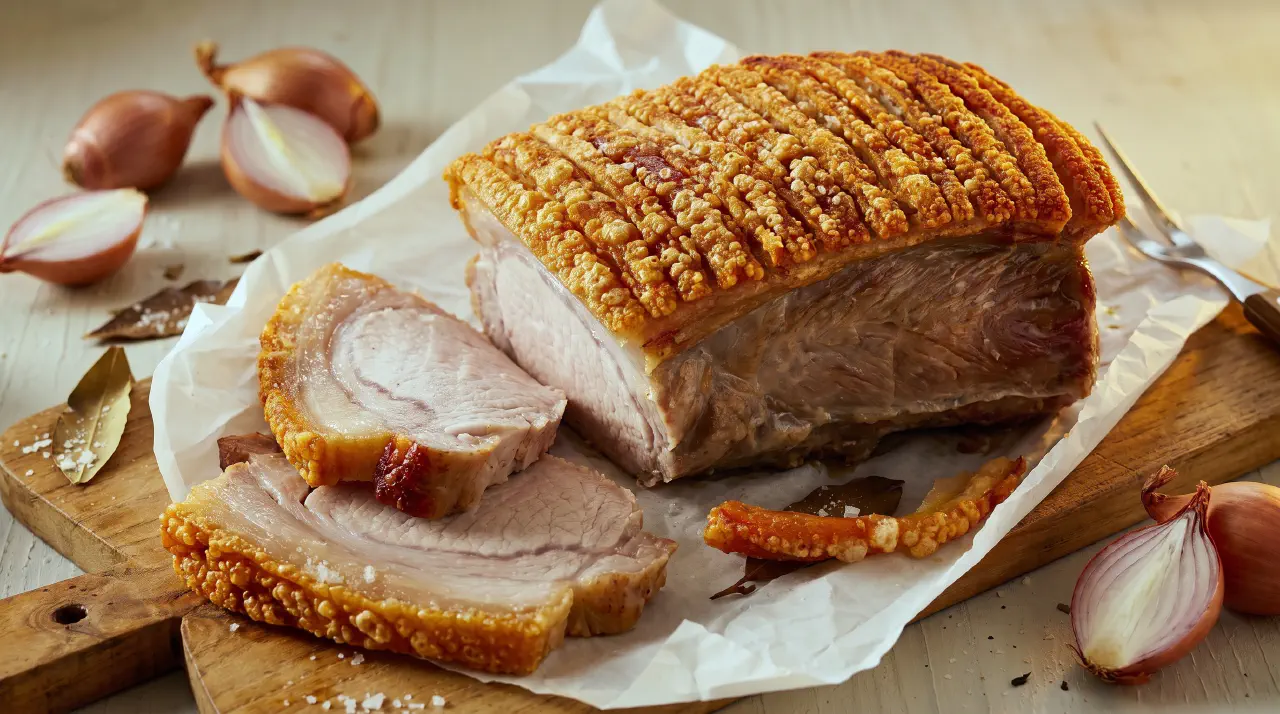
Sous Vide Flæskesteg (Danish Roast Pork)
Sous vide flæskesteg is a pork loin roast with the rind on, cooked in a water bath at low temperature and then crisped off under fierce oven heat. The method solves the classic problem of an ordinary oven-roasted flæskesteg: the meat wants low, slow heat to stay juicy, while the rind demands violent heat to turn crisp. The two requirements are hard to meet at the same time in a single oven.
The sous vide technique separates the two steps. The roast is first cooked in a water bath at 136°F (58°C) for 5-6 hours, so the meat is evenly done from edge to edge without drying out. Afterward, the rind is scalded with boiling water, dried thoroughly and salted in the scored lines, before the roast goes into an oven at maximum heat for a short time, until the rind bubbles up and turns golden and crisp.
The result is juicy, tender meat and a crisp, salty crackling that gives the classic contrast between soft and crunchy - and it’s harder to mess up than the traditionally oven-roasted version. The meat can’t turn dry, because it never goes above the target temperature, and the crackling gets its crispness in a separate step where you have full control.
Flæskesteg is a classic Danish Sunday roast and a fixture of the Christmas table, where it’s served with caramelized or plain boiled potatoes, red cabbage and brun sovs (Danish brown gravy). The sous vide method is a more recent technical approach to the same classic dish and is now widespread among Danish sous vide enthusiasts as a more reliable path to the same result.
Ingredients
Serves 6
- 1.2-1.5 kg pork loin roast with rind, rind scored down to the fat layer
- 12-15 g fine salt, for the meat side
- 3-4 bay leaves (optional)
- freshly ground pepper (optional)
- fine salt, for the rind, as needed
Directions
Check the scored lines in the rind and, if needed, cut them deeper so they go all the way down to the fat layer but not into the meat. Rub the salt, and the pepper if using, into the meat side - not into the rind - and lay the bay leaves against the meat. Vacuum-seal the roast in a sous vide bag.
Cook the roast sous vide at 136°F (58°C) for 5-6 hours. The roast tolerates the wide time margin without harm, so both 5 hours and 6 hours give a safe and juicy result.
Take the roast out of the bag and save the cooking juices for gravy. Pour boiling water over the rind several times to remove the surface gelatin, then pat the meat and rind completely dry with paper towels. Rub fine salt thoroughly into all the scored lines in the rind.
Preheat the oven to maximum heat with the fan on - avoid the broiler setting, since it browns unevenly. Put the roast in and crisp the rind at this temperature for 20-30 minutes, until it bubbles up and turns golden and crisp. Watch it closely for the last few minutes, since the browning happens very fast at the end.
Let the roast rest, covered, for 5-10 minutes, then slice it and serve.
Notes
The roast can easily be cooked sous vide up to a week in advance. Chill the bag quickly in cold water after the sous vide, keep it in the fridge, and reheat it at 136°F (58°C) for about an hour before crisping the rind.
For more control over the crispness, the rind can be cut off before the sous vide and cooked separately: boil it in salted water for 20 minutes, then bake it at 400°F (200°C) for 30-45 minutes.
Serve traditionally with caramelized or plain boiled potatoes, red cabbage and brun sovs (Danish brown gravy).
See Also

Air Fryer Pork Crackling (Flæskesvær)
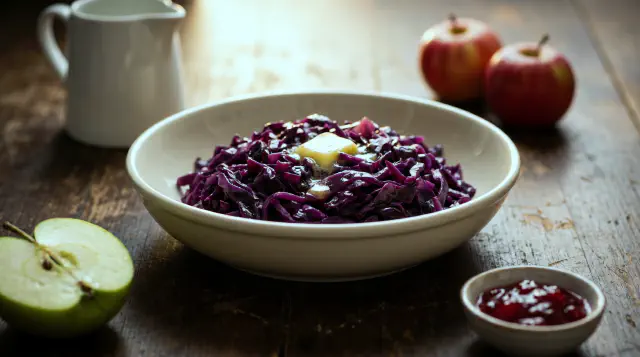
Braised Red Cabbage

Brun Sovs (Danish Brown Gravy)