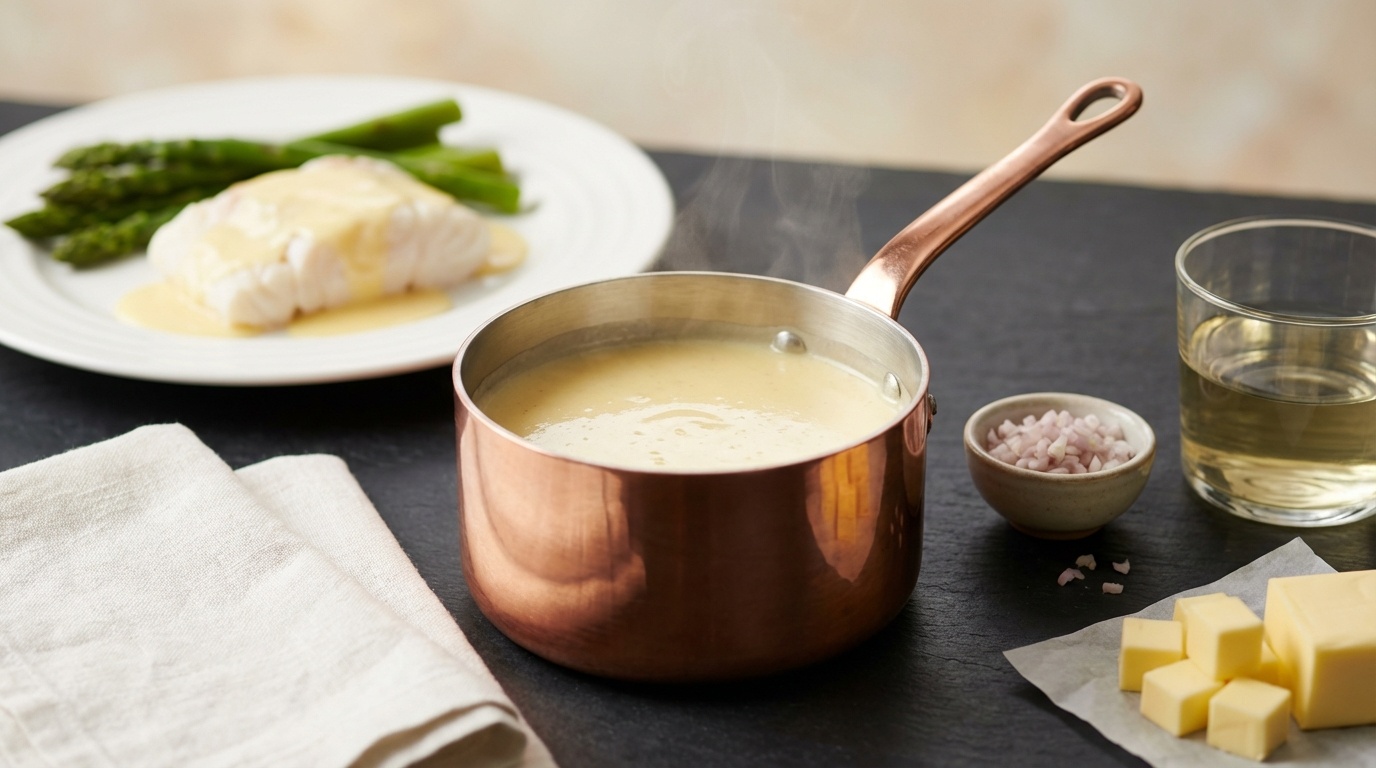
French Velouté Sauce
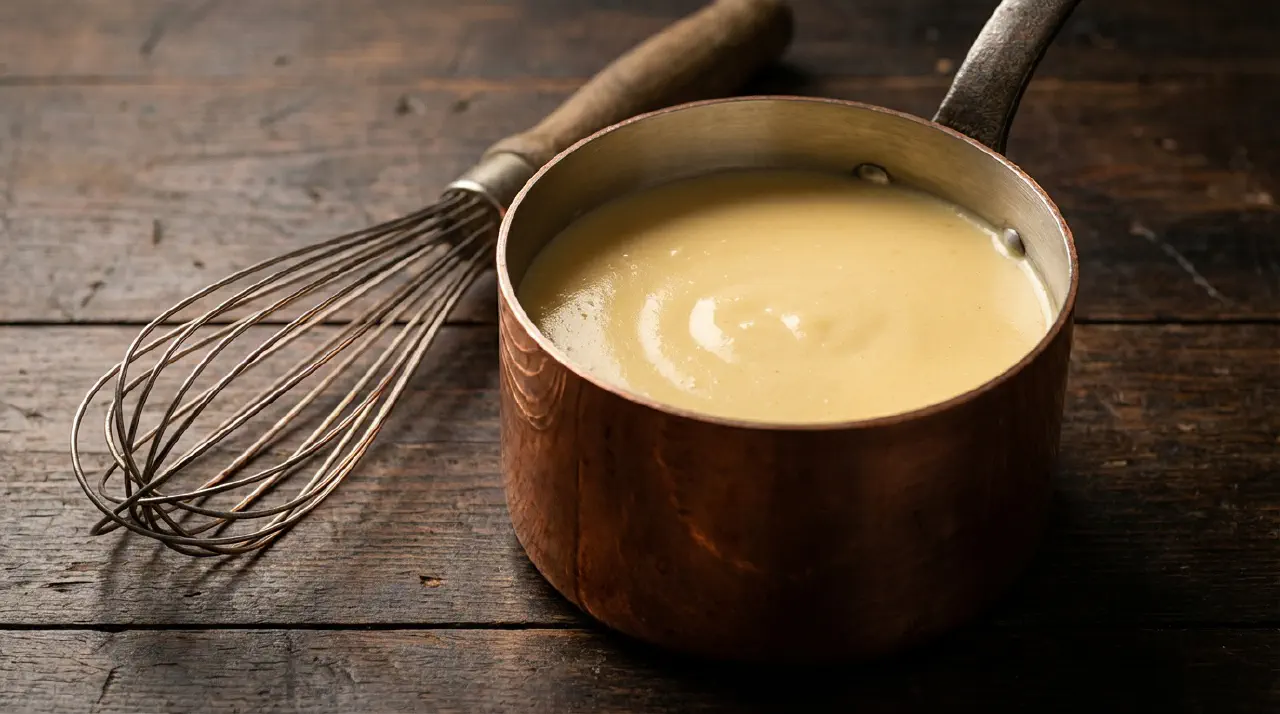
French Velouté Sauce - kvalifood.com
Velouté (French for “velvety”) is one of the five French mother sauces codified by Auguste Escoffier. It consists of a light (blond) roux thinned with a white stock - that is, a stock made from unroasted bones. The stock type determines the sauce name: chicken velouté, fish velouté, veal velouté.
Use chicken velouté with roasted or poached poultry, fish velouté with poached or steamed seafood, and veal velouté with veal or vegetable dishes. It also serves as the base for derivative sauces like sauce allemande and sauce suprême.
Makes ca. 500 ml / 2 cups - about 4-6 servings
Ingredients
- 30 g (2 tbsp) unsalted butter
- 30 g (3 tbsp) all-purpose flour
- 500 ml white stock - chicken, veal, or fish (see notes)
- Salt, to taste
- White pepper, to taste
Optional aromatics (professional method)
- 1/2 small onion (~35 g), finely diced
- 1/2 celery stalk (~25 g), finely diced
- 1 sprig fresh thyme (or 1/4 tsp dried)
- 2-3 parsley stems
- 2-3 whole white peppercorns
Directions
-
Heat the stock. Bring the stock to a gentle simmer in a separate saucepan. Keep warm.
-
Optional: sweat aromatics. If using aromatics, melt the butter in a heavy-bottomed saucepan over low heat. Add onion and celery, cook gently for 4-5 minutes until soft and translucent. Do not let them color.
-
Make the roux. If not using aromatics, melt butter in the saucepan over medium-low heat. Add all the flour at once and stir continuously with a wooden spoon or whisk for 2-3 minutes. The roux should turn a pale golden (blond) color and smell pleasantly toasted, with no raw flour aroma remaining.
-
Add the stock. Remove the roux from heat briefly. Add about one-third of the warm stock and whisk vigorously until smooth. Return to medium heat and add the remaining stock in one or two additions, whisking constantly. The initial small addition prevents lumps.
-
Simmer. Bring to a gentle boil, then reduce heat to low. If using herb aromatics, add them now. Simmer for 20-30 minutes, stirring occasionally. Skim any skin or foam that forms on the surface.
-
Strain. Pass the sauce through a fine-mesh strainer or chinois into a clean saucepan. Press on any solids to extract flavor, then discard them.
-
Season and serve. Taste and adjust seasoning with salt and white pepper. If the sauce is too thick, thin with a splash of warm stock. If too thin, simmer uncovered a few minutes longer to reduce.
Notes
- Stock choice matters more than anything else. Velouté is only as good as the stock it is built on. Use homemade stock if at all possible. The stock must be a “white” stock - meaning bones were simmered, not roasted.
- Veal stock is the classical default and produces the most neutral, refined sauce. Chicken stock is the most common and practical choice. Fish stock (fumet) is used for seafood dishes.
- White pepper is traditional in French light sauces. Black pepper leaves visible specks.
- Straining is not optional if using aromatics. Even without aromatics, straining produces a noticeably smoother result.
- Simmer at least 20 minutes. Shorter times leave a perceptible raw flour taste.
- To prevent a skin from forming while holding the sauce, place a piece of parchment paper or plastic wrap directly on the surface, or dot the surface with small pieces of butter.
Daughter Sauces (for reference)
Starting from this base velouté, common derivative sauces include:
- Sauce Suprême - chicken velouté + heavy cream + mushroom cooking liquid
- Sauce Allemande - veal or chicken velouté + egg yolks + cream + lemon juice
- Sauce Normande - fish velouté + mushroom cooking liquid + cream + egg yolks + butter
- Sauce Bercy - fish velouté + shallots + white wine + lemon juice + parsley + butter
- Sauce Poulette - chicken velouté + mushrooms + lemon juice + parsley
See Also
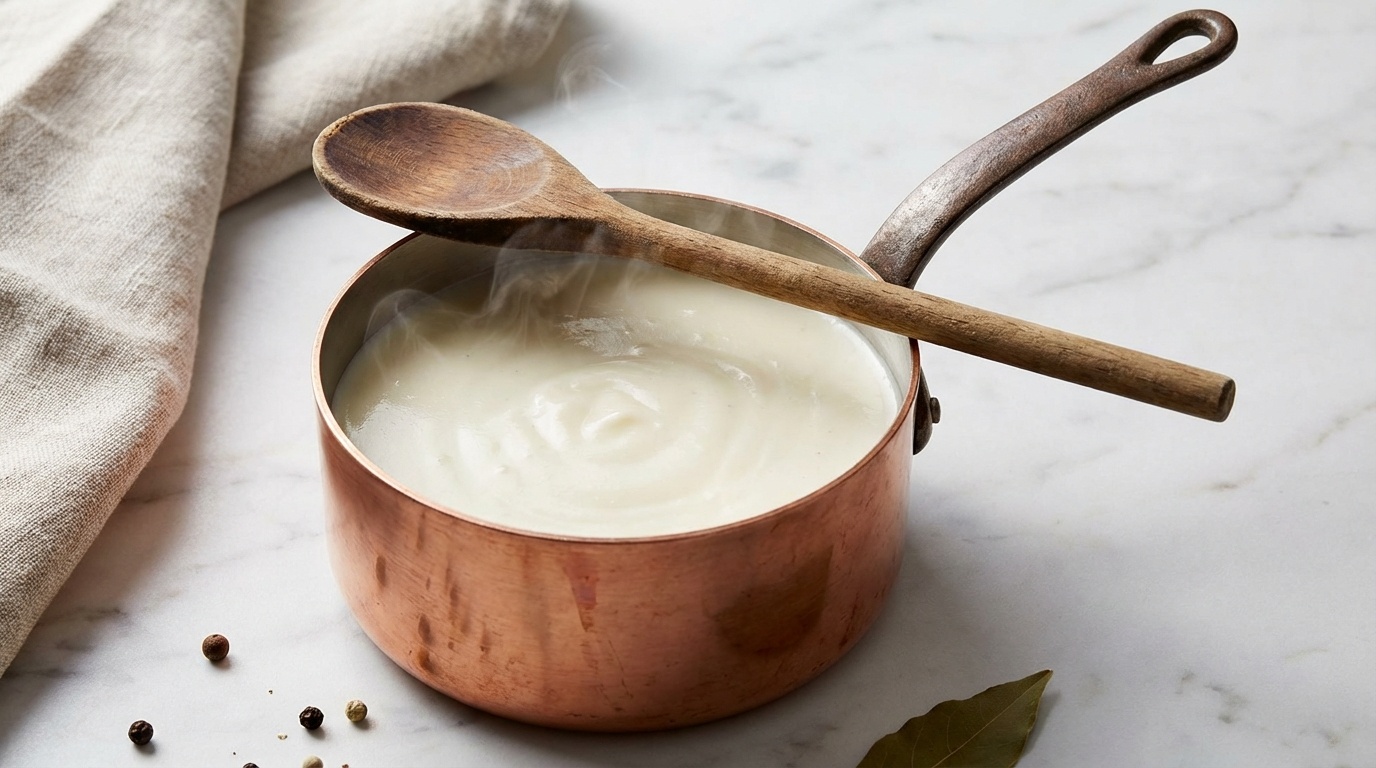
Béchamel Sauce
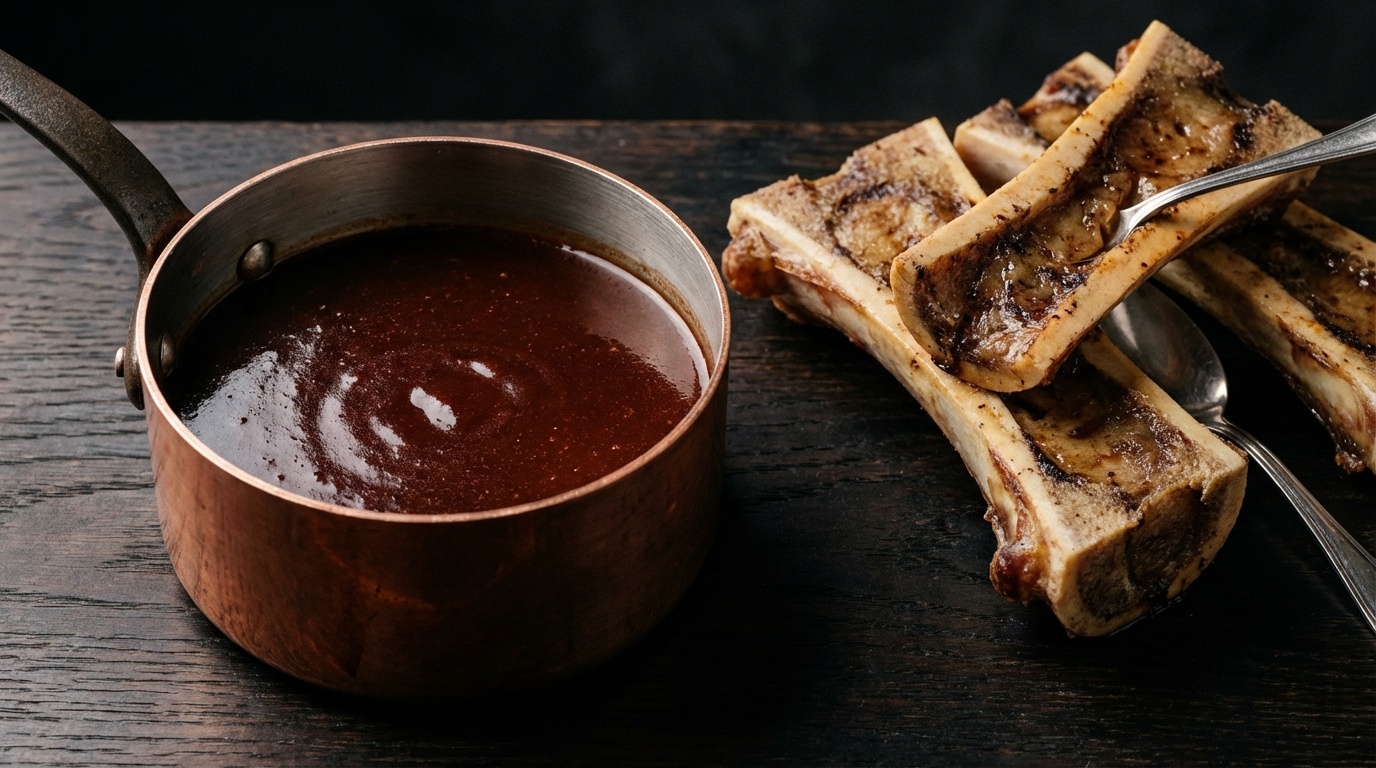
Sauce Bordelaise
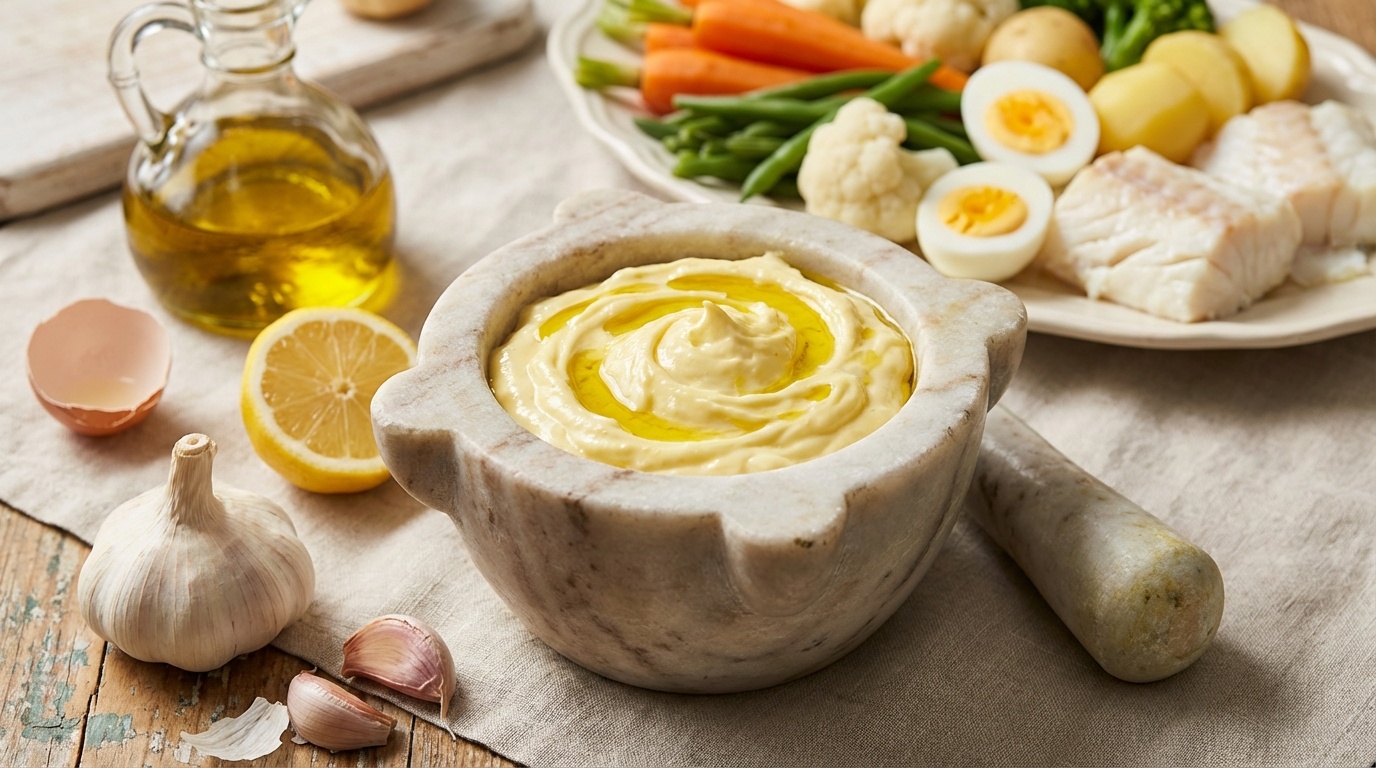
Aioli (Traditional Provencal Garlic Emulsion)
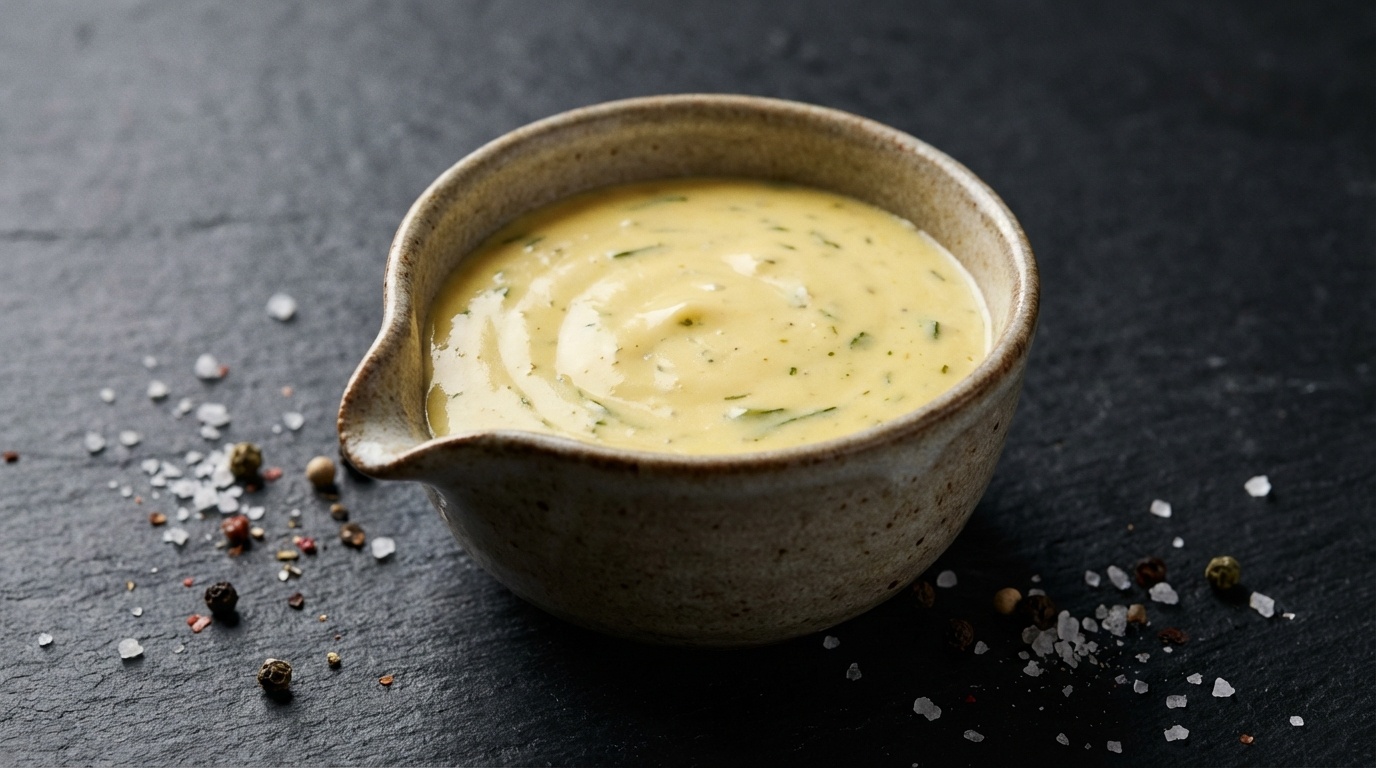
Bearnaise Sauce