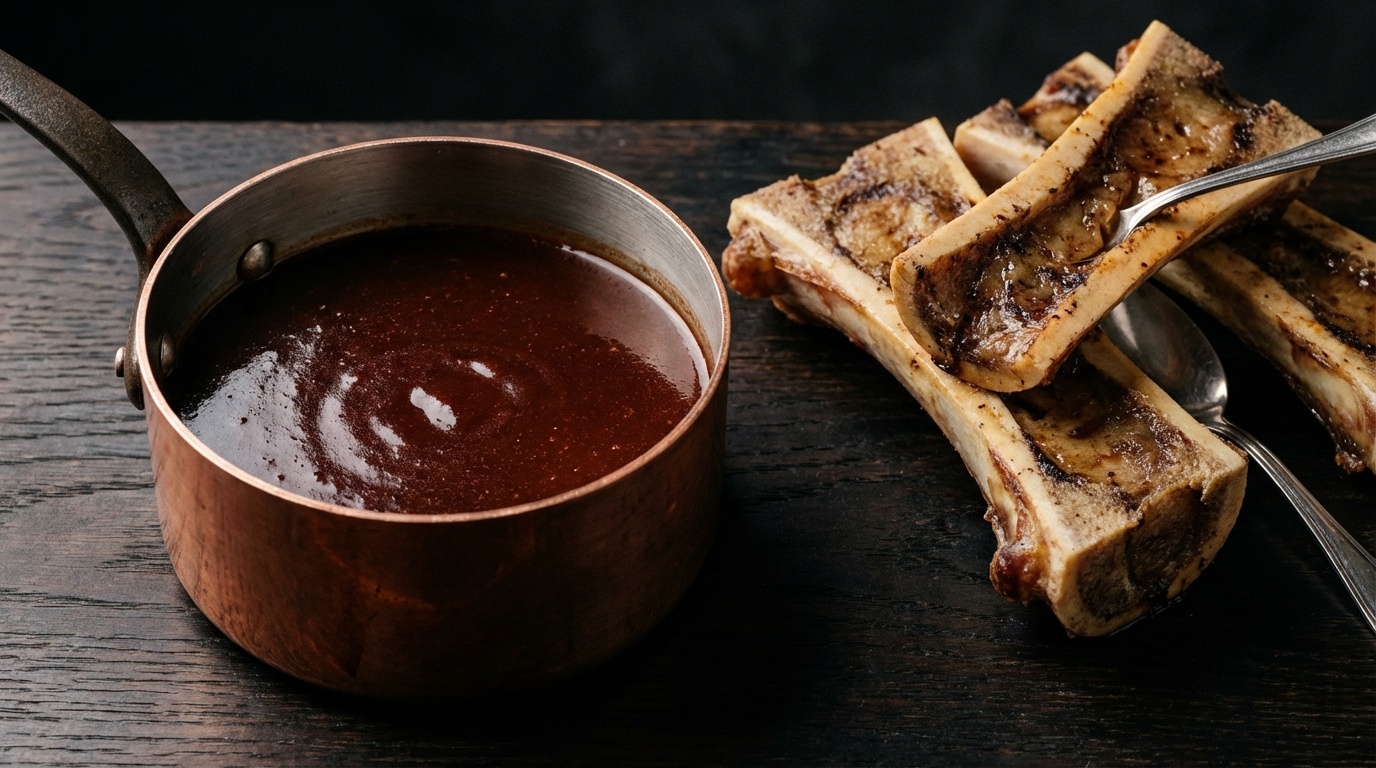
Bearnaise Sauce
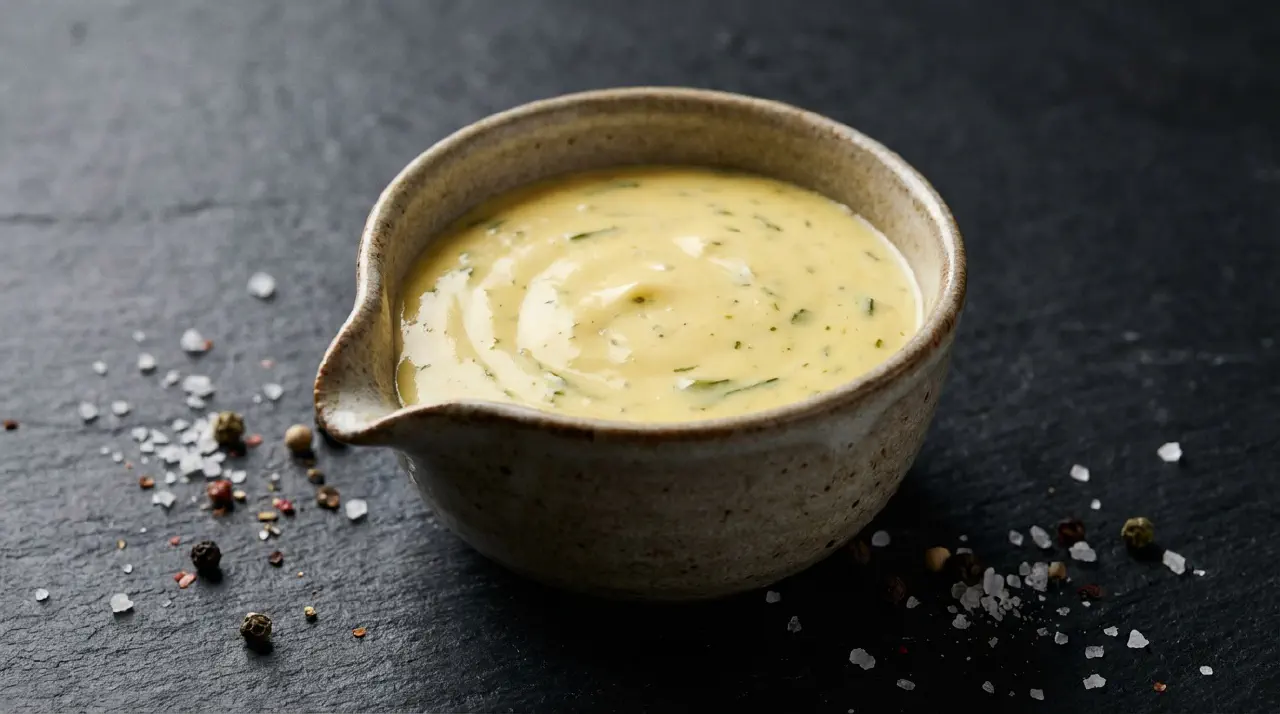
Bearnaise Sauce - kvalifood.com
Bearnaise is a warm emulsified butter sauce from the hollandaise family, flavored with a tarragon-shallot-vinegar-wine reduction. It was created in 1836 at Le Pavillon Henri IV and has remained essentially unchanged since Escoffier codified it. The defining flavor is fresh tarragon.
The classic pairing is grilled steak – especially fillet or entrecote – but it works equally well with lamb chops, roast beef, grilled fish, or steamed asparagus.
Serves 4
Ingredients
Reduction
- 60 mL white wine vinegar
- 60 mL dry white wine
- 1 medium shallot (30 g), finely minced
- 3 sprigs fresh tarragon - stems and leaves separated, stems roughly chopped
- 1/4 tsp black peppercorns, lightly crushed
- 1 pinch salt
Emulsion
- 3 large egg yolks
- 200 g (14 tbsp) unsalted butter, clarified (or 250 g whole butter, clarified to ~200 g)
Finishing
- 1 tbsp fresh tarragon leaves, finely chopped
- 1 tsp fresh chervil leaves, finely chopped (optional but traditional)
- Salt, to taste
Directions
1. Make the reduction. Combine vinegar, wine, shallot, tarragon stems, and crushed peppercorns in a small saucepan. Bring to a boil over medium heat, then reduce heat and simmer until the liquid has reduced to about 2 tablespoons (5-8 minutes). Strain through a fine sieve into a small bowl, pressing on the solids to extract all liquid. Discard solids. Let the reduction cool to warm (not hot).
2. Clarify the butter. Melt the butter gently in a saucepan over low heat. Let it sit for a minute so the milk solids settle to the bottom. Carefully pour off the clear golden butterfat into a container, leaving the white milk solids behind. Keep the clarified butter warm (around 60C/140F).
3. Emulsify.
Traditional method (bain-marie): Place egg yolks and the strained reduction in a heatproof bowl set over a saucepan of barely simmering water (the bowl should not touch the water). Whisk constantly until the yolks are thick and mousse-like and you can see the bottom of the bowl between strokes (about 2-3 minutes). Remove from heat. Very slowly drizzle in the warm clarified butter while whisking constantly - start with drops, then a thin stream as the emulsion builds. If the sauce gets too thick, add a few drops of warm water. If it looks like it might break (getting greasy or separating), add a teaspoon of cold water and whisk vigorously.
Immersion blender method: Place egg yolks and strained reduction in a tall, narrow container (just wider than the blender head). Blitz briefly to combine. Heat the clarified butter until very hot (but not smoking). With the blender running on high, slowly drizzle in the hot butter in a thin, steady stream over about 1 minute. The heat of the butter gently cooks the yolks and forms the emulsion. If too thick, blend in warm water a teaspoon at a time.
4. Finish. Stir in the finely chopped fresh tarragon leaves and chervil (if using). Taste and adjust salt. The sauce should be thick but pourable - like a soft mayonnaise.
5. Serve. Serve immediately, or keep warm in a thermos or in a bowl set over warm (not hot) water for up to 1 hour. Bearnaise cannot be refrigerated and successfully reheated.
Notes
- Butter quantity: The consensus ratio is about 1.5-1.8 yolks per 100 g butter. This recipe uses 1.5, which is traditional and gives a rich, butter-forward sauce. For a more stable (but slightly heavier) emulsion, reduce butter to 150 g.
- Clarified vs. whole butter: Clarified butter makes a more stable, cleaner sauce. Using whole melted butter works but increases the risk of breaking and gives a slightly less refined texture.
- Vinegar type: White wine vinegar is standard. Champagne vinegar is a fine substitution. Do not use balsamic, cider, or red wine vinegar.
- Chervil: Traditional per Escoffier. Adds a subtle anise note. If unavailable, simply omit - do not substitute parsley, which changes the flavor profile.
- Temperature control: The enemy of bearnaise is too much heat. The yolks should never exceed about 68C (155F) or they will scramble. If using the bain-marie, keep the water at a bare simmer and lift the bowl away if it feels too hot.
- Rescuing a broken sauce: If the emulsion breaks, put a fresh egg yolk in a clean bowl and slowly whisk the broken sauce into it. This usually works.
- No lemon juice: Unlike hollandaise, bearnaise gets its acidity from the vinegar reduction. Adding lemon juice is a common Western adaptation that dilutes the tarragon-vinegar character.
See Also
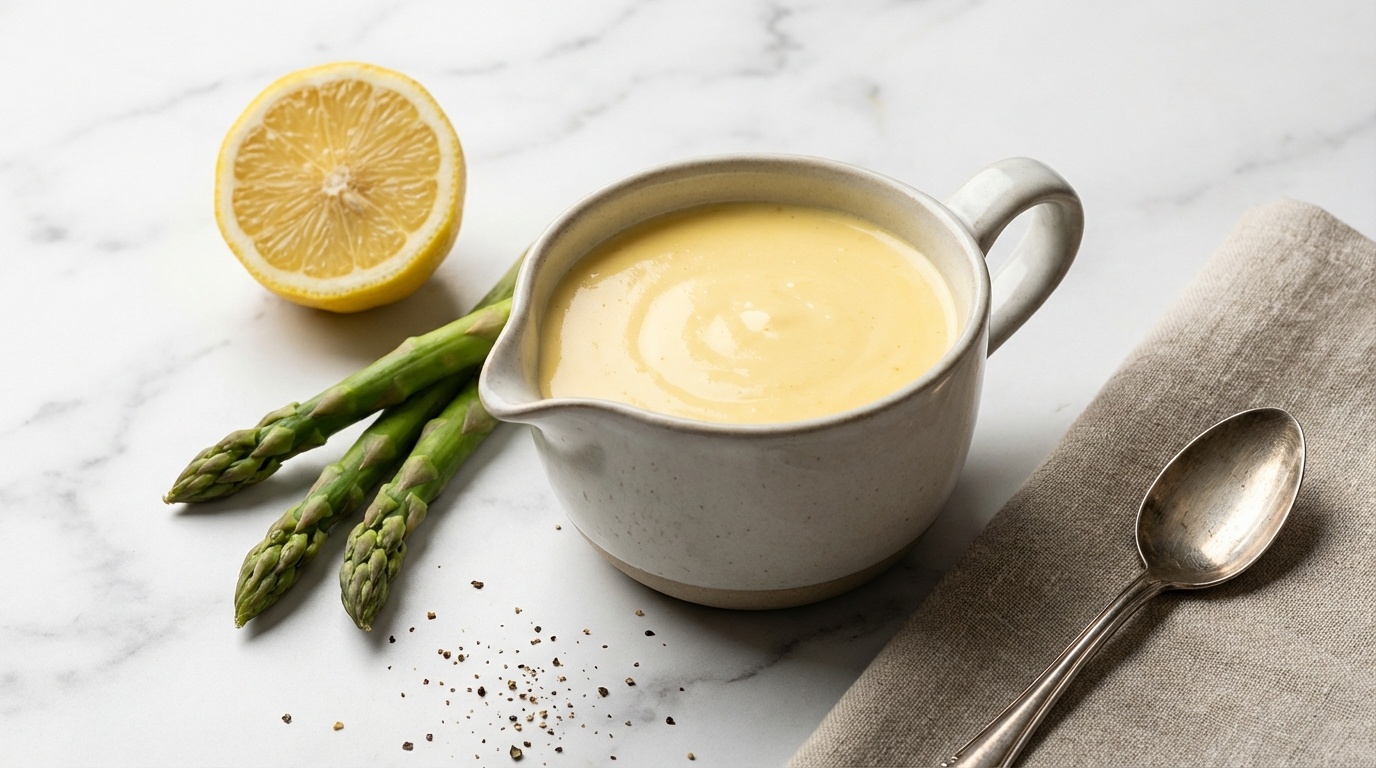
Hollandaise Sauce
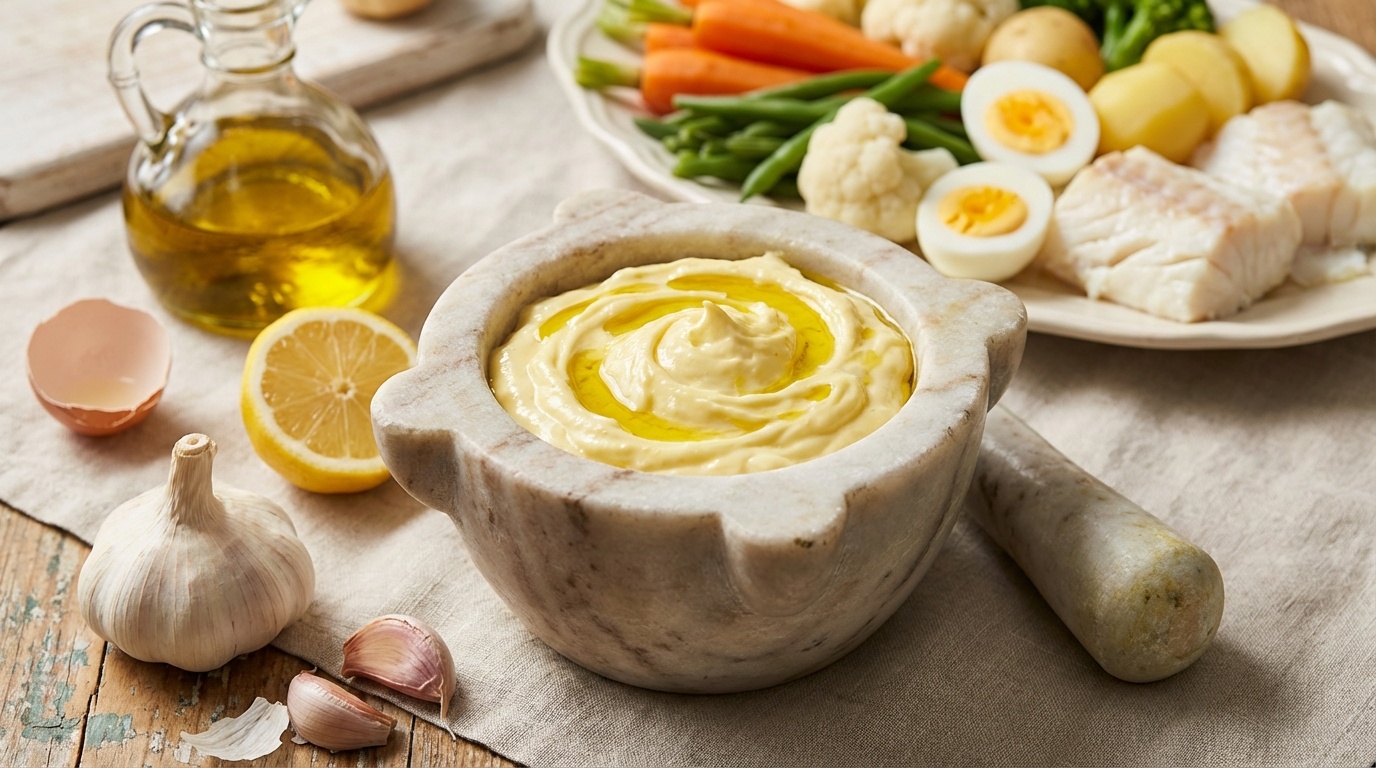
Aioli (Traditional Provencal Garlic Emulsion)
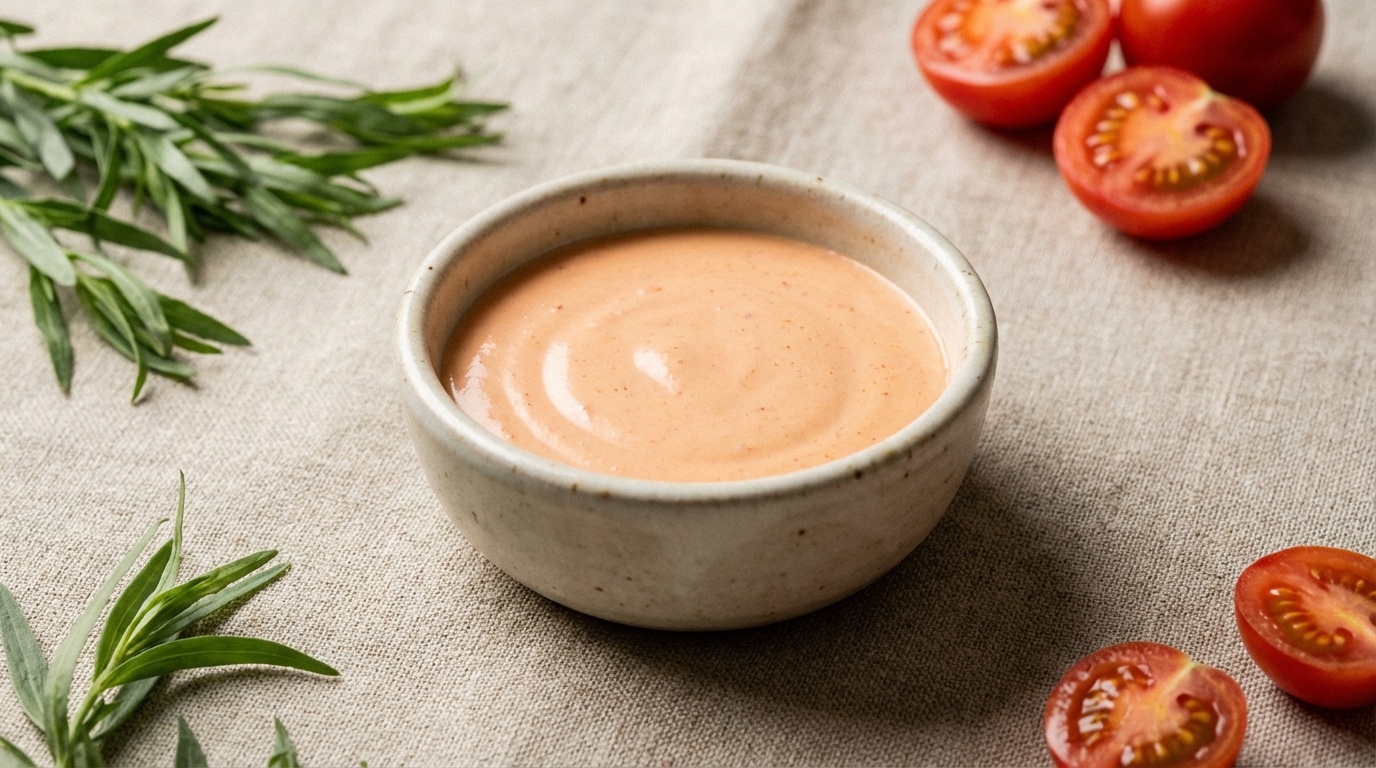
Sauce Choron
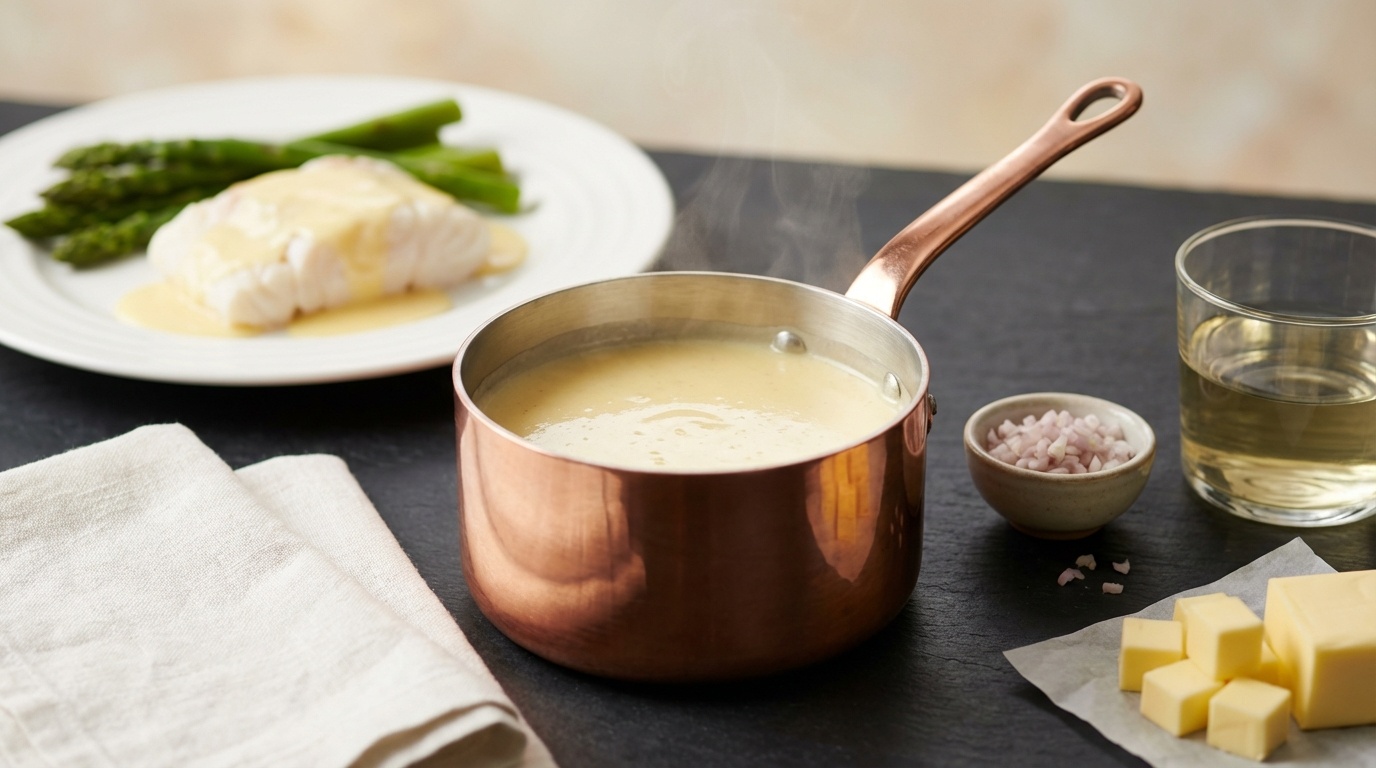
Beurre Blanc (White Butter Sauce)