Sous Vide Glazed Ham
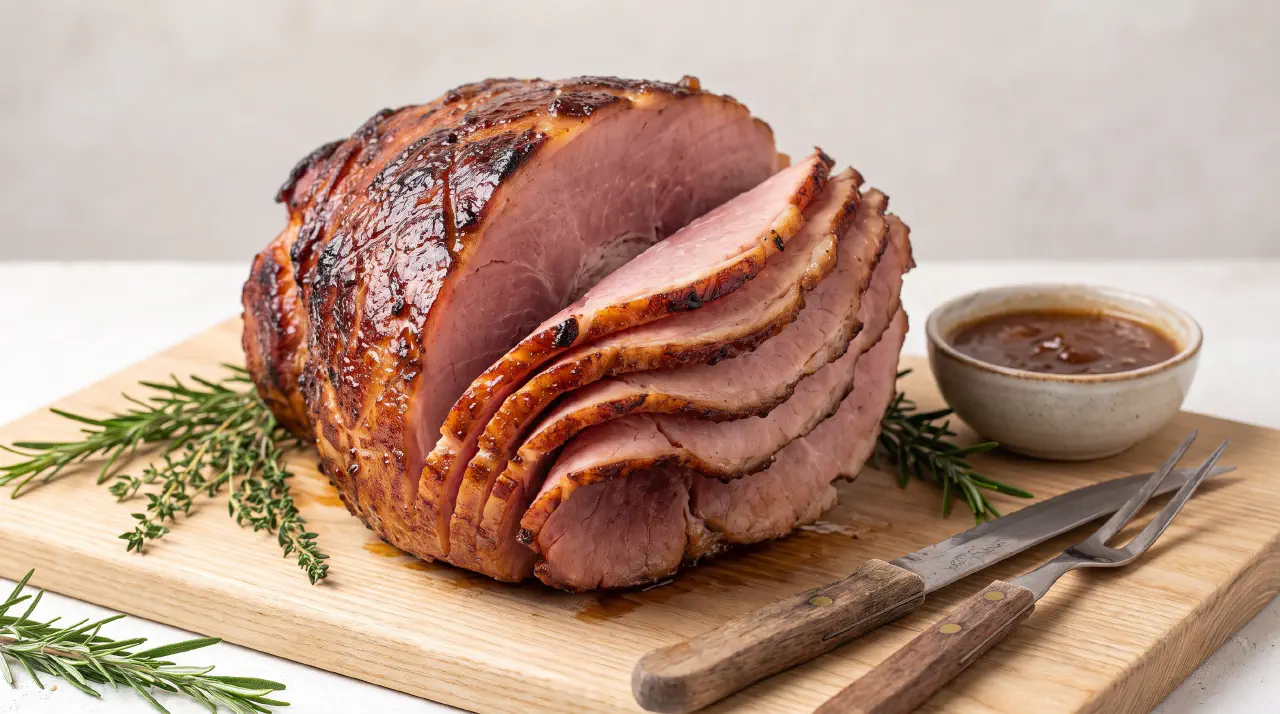
Sous Vide Glazed Ham
A “glazed ham” on an American holiday table is almost always a city ham: a bone-in leg that’s already been fully cooked and cured at the plant, sold ready to eat straight out of the package. The job left to the cook isn’t cooking at all, it’s reheating a large, dense piece of meat evenly without drying out the parts nearest the surface, which is exactly the kind of problem sous vide is good at. A low, steady water bath brings the whole ham up to serving temperature at the same gentle pace all the way through, so the outside doesn’t overcook by the time the center catches up.
Because the ham can’t really overcook in the bath, the timing is forgiving: anywhere from three to eight hours at the same temperature gets it there, which leaves plenty of room to work around an oven that’s busy with side dishes or a table that isn’t quite ready yet. The glaze is what turns a reheated ham into the centerpiece: brown sugar and an acidic liquid, simmered together until syrupy, then brushed on in stages under high oven heat until it sets into a dark, sticky, sweet-and-tangy crust that plays against the ham’s own salt. A little mustard is optional but common, adding tang and helping the glaze grip the meat instead of sliding off.
The glazed ham has been a fixture of American Easter and Christmas dinners for generations, less because of any strict tradition and more because a whole ham feeds a crowd, holds up well made ahead, and looks the part at the center of the table. This sous vide version doesn’t change any of that history; it just replaces a slow, easy-to-overdry oven reheat with one that’s harder to get wrong.
Carve it at the table and pass the extra glaze and pan drippings alongside. Mashed or scalloped potatoes, a green vegetable, and a basket of dinner rolls are the usual company, though the ham is substantial enough to headline a spread with far less on the side.
Ingredients
Serves 8-10
The ham
- 1 half ham, bone-in, fully cooked (cured), ready-to-eat, 3.2-4 kg
The glaze
- 225 g packed dark brown sugar
- 80 ml balsamic vinegar (or ruby port or cider vinegar)
- 30 g Dijon mustard, optional (adds tang, helps the glaze cling)
Directions
The ham
Set the sous vide water bath to 140°F (60°C). If the ham’s original vacuum packaging is intact and undamaged, leave it sealed in that bag; it already fits and seals correctly. Otherwise, transfer the ham to a large zip-top freezer bag or a vacuum bag and press out as much air as possible before sealing.
Submerge the bagged ham and cook for 4 to 6 hours. Because the ham is already fully cooked and cured, this step only brings it up to serving temperature while keeping it moist, so there’s no doneness target to hit. The window stretches from 3 to 8 hours across ham sizes, and the ham won’t overcook anywhere in that range, so it can flex around the rest of the meal.
The glaze
About 30 minutes before the ham comes out of the bath, combine the brown sugar, balsamic vinegar and mustard, if using, in a small saucepan. Simmer over medium heat, stirring occasionally, until the sugar melts and the mixture turns syrupy, about 5 minutes.
Preheat the oven to 475-500°F (246-260°C). Remove the ham from the water bath and out of the bag, pat it dry, and score the fat cap in a shallow crosshatch pattern; this helps the glaze cling and gives the classic diamond finish. Set the ham cut-side down on a foil-lined wire rack set over a sheet pan.
Brush the ham with about a third of the glaze and roast for 5 minutes. Remove, brush with another third, and roast 5 minutes more, then repeat once with what’s left, three rounds in all and about 15 minutes of oven time, until the surface is deeply caramelized and mahogany-colored.
Let the ham rest for 5 to 10 minutes before carving. Serve with the pan drippings and any leftover glaze spooned over the top or passed on the side.
Notes
The acidic component is flexible: balsamic vinegar, ruby port and cider vinegar all show up across tested versions, since it’s the ratio of sugar to acid that makes the glaze work, not the specific liquid. Light brown sugar can stand in for dark if that’s what’s on hand. Keeping the ham in its original vacuum packaging saves a step, since it’s already sized and sealed correctly for the bath.
See Also
Air Fryer Dinner Rolls
Beef Cuvette - Red Meat Sous Vide
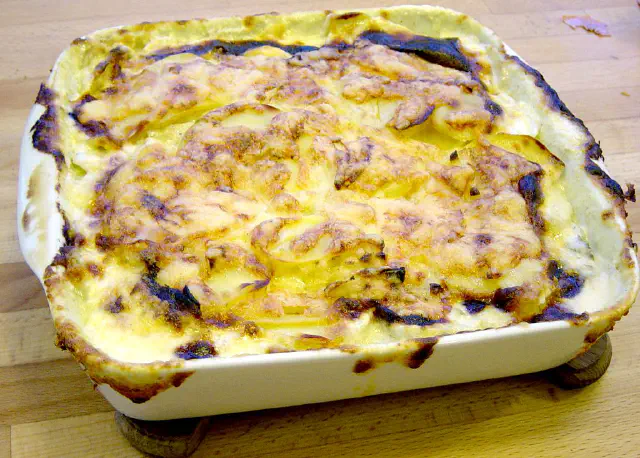
Scalloped Potatoes - Creamed Potatoes
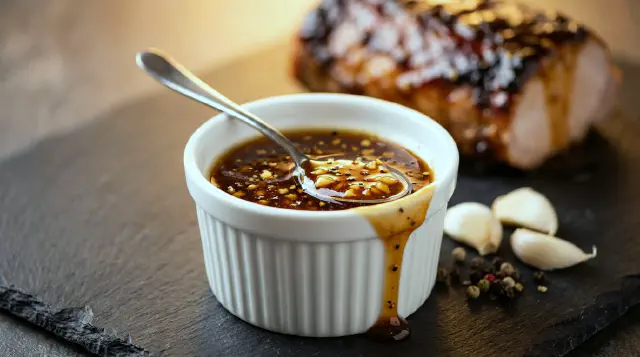
Maple Glaze