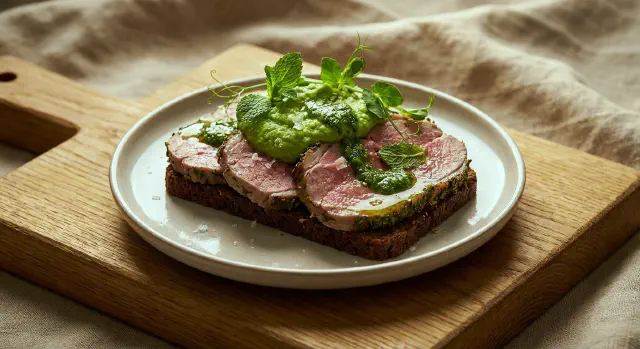
Sous Vide Leg of Lamb
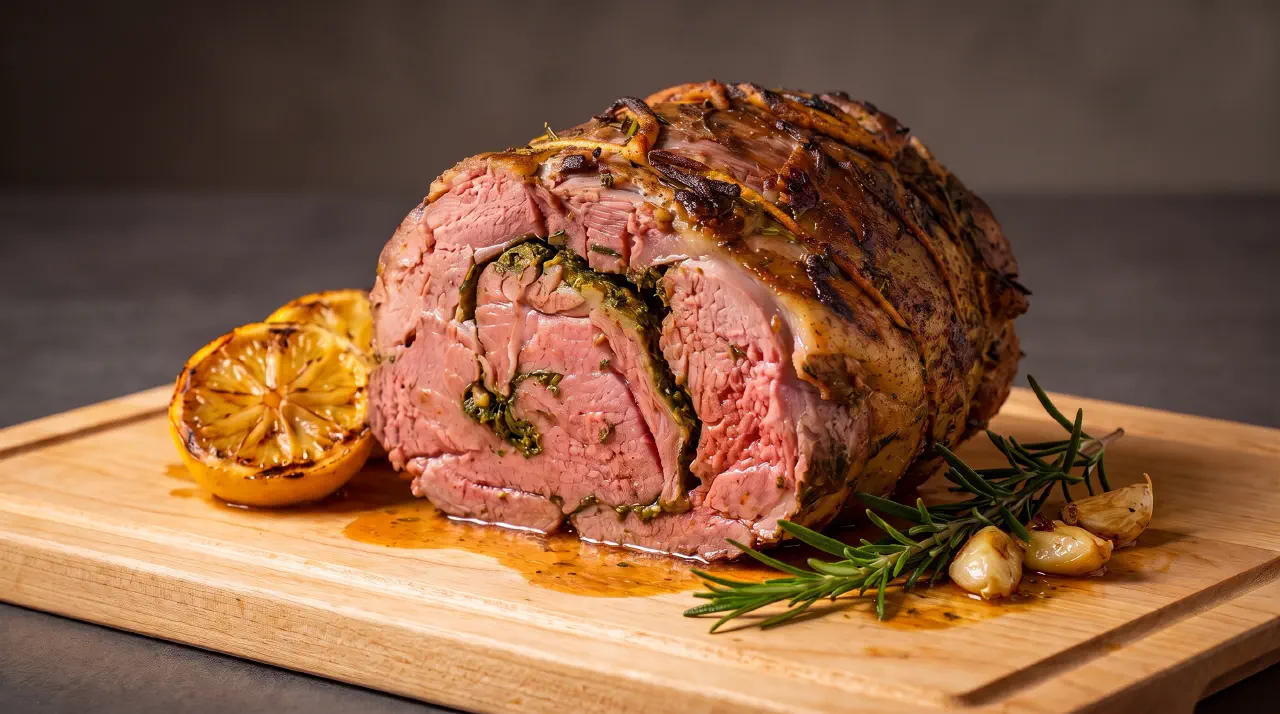
Sous Vide Leg of Lamb
A leg of lamb is the centerpiece cut for Easter and other spring holidays across American, British, and European tables, and sous vide turns a roast that traditionally punishes any timing mistake into one that’s almost impossible to overcook. The leg goes into the bag boneless, butterflied, and rolled back up around a garlic and herb marinade, then spends a full day in a precisely held water bath before a hard sear brings back the browned crust an oven roast gets for free.
That long hold is doing real work, not just holding the meat at temperature. At 131°F (55°C), the same medium-rare band nearly every sous vide source lands on, a rolled leg cooked for just 2 to 6 hours would already be safe and evenly pink - see the Notes for that shorter route - but the full 24 hours breaks down the connective tissue running through a whole leg, turning what would otherwise be a chewy roast into something that slices cleanly yet still yields easily under a fork. The temperature never moves; only the clock does.
The marinade is a straightforward mix of garlic, lemon zest, rosemary, thyme, and cracked pepper worked into both the interior and exterior of the meat before it’s rolled and tied - a combination that shows up, in one form or another, in Mediterranean and Middle Eastern leg-of-lamb roasts long before sous vide existed. Kosher salt goes in early enough to season all the way through during the long cook, which a same-day roast never has time to do.
Sous vide alone leaves the surface gray, so the sear afterward isn’t optional: a few minutes in a screaming-hot skillet or on a grill is what turns the roast from something merely cooked into something worth carving at the table, with a deeply savory, browned crust over bright, garlicky, herb-flecked meat underneath. Slice it thin against the grain and serve it with roasted potatoes, a green salad, or spring vegetables - anything simple enough to let the lamb itself be the point.
Ingredients
Serves 6-8
The lamb
- 1.8-2.2 kg leg of lamb, boneless, butterflied and trimmed of excess fat and silverskin
- 45 ml neutral oil (such as canola or vegetable oil), for searing
The marinade
- 34 g kosher salt
- 4 garlic cloves, minced
- 2 tsp lemon zest
- 1 tbsp fresh rosemary, finely chopped
- 1 tbsp fresh thyme, finely chopped
- 1 tsp black pepper, freshly ground
- 1/2 tsp red pepper flakes, crushed (optional)
- 56 g extra-virgin olive oil
Directions
The marinade
Whisk together the kosher salt, garlic, lemon zest, rosemary, thyme, black pepper, and red pepper flakes with the olive oil.
The lamb
Rub the marinade over the lamb, working it into the interior cut surface as well as the exterior. Roll the leg back into shape and tie it at 1 to 1.5-inch intervals with butcher’s twine. This can be done up to 24 hours ahead, which gives the salt more time to season the meat evenly, or you can move straight to the water bath if you’re short on time.
Place the tied lamb in a vacuum bag, or a zip-top bag sealed with the water-displacement method, and refrigerate until ready to cook.
Preheat the water bath to 131°F (55°C). Submerge the bag and cook for 24 hours. This is the long tenderizing route, best suited to a whole rolled leg like this one, since the extended hold breaks down connective tissue while the water bath keeps the meat a rosy medium-rare from edge to edge. (For a thinner, fully butterflied half-leg, a much shorter bath at the same temperature also works - see the Notes.)
Remove the bag from the bath, take the lamb out, and pat it very dry with paper towels - reserve the bag juices for a pan sauce if you like. A wet surface won’t brown, so don’t rush this step.
Heat the neutral oil in a large cast-iron skillet, or an outdoor grill, over high heat until shimmering. Sear the lamb on all sides, about 4 minutes total, until deeply browned. Broiling for 6 to 8 minutes, turning once, or grilling directly over hot coals until charred, both work as well - watch the grill for flare-ups from rendered fat.
Transfer the lamb to a cutting board and rest it for 5 to 10 minutes, much shorter than a conventional roast needs, since the interior is already uniformly at temperature. Remove the twine, slice against the grain, and serve.
Notes
- Shorter, tender medium-rare route: for a thinner, fully butterflied half-leg rather than a rolled whole leg, 2 to 6 hours at the same 131°F (55°C) is enough and keeps a cleaner, more steak-like slice. Don’t go below 130°F (54°C) unless the total time stays under about 3 hours - that’s a food-safety floor, not a texture choice.
- Bone-in whole leg: extend the bath to a full 22 to 24 hours regardless of texture preference. The bone slows heat penetration, and a bone-in leg is both larger and tougher than a boneless half-leg.
- Don’t add butter or extra oil directly into the bag beyond what carries the marinade - added fat in the bag dilutes seasoning rather than adding richness. Save richer fats, like a butter baste, for after the sear.
- For a different flavor direction, stuff the butterflied leg with toasted mustard and cumin seeds and serve with a mint-cilantro sauce, rub it with a North African spice paste (paprika, cumin, turmeric, cinnamon, ginger, cayenne) and serve with chermoula, or glaze it with honey and sherry and finish over a live fire. None of these change the core temperature or time.
See Also
Beef Cuvette - Red Meat Sous Vide
Boneless, marinated and grilled leg of lamb
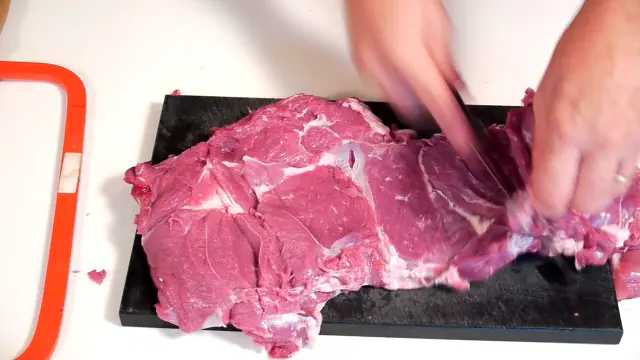
Boning and Butterflying a Leg Of Lamb
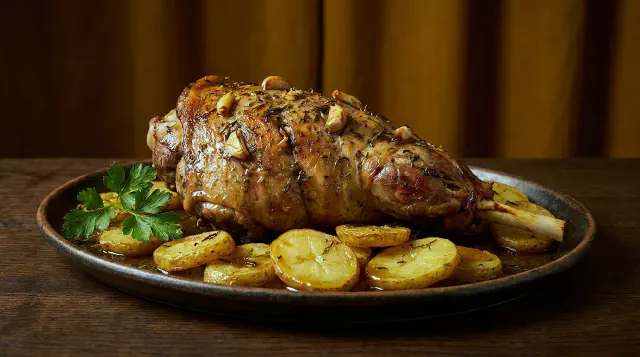
Lamb Leg Provençale