Sous Vide Oxtail
Sous Vide Oxtail
Oxtail is a hard cut to get right by any method except long, slow, moist heat, and sous vide is just a hands-off way of delivering exactly that. The pieces go into the bag raw or lightly seared, sealed with a little liquid and aromatics, and left in a water bath for a full day until the meat pulls cleanly away from the bone. The braising liquid that collects in the bag comes out rich with gelatin, and reducing it into a glaze is what turns the meat from merely cooked into something silky.
Every well-tested version of this recipe agrees on the shape of the process even when the seasoning changes: sear (or don’t), bag with onion, garlic and a little wine and stock, submerge fully for the long cook, then separate the meat from the liquid and reduce that liquid before putting the two back together. Oxtail’s density of collagen and connective tissue is what makes the long cook non-negotiable - cutting it short leaves the meat tight and chewy instead of falling off the bone.
Oxtail braises show up across a lot of different culinary traditions - French-style ragouts, Jamaican stews, Filipino kare-kare - because it’s a cheap, bony cut that rewards exactly this kind of long cooking. Sous vide doesn’t change the underlying logic of any of those dishes; it just moves the “very slow oven or stovetop” step into a water bath that holds a single temperature for as long as it takes without any risk of scorching or drying out.
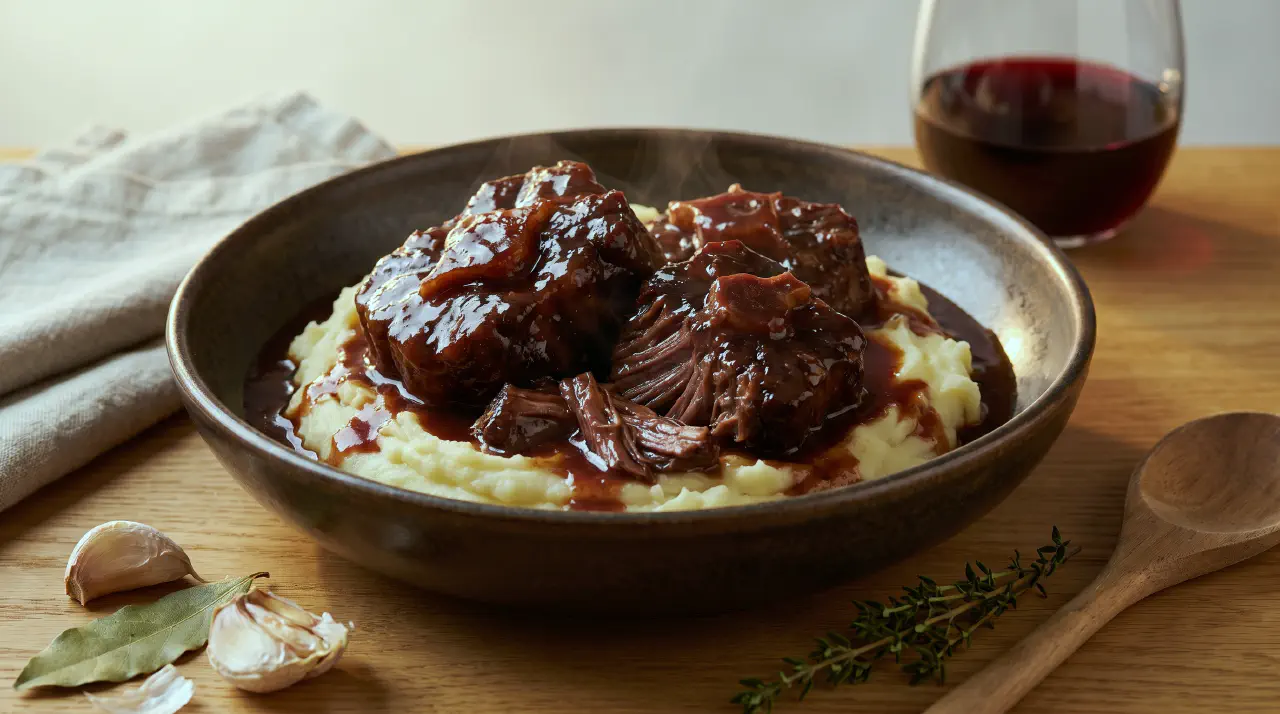
Serve the glazed oxtail over something that can soak up the sauce - mashed potatoes, soft polenta, rice or wide pappardelle all work. The cook itself needs almost no attention once the bags are submerged, which makes it a good make-ahead main for a dinner party or a low-effort weekend project.
Ingredients
Serves 4
The oxtail
- 1.3-1.5 kg oxtail, cut into cross-sections (ask the butcher, or as sold)
- kosher salt
- black pepper, freshly ground
- 1 tbsp neutral oil (or olive oil), for searing
- 1 onion, sliced (about 150 g)
- 3 garlic cloves, smashed
- 1 bay leaf
- 2 sprigs fresh thyme (optional)
The sauce
- 120 ml dry red wine (or additional beef stock)
- 180 ml beef stock
- 1 tbsp tomato paste (or Worcestershire sauce), optional
Directions
The oxtail
Pat the oxtail pieces dry and season generously with kosher salt and black pepper. Heat the oil in a heavy skillet over medium-high heat and sear the oxtail in batches until well browned on all sides, about 2-3 minutes per side. Searing isn’t strictly necessary for a sous vide cook, but it builds flavor the water bath can’t reach on its own.
Set the water bath to 176°F (80°C). Divide the seared oxtail between one or two vacuum bags in a single layer, along with the onion, garlic, bay leaf, thyme, wine, beef stock and tomato paste. Seal the bags with a vacuum sealer or the water displacement method.
Submerge the bags fully in the water bath. Cover the bath with foil or plastic wrap to cut down on evaporation, and weigh the bags down or use a rack so they don’t float over such a long cook. Cook for 24 hours at 176°F (80°C), checking at least once a day that the bags are still fully submerged.
Lift the bags out of the bath and let them rest for 10-15 minutes, or chill briefly in an ice bath if you’re not serving right away. Open the bags and strain the liquid into a saucepan, setting the oxtail, onion and bay leaf aside. Pull the meat off the bones in large pieces, discarding the bones, the bay leaf, the thyme and any large deposits of fat.
The sauce
Skim the fat from the surface of the reserved liquid, then bring it to a simmer in the saucepan and reduce for 5-10 minutes, until it’s lightly thickened and glaze-like.
Return the oxtail and the reserved onion to the reduced liquid and simmer gently for another 5 minutes, just long enough to coat the meat and heat it back through. Season to taste.
Serve the glazed oxtail over mashed potatoes, polenta, rice or pappardelle, spooning the extra sauce over the top.
Notes
- For a firmer, more sliceable texture with the joint cartilage still intact, cook at 140°F-165°F (60°C-74°C) for 36-100 hours instead of the 24-hour schedule above - both are legitimate endpoints, just different textures, not a right-or-wrong split.
- Keep the bags fully submerged for the whole cook. Floating bags that pop up above the waterline are the most commonly flagged failure point on cooks this long.
- Beef broth works in place of stock if that’s what’s on hand.
- Any dry red wine is fine here - nothing needs to be a special bottle.
See Also
Beef Cuvette - Red Meat Sous Vide
Braised Short Ribs
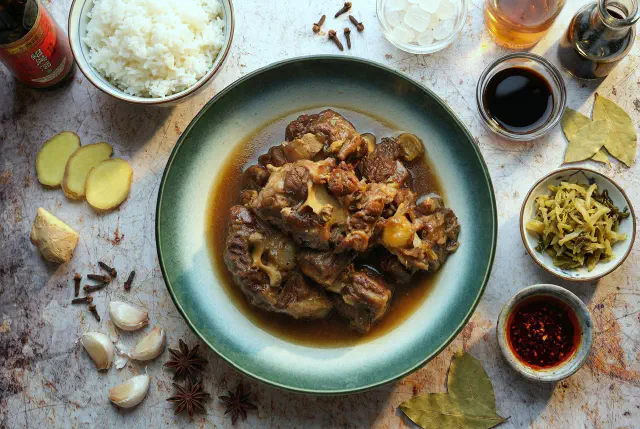
Chinese Red-Braised Oxtail (hóng shāo niú wěi)