Sous Vide Pork Collar
Sous Vide Pork Collar
Pork collar is the cut from the pig’s neck that also goes by the name neck fillet - a muscle with plenty of fat marbling, which makes it unusually tolerant of low-temperature cooking. The fat slowly melts into the meat over the many hours in the water bath, so the result stays juicy even if the temperature varies by a couple of degrees from the recipe. It’s this quality that makes pork collar one of the most obvious cuts to cook sous vide.
Sous vide pork collar is not an old Danish kitchen tradition - traditionally the cut ends up as an oven roast or on the grill. The technique has instead spread through Danish enthusiast sites and cookbooks from the 2010s onward, and has since found its way into ordinary Danish kitchens, because it gives a more predictable result than a roast in the oven. A common pitfall is to translate nakkefilet directly to the American “pork shoulder” or “pork butt”, which cover a coarser cut intended for pulled pork. Danish pork collar is a more uniform and tender muscle, better suited to slicing at a lower temperature.
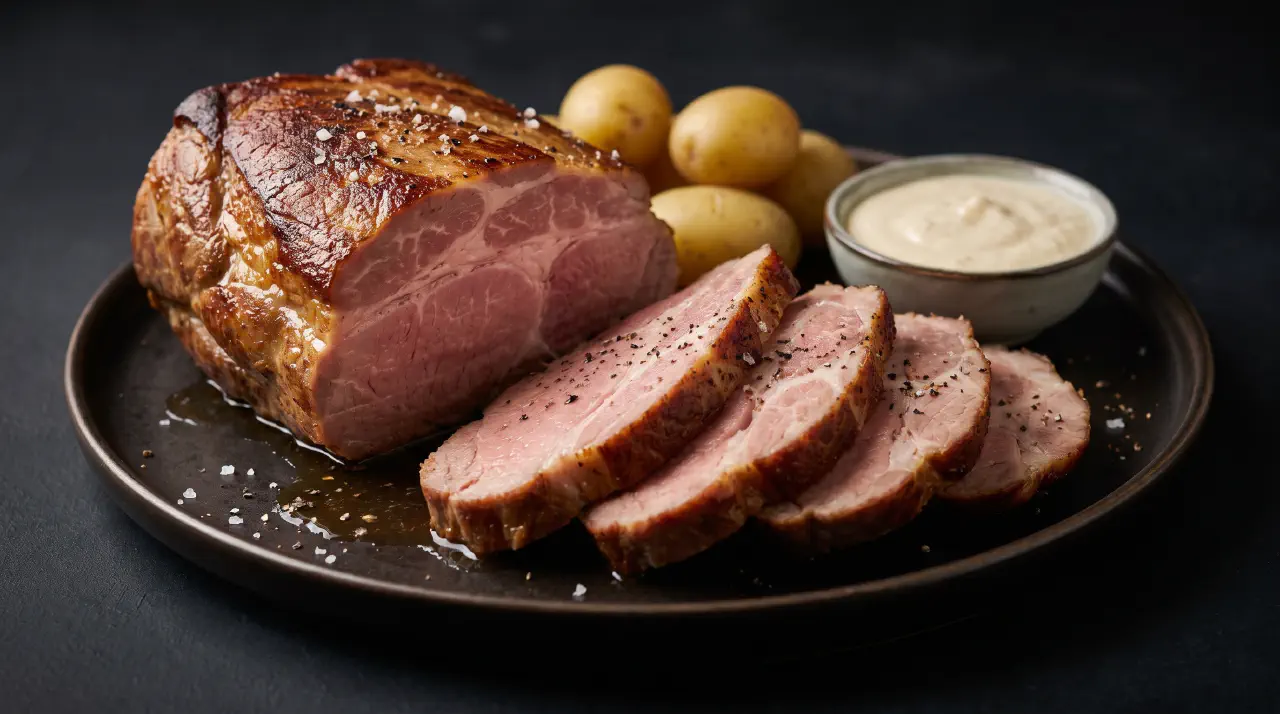
The meat is rubbed with salt and pepper, vacuum-sealed and cooked sous vide at 145°F (63°C) for 18-24 hours, which gives a firm, juicy, almost steak-like structure that can be cut into neat slices without falling apart. After the water bath the meat must always be finished with intense heat - here in a pan with butter or ghee - to create the golden crust that the sous vide technique can’t produce on its own. The long but largely hands-off cooking time makes the dish ideal for an ordinary weeknight dinner, where the meat looks after itself in the water bath, while it also suits entertaining, because the precise temperature control gives a predictable result every time.
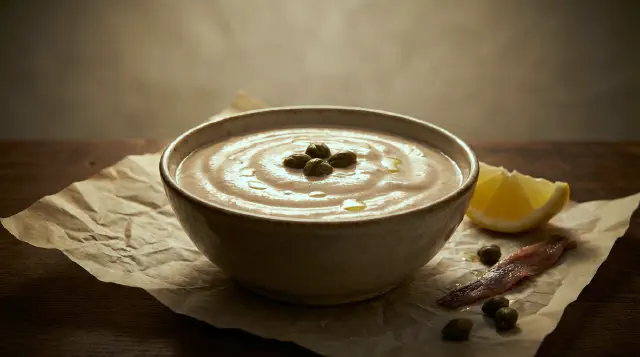
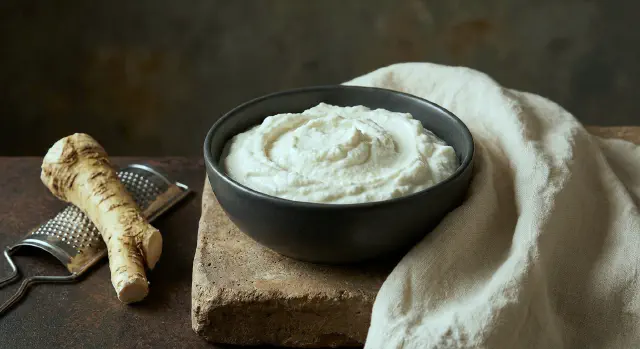
Serve the pork collar in slices with a pan gravy, a curry sauce or a horseradish sauce, or go for the classic option with BBQ sauce. The meat also works excellently cold and thinly sliced as a cold cut or a starter in the style of vitello tonnato, if it’s cooked at a lower temperature - see the notes.
Ingredients
Serves 4
- 800 g pork collar (pork neck/neck fillet), in one piece, sinew trimmed from the front end
- 8 g salt
- freshly ground pepper
- 1 tbsp butter (or ghee), for browning
Directions
Take the pork collar out of the fridge, and pat it dry with paper towels. If the sinew at the front end isn’t already trimmed off, do it now - otherwise it turns tougher than the rest of the meat after cooking.
Rub the meat with salt and freshly ground pepper on all sides, and vacuum-seal it.
Sous vide the meat at 145°F (63°C) for 18-24 hours. 18 hours gives a firm, sliceable result, while 24 hours gives a slightly more tender texture - both stay juicy.
Take the bag out of the water bath, cut it open, and pat the meat thoroughly dry with paper towels. This is crucial for a good crust when browning.
Heat butter or ghee in a pan over high heat until very hot. Brown the meat on all sides for about 3-4 minutes total, until there’s a golden-brown crust.
Let the meat rest for 5 minutes. Then cut it into about 1 cm (⅜ in) thick slices against the grain, and serve.
Notes
For thin, cold slices as a cold cut or a starter in the style of vitello tonnato, use 136-140°F (58-60°C) for 5-7 hours instead. The meat is cooled completely after sous vide, with no subsequent browning, and sliced 1-2 mm thin.
For a more meltingly tender texture without going in the direction of pulled pork, use 154-158°F (68-70°C) for 10-12 hours.
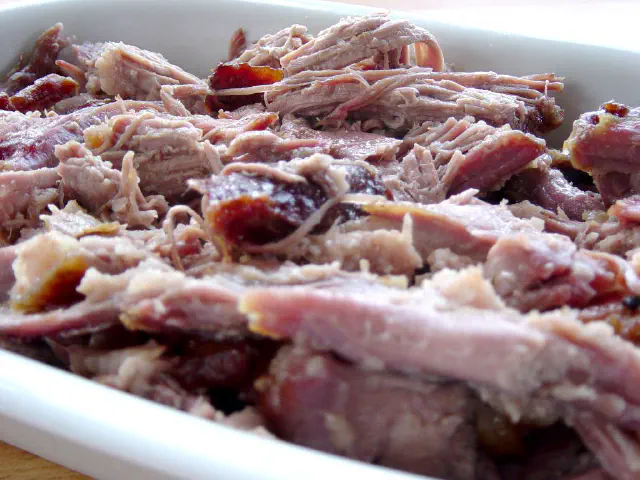
For actual pulled pork, use 165°F (74°C) for 18-24 hours - that falls outside the purpose of this recipe, which is a roast that is cut into slices.
The pork collar can be cooked in advance and cooled for later use: cool it in ice water for 30 minutes after sous vide, store it refrigerated at no more than 43°F (6°C) for up to a week, and reheat it gently in warm water before browning.
See Also
Beef Cuvette - Red Meat Sous Vide
Horseradish Sauce
Pulled Pork - that melts in the mouth