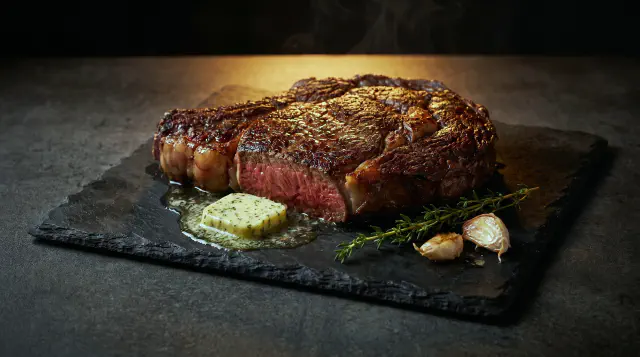
Sous Vide Ribeye Steak
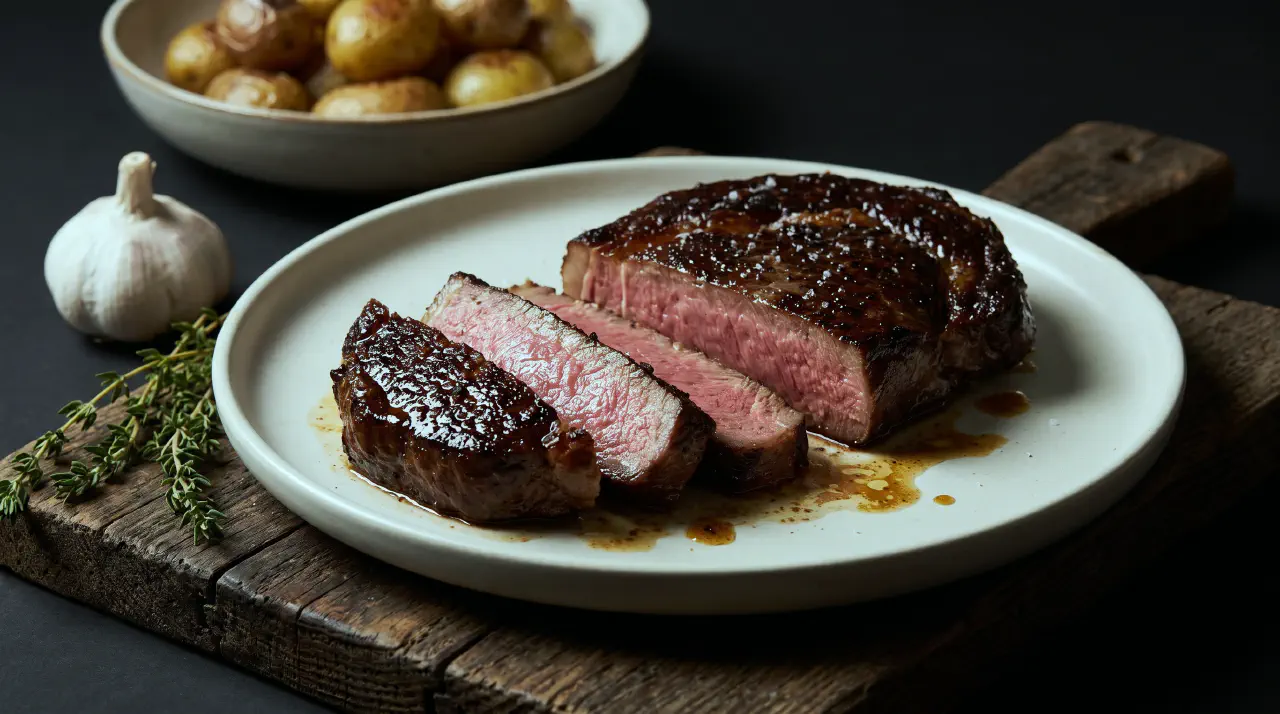
Sous Vide Ribeye Steak
A ribeye steak cooked sous vide is about as close to guaranteed as steak gets. The cut is well-marbled, thick, at least an inch and a half, and simply seasoned with salt and pepper before it goes into a sealed bag. There is no marinade and no rub competing with the beef; the rendered fat gives it a rich, buttery flavor that needs nothing else.
The water bath is what makes this method different from a normal pan or grill sear. Instead of guessing when a steak is done by touch or by cutting into it, you set the water to the exact final temperature you want, 129°F (54°C) for medium-rare, and the steak simply cannot go past that, no matter how long it sits in the bath within reason. Only after it comes out does it hit a screaming-hot pan for a minute or two, just long enough to build a deep brown crust without pushing the interior any further.
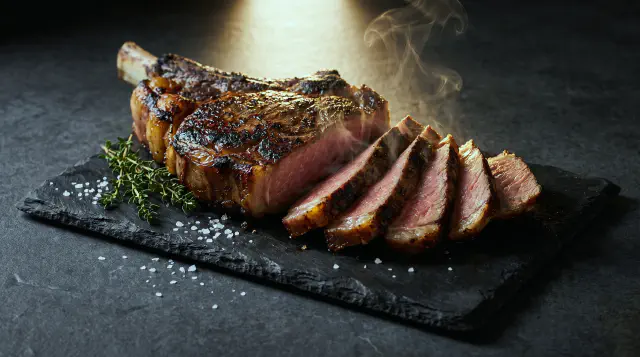
The result is a steak that is the same rosy pink from edge to edge, with none of the gray overcooked band you get from cooking on heat alone. The crust still forms, proper searing after a bath is not optional, but underneath it, the meat is exactly as rare or as medium as you set the bath to be.
Sous vide steak became a home-kitchen fixture once immersion circulators got affordable, borrowed straight from restaurant kitchens where the same precision matters for consistency across dozens of orders a night. It suits a weeknight dinner as much as a special occasion, since the timing is forgiving: the steak can sit in the bath for an extra hour without any harm while you finish the rest of the meal. Serve it simply, sliced or whole, with good bread, a green salad, or roasted potatoes alongside.
Ingredients
Serves 4
- 4 ribeye steaks, 280-340 g each, 4-5 cm thick, bone-in or boneless
- kosher salt, to taste
- black pepper, freshly ground, to taste
- 4 sprigs fresh thyme (or rosemary), optional
- 2 garlic cloves, smashed (optional)
- 28 g neutral oil (canola, vegetable, or rice bran), for searing
- 28 g unsalted butter, for searing
- coarse sea salt (such as Maldon), to finish
Directions
Set your sous vide circulator to 129°F (54°C) for medium-rare. That temperature is what this whole method is built around: the water bath decides the doneness, not guesswork or timing tricks.
Season the steaks generously on both sides with kosher salt and pepper. If using, tuck a sprig of thyme or rosemary and a smashed garlic clove into each bag.
Seal the steaks individually, either with a vacuum sealer or with the water displacement method in a zip-top freezer bag: lower the open bag slowly into a pot of water, letting the pressure push the air out before sealing it just above the waterline.
Submerge the bags in the water bath, keeping them clear of the circulator’s intake and outflow. Cook for 1 to 4 hours. Steaks this thick need at least an hour to come fully up to temperature, and you can hold them well past that without overcooking them. Just do not go past 2½ hours if your bath is set below 130°F (54.4°C); that is the food-safety cutoff at the low end of the range.
Lift the steaks out of the bags and pat them completely dry with paper towels. This is the step people skip, and it is the one that matters most. Any moisture left on the surface will steam instead of sear, and you will never get a real crust.
Heat a cast-iron or heavy stainless skillet over high heat until the oil is just smoking. Lay the steaks in the pan, add the butter, and sear hard and fast, flipping every 15 to 30 seconds, until a deep brown crust forms on both sides, about 60 to 90 seconds total. Stand each steak on its fat edge with tongs for 30 to 45 seconds to render and brown the rim too.
Transfer the steaks straight to a cutting board or plates. No resting needed, since the inside is already exactly where you want it. Spoon the browned butter over the top, finish with a pinch of coarse sea salt, and serve right away.
Notes
For other doneness levels, adjust the bath: 120°F to 128°F (49°C to 53°C) for rare, 135°F to 144°F (57°C to 62°C) for medium, 145°F to 155°F (63°C to 68°C) for medium-well. The time window, 1 to 4 hours for steaks this thick, stays the same regardless of doneness.
A kitchen torch or a hot grill both work in place of the skillet. With a torch, work in even strokes over each side for about 30 seconds, then brown the edges in a hot pan. On a grill, sear 60 to 90 seconds per side over direct high heat, rotating for cross-hatch marks.
For an even crisper crust, chill the steaks in an ice bath for 5 to 10 minutes straight out of the bag before searing. It renders more surface fat without overcooking the edge; it just adds a few extra minutes to the process.
Do not skip spooning the browned butter and pan drippings back over the sliced steak. It is worth the extra thirty seconds.
A quick salsa criolla, made from minced sweet peppers, green onion, red wine vinegar, olive oil, and salt, makes a bright, acidic side for a rich cut like this.
See Also
Beef Cuvette - Red Meat Sous Vide
Rib-Eye Steak
Steak - Cooking Methods Guide