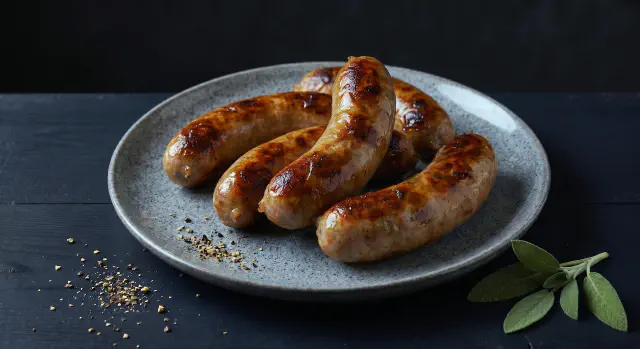
Sous Vide Sausages
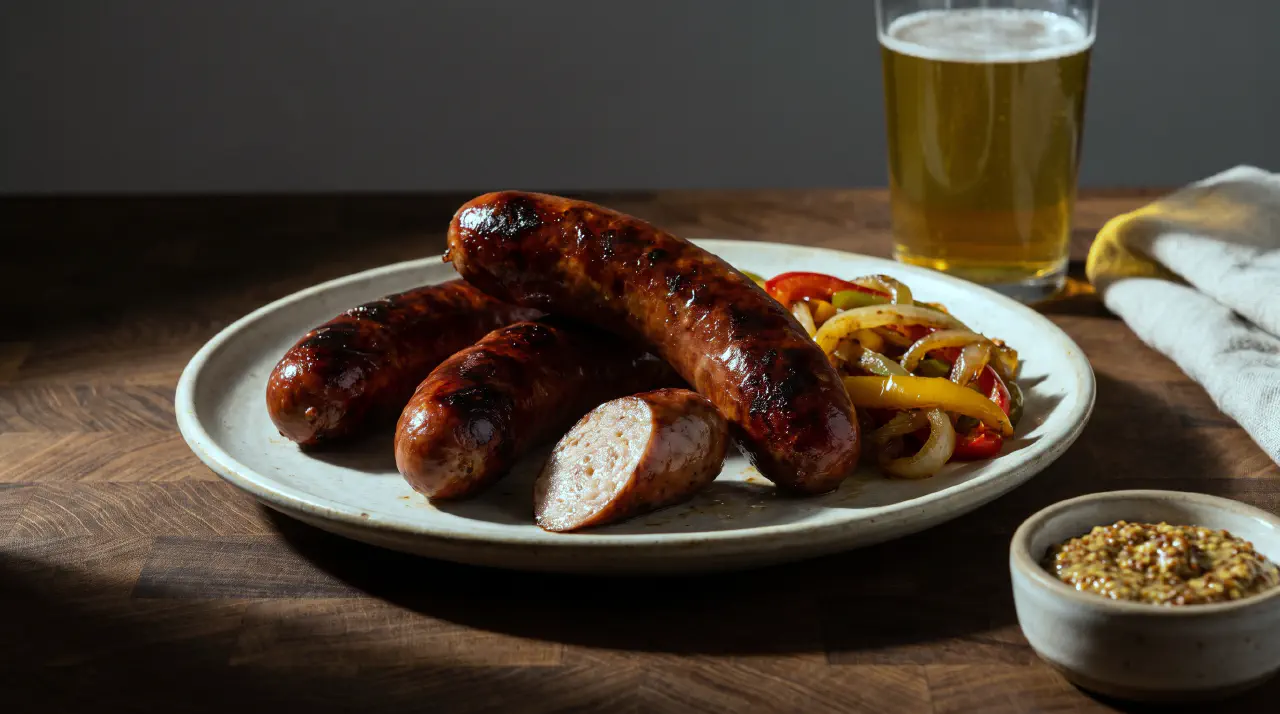
Sous Vide Sausages
A raw sausage on the grill is a small gamble: the casing can split before the center’s done, or the outside chars while the middle stays raw. Sous vide removes that gamble almost entirely. The sausage cooks gently in a sealed bag until it reaches the exact internal temperature you want, evenly from edge to edge, with no risk of the casing bursting or the center coming out underdone.
The method works for any fresh, raw sausage still in its casing - bratwurst, Italian sausage, chicken sausage, whatever’s in the case at the butcher. It doesn’t work for sausage that’s already smoked or fully cooked, since that’s already done and doesn’t need the treatment. A splash of mild lager can go in the bag for aroma, salted first so it doesn’t pull moisture and flavor out of the sausage by osmosis, though plain sausage in the bag works just as well.
Once the bath’s finished, the sausage still needs real heat. Pat it completely dry, since any surface moisture left behind steams instead of browning, then sear it hard and fast in a skillet or on a grill until the casing is deeply colored on all sides. That two-to-three-minute sear is where all the crust and snap come from - a deeply savory, faintly smoky crust around a juicy center - sous vide alone leaves a pale, unappetizing surface no matter how long it holds.
Because the sausage is thin, it heats through quickly and holds well past the minimum time without harm, which makes this an easy dish to build a meal around. Serve it plain in a bun with mustard, or set it beside a batch of sautéed peppers and onions or a quick mustard-and-caraway onion topping - the technique stays the same underneath whatever you serve it with.
Ingredients
Serves 4
- 4 fresh raw sausages, 100-140 g each (bratwurst, Italian sausage, or similar)
- 120 ml mild lager, optional (or other light beer)
- ½ tsp kosher salt, only if using beer
- 14 g butter, for searing (or neutral oil)
- buns, for serving (optional)
- condiments, for serving (optional)
Directions
If you’re using beer, stir the kosher salt into it until it dissolves completely. This offsets the osmotic pull that raw beer has on the sausage, which otherwise loses moisture and flavor into the liquid rather than the other way around.
Place the sausages in a vacuum bag, adding the salted beer if using. If sealing with a vacuum machine, stop it the instant the air is out; letting it keep pulling can crush the links. A zipper-lock bag works just as well with the water-displacement method - lower the open bag slowly into the water so the pressure pushes the air out, then seal it just above the waterline. If the bag contains beer, double-bag it, since a seam failure in the water bath would dump the liquid.
Set the water bath to 150°F (66°C), the most widely used default for a sausage that’s fully firm but still noticeably juicy. Lower the bag in and cook for 1 to 2 hours; anywhere from 45 minutes to 4 hours works, since the sausage is thin and heats through fast, but don’t leave it in past the 4-hour mark or the texture turns mushy and mealy.
Take the sausages out of the bag and pat them completely dry with paper towels. This step decides whether the sear takes at all - any surface moisture left behind steams instead of browning, and the casing stays chewy rather than snapping.
Heat the butter or oil in a skillet over medium-high heat, or preheat a grill to the same. Sear the sausages, turning them occasionally, until deeply browned on all sides, about 2 to 3 minutes total.
Serve right away, with buns and condiments if using.
Notes
Target temperature splits into two schools. The juicy school - 140-160°F (60-71°C), with 150°F (66°C) as the most-cited sweet spot - gives a sausage that’s fully firm yet still extra juicy and smooth throughout; that’s the default above and the one most sources land on. The traditional, well-done school runs the bath at 170°F (76.5°C) instead, trading some of that juiciness for a fully firm, no-pink interior and the classic snap of a well-done bratwurst.
Any fresh, raw sausage in natural or synthetic casing works here - the technique isn’t tied to one style. Don’t substitute pre-cooked or smoked sausage; it’s already done and doesn’t need this treatment.
For a topping, sauté sliced onion and bell or poblano peppers separately while the sausage is in the bath, or stir together a quick mustard-and-caraway onion mix. Both are common ways to dress this up without changing the core method.
See Also
Air Fryer Sausage, Peppers and Onions
Beef Cuvette - Red Meat Sous Vide
Boiling Sausages
Currywurst Sauce