Sichuan Chili Oil (红油 / Hongyou)
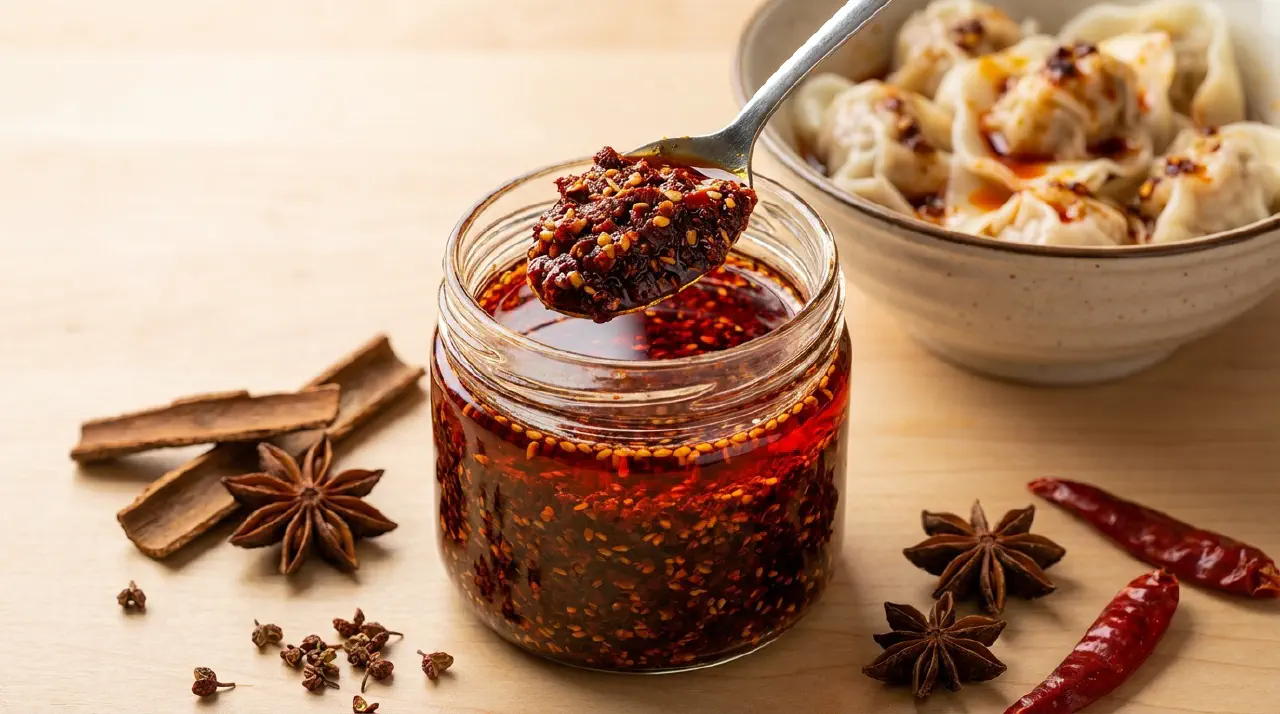
Sichuan Chili Oil (红油 / Hongyou) - kvalifood.com
Sichuan chili oil is a foundational condiment in Sichuan cooking. This is the aromatic version (xiangla hongyou), with star anise, cassia, and ginger infused into the oil before combining with ground chilies using a three-temperature pour. Each temperature stage extracts different chili compounds: high heat for fragrance, mid for color, low for spice.
Makes ca. 450 mL / ~2 cups
Ingredients
Oil and chilies
- 350 g neutral oil with high smoke point (peanut, vegetable, or rapeseed)
- For most authentic flavor: use caiziyou / roasted rapeseed oil
- 70 g (about 3/4 cup) ground dried Sichuan chilies
- Ideal blend: 60% erjingtiao (fragrant, mild), 30% facing heaven / zidantou (moderate heat, good color), 10% xiaomila or Thai bird’s eye (hot)
- Acceptable substitute: Korean gochugaru (coarse) for color and fragrance, plus a small amount of cayenne for heat
Aromatics for oil infusion
- 2 star anise
- 1 small piece cassia bark (or half a cinnamon stick)
- 1 tsp Sichuan peppercorns
- 2 bay leaves
- 1 thumb-sized piece fresh ginger (~15 g), smashed
- 2 scallion whites, cut into 5 cm pieces and smashed
- 1/4 small onion (or 1 small shallot), sliced
Optional
- 1 black cardamom pod (caoguo), cracked
- 1/2 tsp fennel seeds
- 1 tbsp toasted white sesame seeds
Directions
1. Prepare the chili blend. Divide the ground chilies into three equal portions (~23 g each). Place the first portion in a heatproof bowl or jar (glass, ceramic, or stainless steel - not plastic). The vessel should be at least 3x the volume of the chilies to prevent overflow when oil is added.
2. Infuse the oil with aromatics. Add the oil and all aromatics (star anise, cassia, Sichuan peppercorn, bay leaves, ginger, scallion, onion) to a cold wok or saucepan. Heat over medium-low. Once small bubbles appear around the aromatics, maintain this gentle fry for 30-40 minutes. The aromatics should turn deep golden brown and the scallion should look papery and dry. If anything begins to blacken, reduce the heat.
3. Strain the oil. Remove all solids with a mesh strainer or slotted spoon. Discard the aromatics.
4. Heat the oil to smoking point. Increase heat to medium-high. Heat the strained oil until it just begins to smoke (~210C / 410F). Remove from heat. Use a thermometer if available.
5. First pour (fragrance - 180C / 356F). Let the oil cool to 180C. Pour approximately one-third of the hot oil over the first portion of chilies. Stir. The oil should bubble vigorously and smell intensely fragrant (like roasted peppers, not burnt). Add the second portion of ground chilies to the bowl while it still bubbles.
6. Second pour (color - 150C / 302F). When the oil cools to 150C, pour the second third over the mixture. Stir. Add the third and final portion of ground chilies.
7. Third pour (heat preservation - 120C / 248F). When the oil cools to 120C, pour the remaining oil into the bowl. Stir well.
8. Optional additions. If using toasted sesame seeds, stir them in now.
9. Rest. Cover the container tightly (lid, plastic wrap, or foil). Let sit undisturbed at room temperature for a minimum of 24 hours. The color deepens and the flavors meld during this rest.
10. Store. Transfer to a clean glass jar with a tight lid. Store in the refrigerator for up to 6 months. Always use a clean, dry utensil to scoop.
Notes
- Temperature is everything. If you do not have a thermometer, test by dropping a tiny pinch of chili into the oil. At the right temperature for the first pour, it should sizzle actively and release fragrant (not acrid) smoke. If the chili blackens instantly, the oil is too hot - wait longer.
- Hongyou (red oil): After resting, the clear red oil that rises to the top is hongyou proper. Skim it for use as a finishing oil on cold dishes, wontons, or noodles. The sediment below is also usable - it is essentially chili crisp.
- Chili quality matters more than technique. Generic Italian-style red pepper flakes are roasted longer and darker than Sichuan chili flakes. They will produce a bitter, burnt-tasting oil. Seek out Sichuan-style chili flakes (erjingtiao) from Asian grocers or online.
- Caiziyou substitution: If unavailable, Indian mustard oil (heated to smoking point to reduce pungency) is the closest substitute. Peanut oil is the next best option. Neutral vegetable oil works but produces a less characterful result.
- Do not skip the 24-hour rest. Multiple sources emphasize that sealed resting is essential for full flavor and color development.