Sous Vide Whole Chicken
Sous Vide Whole Chicken
Sous vide turns a whole chicken into something roast chicken rarely manages: a bird that’s fully cooked and still genuinely moist all the way through the breast. The catch is that a whole bird has two different ideal temperatures - one for the breast, one for the legs - and cooking it in a single bag means picking one number that splits the difference between them.
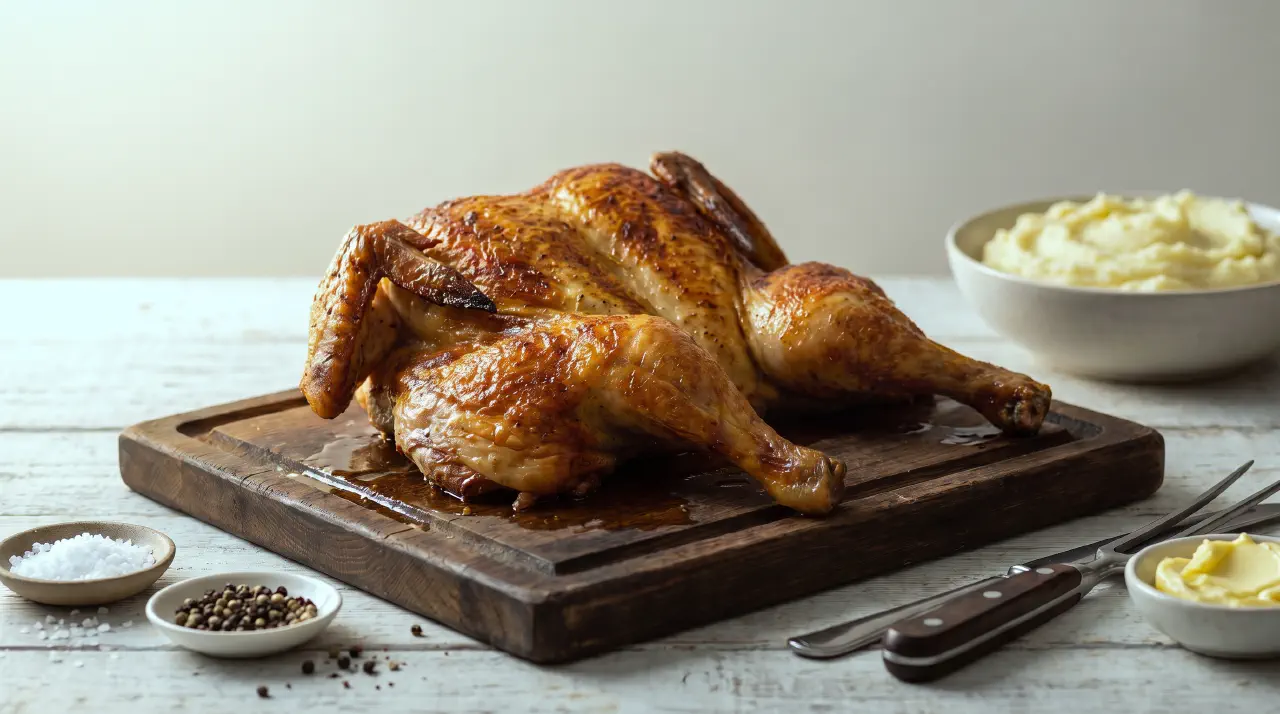
The chicken is spatchcocked first, and that step isn’t just about even cooking. An intact cavity traps a pocket of air that heats far more slowly than the meat around it, and that pocket can sit in unsafe territory long enough to matter. Cutting out the backbone and pressing the bird flat gets rid of that dead zone before it ever goes in the bag.
A water bath at 150°F (66°C) for six hours lands close to the middle of the range: chicken breast is at its best around 140–145°F (60–63°C), thigh and leg around 148–156°F (64–69°C). At 150°F the breast sits a little past its juiciest point and the thigh a little short of falling-apart tender, but both come out safe and genuinely good to eat - which is the entire point of cooking the bird whole instead of breaking it into parts.
Sous vide alone won’t crisp the skin, since the bag is a moist environment, so the chicken gets a short, hot finish in the oven or under the broiler before it rests and gets carved. It’s an easy Sunday dinner bird - carve it and serve with roasted vegetables, mashed potatoes, or a simple green salad, and save the juices left in the bag for a light gravy or stock.
Ingredients
Serves 4
- 1 whole chicken, spatchcocked (about 1.8-2 kg)
- 2 tbsp unsalted butter, softened (or olive oil)
- 1½ tsp kosher salt
- 1 tsp garlic powder
- 1 tsp dried Italian herbs (or dried thyme, oregano, and basil, mixed)
- ½ tsp black pepper, freshly ground
Directions
Spatchcock the chicken before anything else. Set it breast-side down, cut along both sides of the backbone with kitchen shears, and pull the backbone free (keep it for stock if you like). Flip the bird breast-side up and press down hard on the breastbone until it cracks and the chicken lies flat. This isn’t just for even cooking - flattening the bird gets rid of the air pocket in the cavity that would otherwise heat too slowly to stay food-safe in the bath.
Preheat the water bath to 150°F (66°C). Pat the chicken dry with paper towels, then mix the softened butter with the kosher salt, garlic powder, dried herbs, and pepper into a rough paste. Rub it all over the bird, working some of it under the skin as well.
Lay the flattened chicken in a large vacuum-seal or zip-top bag in a single flat layer and seal it, using the water-displacement method if it’s a zip-top bag. Submerge the bag in the bath and cook for 6 hours, weighing it down with a plate if it floats.
Lift the chicken out of the bag and pat it very dry - any surface moisture left on the skin is what stands between you and crisp skin. Heat the oven to 450°F (230°C) and roast the chicken on a foil-lined baking sheet for 15 to 20 minutes, until the skin is deeply golden and crackling. A hot broiler works too, 5 to 7 minutes, watched closely so it doesn’t scorch.
Let the chicken rest for 10 minutes before carving.
Notes
The 150°F/6-hour bath here is a deliberate compromise between white and dark meat, not the only option. Drop the bath to 145°F (63°C) and cut the time to 4 hours for juicier breast meat at the cost of slightly firmer thighs, or raise it to 155°F (68°C) and keep the 6 hours (up to 8 for a very large bird) for more tender, almost fall-apart thighs at the cost of slightly firmer breast.
For a bird over 2 kg (4.5 lb), add 1 to 2 hours to the bath time so the thickest part of the thigh has time to reach a safe temperature. The juices left in the bag are worth straining and keeping - they make a good light stock or the base for a quick gravy.
See Also
Air Fryer Whole Roast Chicken
Beef Cuvette - Red Meat Sous Vide
Mashed Potatoes
Old-Fashioned Danish Pot-Roasted Chicken