Fruit Ripening
Fruit Ripening
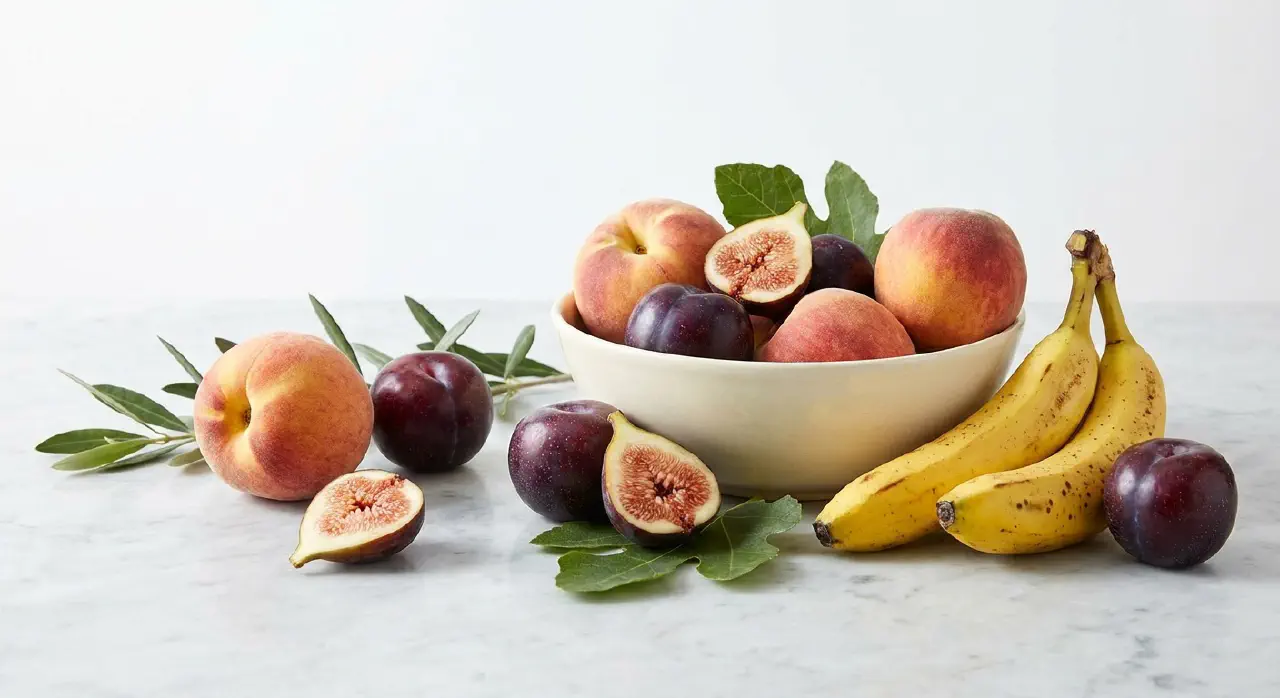
Ripening is programmed senescence — a coordinated enzymatic self-destruction that converts a seed-protecting structure into a seed-dispersing reward. Understanding the biochemistry of ripening is the single most useful piece of knowledge for buying, storing, and cooking fruit, because it determines whether a fruit can improve after harvest or is locked in at the moment it was picked.
Four stages of fruit development
Fruits develop through fertilization and hormone induction, cell multiplication (brief), cell expansion (the major growth phase, where storage cells fill with water, sugars, defensive compounds, and pre-positioned enzyme systems), and finally ripening itself. During the expansion phase, melon fruits can grow 80 cc daily; watermelon cells reach visible millimeter scale.
Melons
Melons
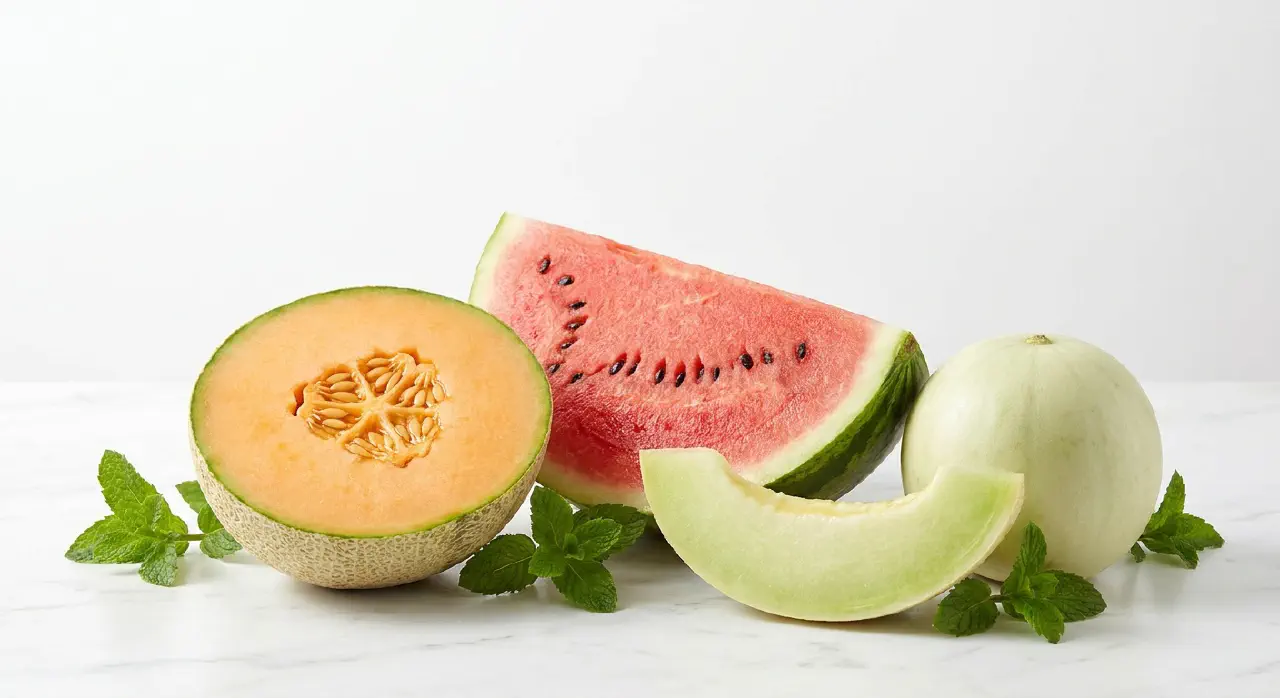
Most melons belong to Cucumis melo, a relative of cucumber, native to the semiarid subtropics of Asia. Large, rapid-growing fruits that symbolized fertility and abundance in ancient cultures. The melon family divides cleanly into two groups that mirror the climacteric/non-climacteric divide — aromatic, perishable summer melons and mild, durable winter melons — plus the distantly related watermelon, which stands alone as one of the world’s most remarkable fruits.
The fundamental rule: no starch, no post-harvest sweetening
Melons do not store starch. Sweetness is entirely fixed at harvest — a melon picked with 8% sugar will never reach 12%. Post-vine aroma may develop slightly, but it won’t match vine-ripened fruit. This makes vine-ripening critical and good sourcing the most important kitchen decision. For aromatic summer melons, a stem remnant signals premature harvest.
Pome Fruits
Pome Fruits
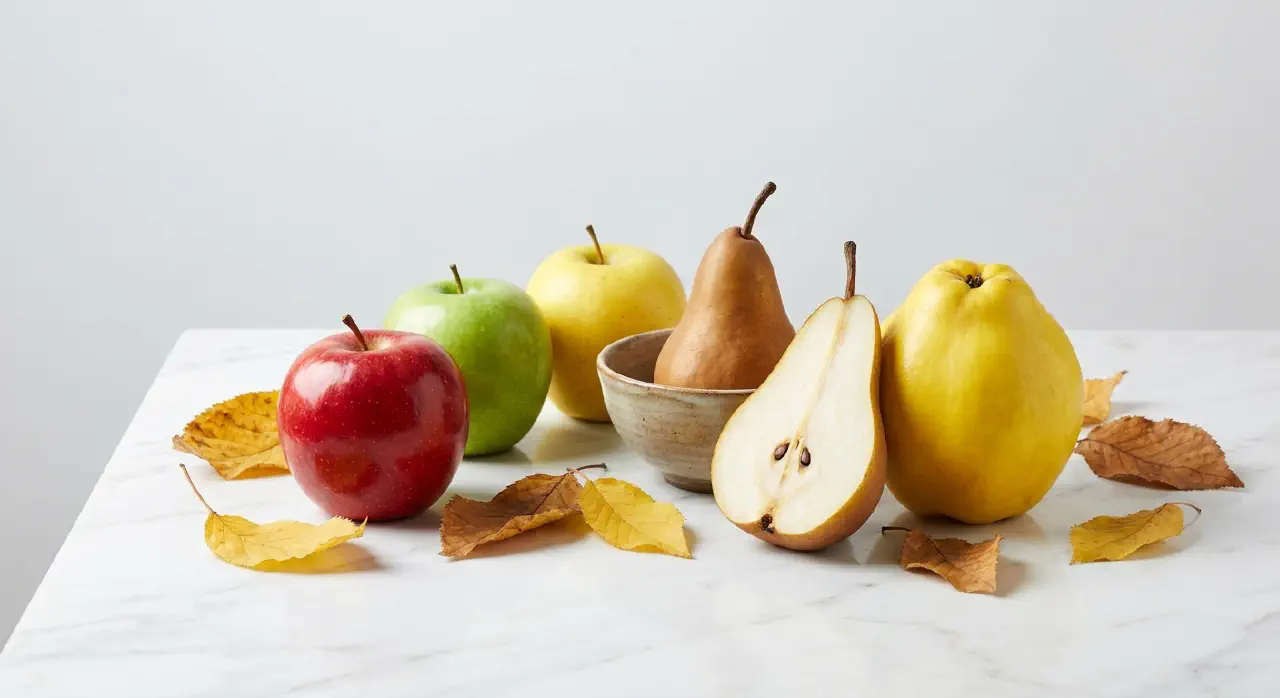
The pome fruits — apples, pears, quince, and their relatives — are all members of the rose family (Rosaceae), native to Eurasia. The defining structure is a thick fleshy portion derived from the enlarged flower stem tip (not the ovary alone), surrounding an inner tough-walled core containing seeds. All are climacteric, storing starch that converts to sugar during ripening, making them the temperate world’s most storable and versatile fresh fruits.