Melons
Melons
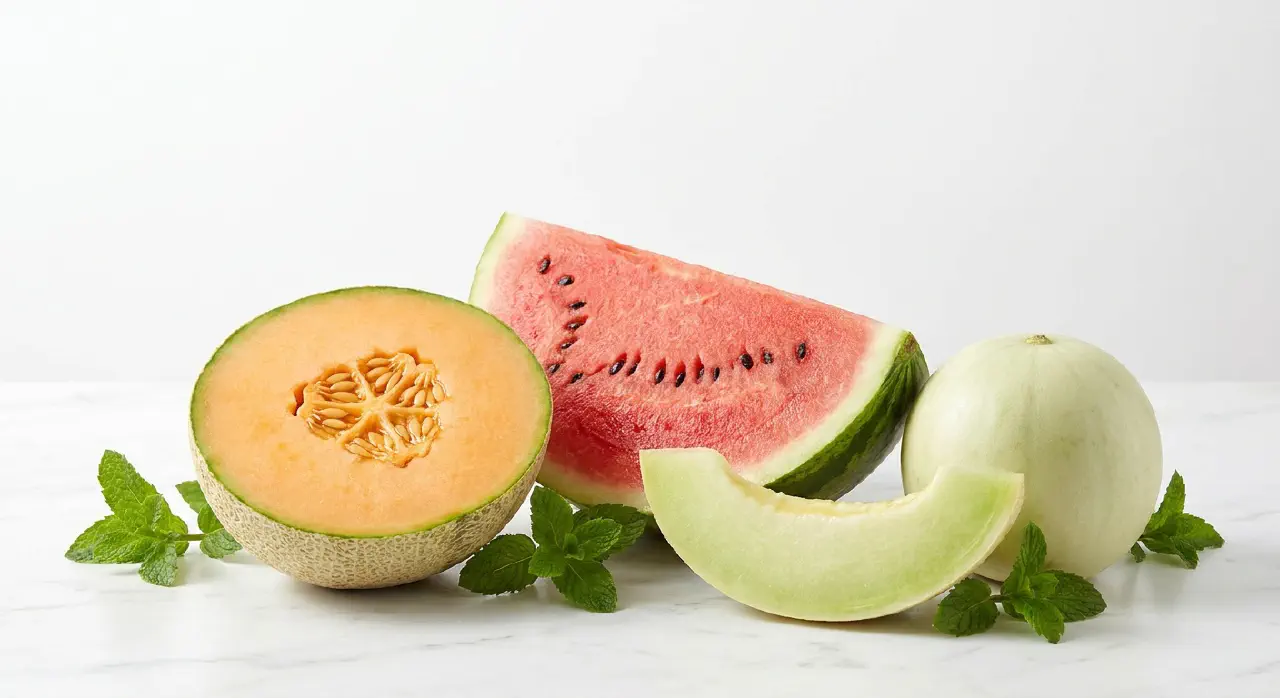
Most melons belong to Cucumis melo, a relative of cucumber, native to the semiarid subtropics of Asia. Large, rapid-growing fruits that symbolized fertility and abundance in ancient cultures. The melon family divides cleanly into two groups that mirror the climacteric/non-climacteric divide — aromatic, perishable summer melons and mild, durable winter melons — plus the distantly related watermelon, which stands alone as one of the world’s most remarkable fruits.
The fundamental rule: no starch, no post-harvest sweetening
Melons do not store starch. Sweetness is entirely fixed at harvest — a melon picked with 8% sugar will never reach 12%. Post-vine aroma may develop slightly, but it won’t match vine-ripened fruit. This makes vine-ripening critical and good sourcing the most important kitchen decision. For aromatic summer melons, a stem remnant signals premature harvest.
Pome Fruits
Pome Fruits
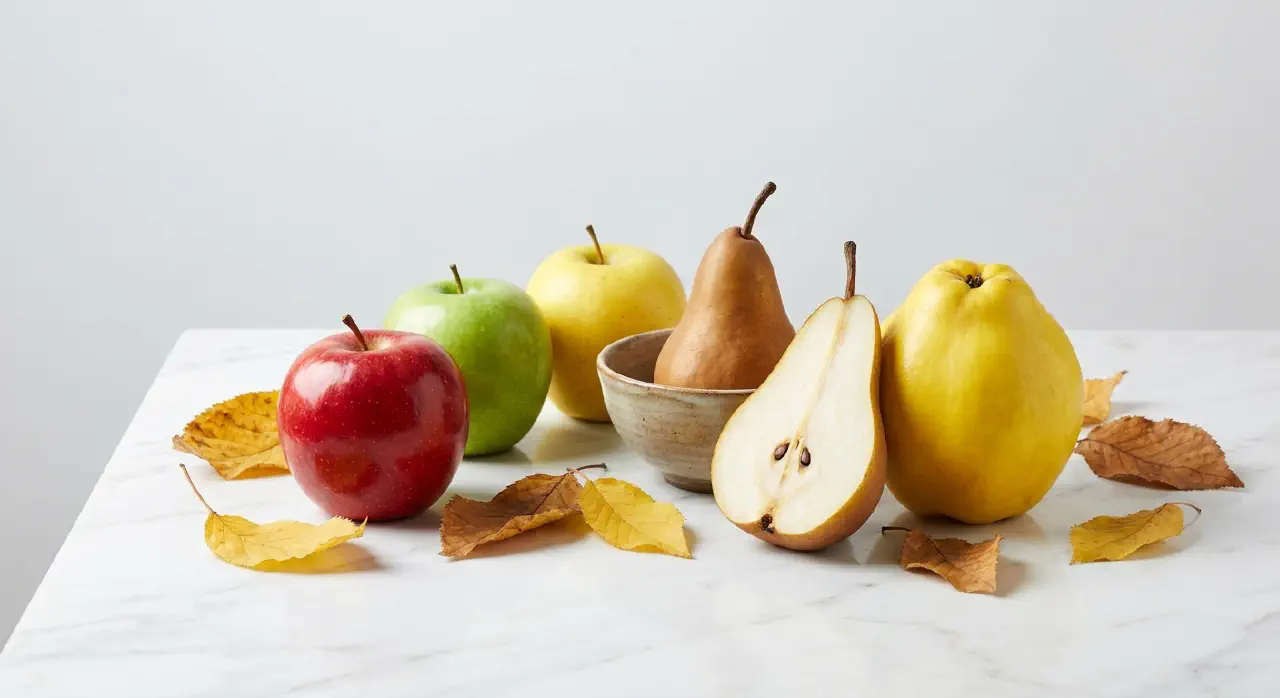
The pome fruits — apples, pears, quince, and their relatives — are all members of the rose family (Rosaceae), native to Eurasia. The defining structure is a thick fleshy portion derived from the enlarged flower stem tip (not the ovary alone), surrounding an inner tough-walled core containing seeds. All are climacteric, storing starch that converts to sugar during ripening, making them the temperate world’s most storable and versatile fresh fruits.