Culinary Herbs
Culinary Herbs
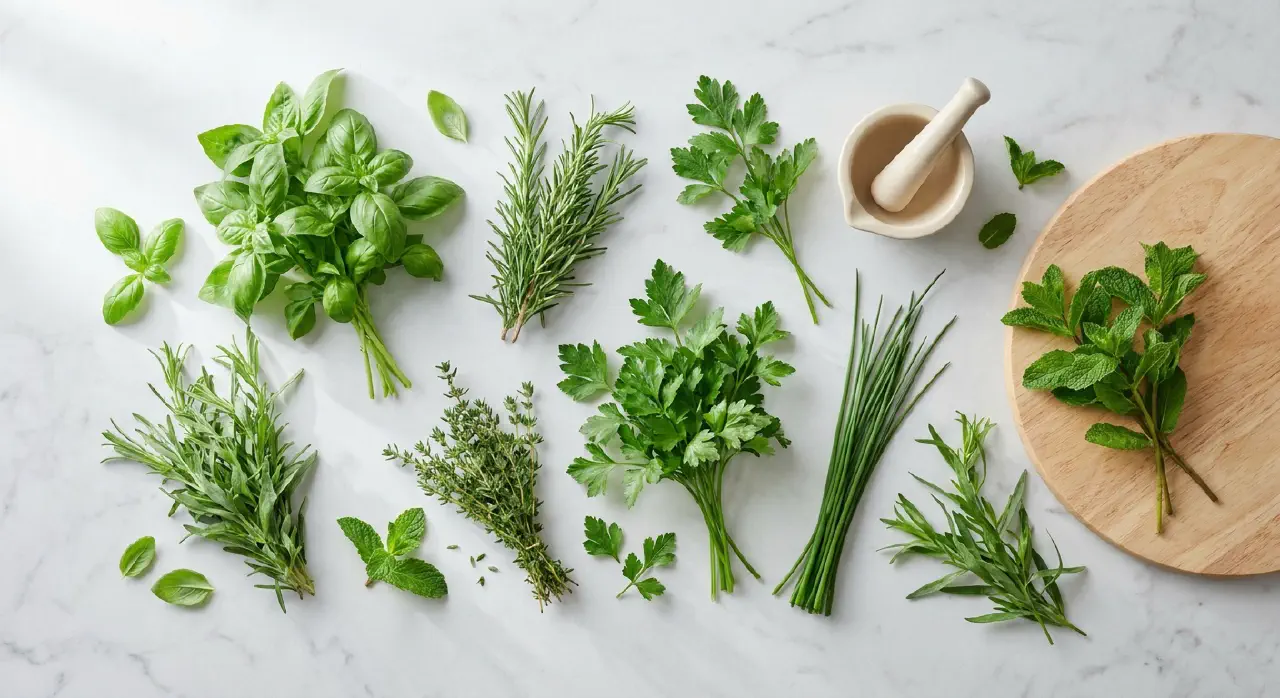
Herbs are the leafy, aromatic parts of plants used in small quantities to flavor food. Nearly all are chemical defense systems — volatile compounds stored in specialized glands or oil canals that deter insects and microbes. Three plant families dominate the kitchen herb world: the mint family (Mediterranean shrubs with surface oil glands), the carrot family (gentler plants with oil canals inside leaves), and the laurel family (ancient tropical trees). Understanding the family relationships explains flavor affinities and substitution logic.
Spice Handling
Spice Handling
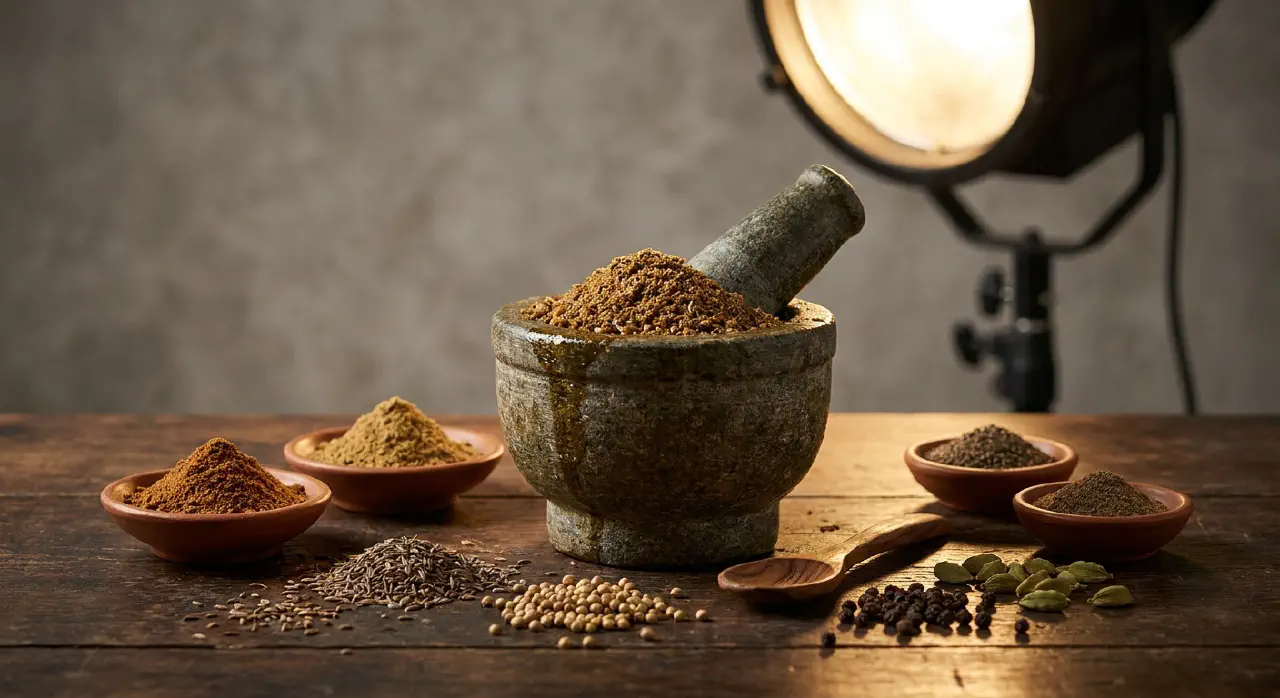
The gap between a vibrant spice and a dusty one comes down to handling — how it was dried, stored, ground, and introduced into the dish. The core challenge is that the same volatility that lets aroma compounds reach the nose also lets them escape into the air. Every step from harvest to plate is a race against evaporation and oxidation.
Storage fundamentals
Whole spices retain aromas within intact cells and keep well for a year or more. Ground spices expose enormous surface area to oxygen and light, losing characteristic aroma within months. The rule: opaque glass containers, freezer is optimal (warm to room temperature before opening to prevent moisture condensation). Cool, dark, dry room temperature is acceptable short-term. Black pepper is especially light-sensitive — UV rearranges piperine into nearly tasteless isochavicine.