Spice Handling
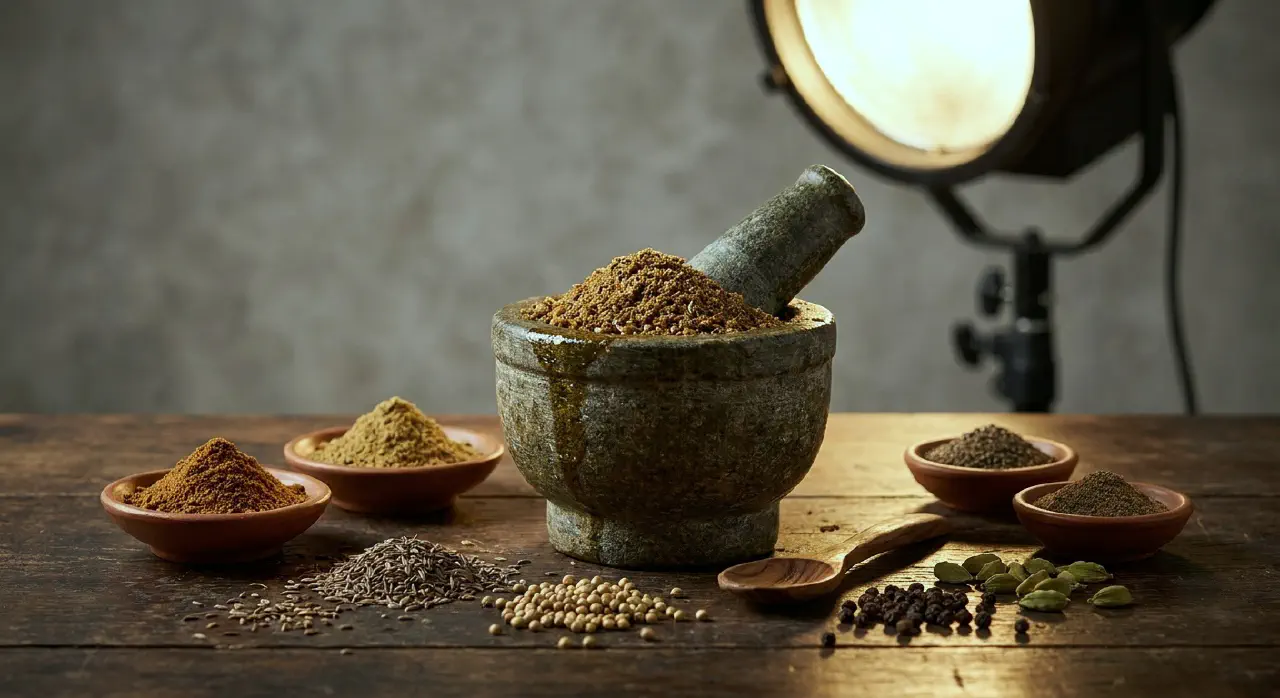
The gap between a vibrant spice and a dusty one comes down to handling - how it was dried, stored, ground, and introduced into the dish. The core challenge is that the same volatility that lets aroma compounds reach the nose also lets them escape into the air. Every step from harvest to plate is a race against evaporation and oxidation.
Storage fundamentals
Whole spices retain aromas within intact cells and keep well for a year or more. Ground spices expose enormous surface area to oxygen and light, losing characteristic aroma within months. The rule: opaque glass containers, freezer is optimal (warm to room temperature before opening to prevent moisture condensation). Cool, dark, dry room temperature is acceptable short-term. Black pepper is especially light-sensitive - UV rearranges piperine into nearly tasteless isochavicine.
Storing fresh herbs
Fresh herbs are young, delicate stems and leaves. Cut stems produce wound hormone ethylene that accumulates in closed containers, triggering deterioration (the same ethylene problem as in fruit storage). Most herbs: refrigerate in partly open plastic bags with absorbent paper to prevent wet-leaf microbial growth. Basil and perilla are exceptions - warm-climate plants that suffer chilling injury in the fridge; store at room temperature with stems in water. Freezing preserves flavor well but damages tissue (dark, limp on thawing). Oil immersion protects for a few weeks but requires refrigeration - absence of oxygen suits garlic-friendly botulism bacteria perfectly.
Drying fresh herbs
The core dilemma: many aroma chemicals are more volatile than water, so drying that evaporates water also evaporates flavor. The exception: Mediterranean mint-family natives - oregano, thyme, rosemary, bay laurel - whose aromatics persist through drying because they evolved in hot, arid conditions.
Best method: air-drying in shade over a few days (much less flavor loss than sun or oven). Microwave drying works surprisingly well for small quantities - microwaves selectively excite water molecules while leaving non-polar oil molecules relatively unaffected, so water escapes in seconds while oil-containing flavor structures heat only gradually and indirectly. Commercial freeze-drying preserves original flavor best.
Grinding and crushing
All grinding generates heat, and hotter aromatics are more volatile and more reactive. Pre-chill both spice and grinder to minimize loss. Food processors slice herbs but introduce lots of aroma-altering oxygen (rapid brown-black discoloration). Mortar and pestle crushes while minimizing aeration - Italian pesto made this way has deeper color and flavor. Sharp knife careful chopping leaves structure mostly intact (fresh flavor); a dull knife crushes wide cell swaths, accelerating discoloration. One positive effect of oxygen exposure: ground blended spices mellow over days to weeks of aging.
Flavor extraction principles
Solubility governs everything: Fats and oils dissolve more aroma molecules than water during cooking, and hang onto them during eating (flavor appears gradually, persists longer). Alcohol extracts efficiently but is volatile itself, releasing aromas quickly. Water extractions are slower and less complete. This is why sautéing spices in oil before adding liquid produces deeper, more persistent flavor.
Timing: Rapidly cooked dishes need fine particles for fast extraction. Long-cooked stews benefit from whole or coarse pieces that release flavor slowly and sustainedly. The remedy for any long-cooked dish: add a supplemental dose of fresh herb/spice at the end.
Prepared extracts (vanilla, almond, mint): flavor molecules already dissolved in liquid, immediately permeating the dish. Best added toward the end of cooking.
The Indian spice maturation system
The most sophisticated approach to developing spice flavor, using four distinct techniques at different stages of cooking:
1. Dry-toasting whole spices: Hot pan for a minute or two (mustard seeds, cumin, fenugreek). Seeds begin to pop (inner moisture vaporized). Browning reactions generate savory pyrazines. Mellowed, retaining individual identities.
2. Frying mixed powdered spices: Oil or ghee medium (turmeric, cumin, coriander). Different aroma chemicals react with each other, integrating flavors. Usually followed by sequential garlic, ginger, onions, fresh components.
3. Slow-frying spice paste: Powdered + fresh spices combined into paste, constantly stirred until moisture evaporates, oil separates, mixture darkens. Fresh spice moisture moderates heat on dried spices. Active enzymes from fresh ingredients interact with dried from the beginning. Mexican puréed chilli mixtures are treated similarly.
4. Brief-frying whole spices as garnish (tadka): Ghee medium, sprinkled over the just-cooked dish as a final aromatic layer.
5. Dhungar (smoking): A hollowed onion or small bowl containing a live coal is placed in the pot of cooked food, sprinkled with ghee and sometimes spices, then the pot is tightly covered. Smoke fumes infuse the entire dish.
Marinades and rubs
Liquid marinades: Water + oil-based coat; flavor molecules are mostly fat-soluble, and meat is 75% water, so penetration far inside is limited. Salty marinades disrupt meat tissue, facilitating some water-soluble aroma penetration. Injection: cooking syringe distributes flavorful liquid to many interior locations.
Dry rubs: Paste and solid aromatics in direct surface contact. Herbs and spices also act as protective coatings - insulating meat from direct oven/grill high heat, keeping outer layers moister. Coarse-cracked coriander provides crunchy counterpoint to soft insides. Adding oil to the coating causes it to fry rather than dry out.
Herb purées as thickeners
Italian pesto is the model: thickness comes from abundant cell walls and membranes that coat oil droplets, creating a stable luxurious emulsion. Dried and fresh chillis similarly purée into smooth sauces via cell-wall pectins. Starchy rhizomes (ginger, turmeric) dissolve starch chains during prolonged simmering. Ground coriander absorbs water through its dry husk. Fenugreek releases thick mucilaginous gel when ground seeds are soaked.
Safety
Many spices are NOT effective at killing disease microbes (a common myth) - black pepper and others carry millions of microbes per pinch. Commercial spices are often fumigated, steamed, or irradiated. Oil infusions (especially garlic in oil) require refrigeration to prevent botulism. Herb and spice safety also involves moderation: thujone in sage, glycyrrhizic acid in licorice, and ascaridole in epazote are all toxic in concentrated daily doses, though safe as occasional culinary flavorings.
See also
- flavor-chemistry - essential oils, terpene/phenolic solubility, extraction science
- produce-handling - ethylene management, chilling injury (shared with fresh herb storage)
- culinary-herbs - the herbs being stored, dried, and extracted
- warm-spices - whole vs ground spice storage
- pungent-spices - pepper light sensitivity, mustard enzyme activation
- maillard-reaction - browning reactions during dry-toasting and spice-paste frying