Acrylamide
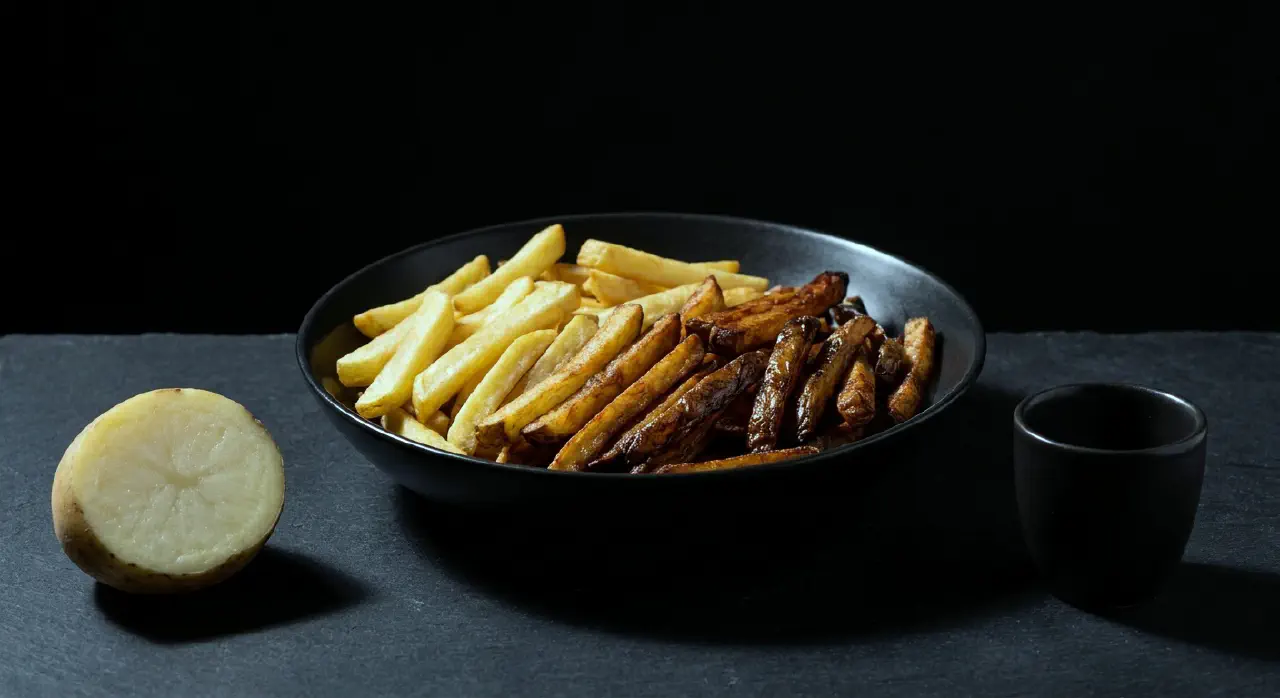
Acrylamide is a chemical byproduct of the Maillard reaction formed when the amino acid asparagine reacts with reducing sugars at temperatures above 120°C. It occurs in starchy foods cooked at high heat - fried potatoes, bread crusts, and roasted coffee are significant sources.
Formation chemistry
Asparagine is one of the most abundant free amino acids in potatoes. When combined with reducing sugars (glucose, fructose) and heated above 120°C, asparagine undergoes deamination - losing its amine group - producing acrylamide as a side product of the Maillard cascade rather than a deliberate flavor compound.
The reaction accelerates sharply above 150°C. Darker-colored fried or baked starchy foods contain more acrylamide; longer cook times and higher temperatures both increase concentrations.
Two conditions must be met simultaneously for acrylamide to form at meaningful levels:
- A source of free asparagine (high in potatoes, wheat, some cereals)
- A source of reducing sugars (glucose, fructose - distinct from sucrose, which does not participate)
This is why reducing the sugar content of the raw material - through soaking, blanching, or careful storage - is the primary control lever.
Concentrations in food
French fries typically contain 100–1,000 µg/kg, with averages in food-safety studies around 300–500 µg/kg. Darker-colored fries fall at the higher end. Potato chips run higher still (500–1,500 µg/kg) because of thinner cut and higher surface temperatures. Roasted coffee typically contains 200–450 µg/kg.
Health classification
The International Agency for Research on Cancer (IARC) classifies acrylamide as a Group 2A probable human carcinogen - the same category as red meat and occupational exposure to hairdressing chemicals. This classification is based primarily on animal studies at doses far higher than typical dietary exposure.
Large human epidemiological studies reviewed through 2022 have not found consistent evidence that dietary acrylamide at realistic intake levels increases cancer risk. The American Cancer Society and the National Cancer Institute note the uncertainty and recommend mitigation without recommending elimination of fried or baked starchy foods.
Reducing acrylamide in cooking
- Soak cut potatoes before frying - removes surface reducing sugars (glucose, fructose), the primary reactant substrate; 30 minutes minimum, 1–2 hours ideal
- Store raw potatoes above 7°C - cold storage converts starch to reducing sugars, sharply increasing acrylamide precursors; never refrigerate potatoes destined for frying
- Aim for golden, not dark brown - color is a reliable proxy for acrylamide concentration; overcooking multiplies levels
- Blanch before frying - the industrial standard; hot water (70–90°C) removes surface sugars and partially deactivates precursor pathways
- Double-frying at controlled temperatures - the first fry at 130–160°C cooks the interior without pushing surface temperatures high enough for rapid acrylamide accumulation; the short second fry at 180–190°C limits total high-temperature exposure time
See also
- maillard-reaction - the parent reaction family; acrylamide as one of its byproducts
- potatoes - asparagine content, cold-storage sugar conversion, soaking
- deep-frying - temperature management that directly affects acrylamide formation
- starch-browning - browning in starchy coatings and crusts